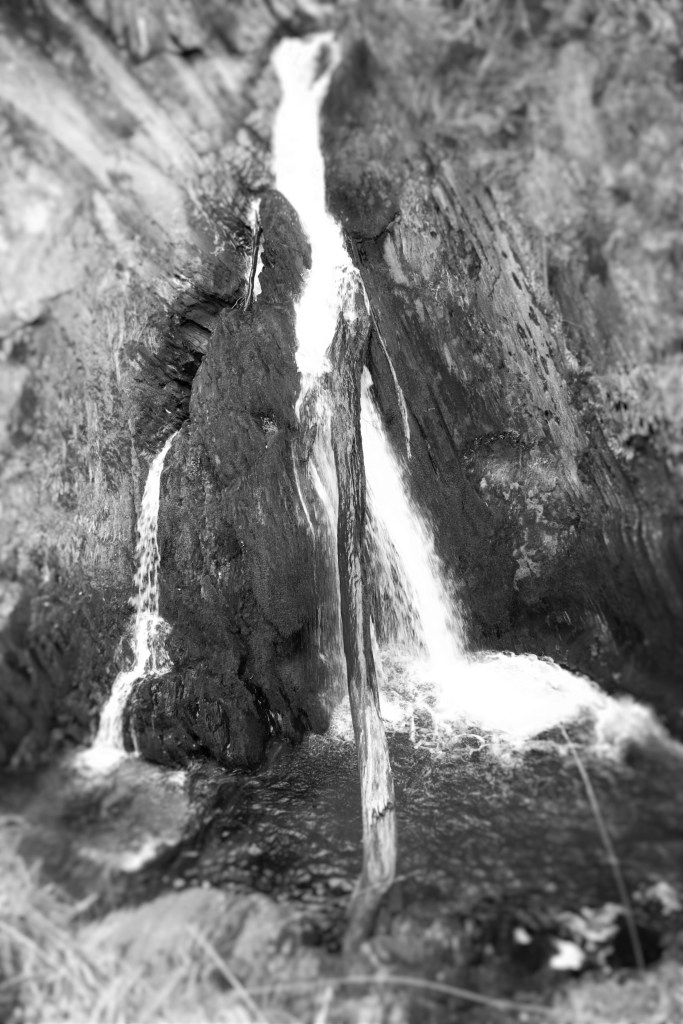
Fallen

“Coventry lies at the heart of England, and in the medieval period was at the centre of national power, hosting Parliament and courts, and serving as the national capital at times during the Wars of the Roses. Its rich surviving heritage has often been over-looked and underused since the wartime destruction of 1940.”
The Carthusian Priory of St Anne- is a unique Grade 1 listed building and grounds, surrounded by parkland in the centre of Coventry. Charterhouse is a grade I listed 14th Century Carthusian Monastery, one of only nine ever built in Britain. The Carthusian order was a silent order. Sadly it suffered at the time of the Dissolution of the Monasteries when the Chapel and other religious buildings were destroyed and used as building materials. It is the only Carthusian Monastery in the UK to have survived with intact internal features, including an internationally significant early fifteenth century wallpainting of Christ on the cross. Historic Coventry Trust are working to restore the building and open it to the public as a heritage visitor centre and educational attraction.

Part of the restoration includes replanting and harvesting the kitchen garden where we started work yesterday on the Grow with Us project. This will eventually supply the Cafe when the building is re-opened in September, working on a soil to plate ethos embeds the idea of ‘slow food’ into the sustainability of the site. There are seven raised beds, we designated four yesterday as a crop rotation, these will be Umbeliferae (carrots, parnsips, celery) and Allium (garlic, onion, shallot, chive, leek), Legumes (beans & peas), Brassicas (broccoli, cabbage, cauliflower, kale) and Cucurbits (squash & marrow). For variety and colour we will be planting different members of the same family into the beds. Taken as a whole this is the practice of monoculture and can be problematic since certain vegetables either drain or enhance the content of the soil, this is why each year they are rotated.
The remaining three raised beds will be organised as a polyculture, otherwise known as intercropping, it is the opposite of monoculture and means you plant several different types of vegetable into one bed. The intercropping for instance of maize, beans and squash is a method known as the ‘three sisters’. In this combination, the maize provides a structure for the bean to grow on, the bean provides nitrogen for all of the plants, while the squash suppresses weeds on the ground, it is more harmonious and follows natural eco-systems. Having cleared all the beds of left over vegetation and fertilized the other beds with the mulch we are ready for seed sowing which we will be doing next week.
For more information about the portfolio and the work of Historic Coventry Trust click this link Historic Coventry Trust.
Image and text reproduced from https://www.nationaltrust.org.uk/packwood-house/features/the-charterhouse-project (accessed 05/03/22). Image reproduced from https://discover.hubpages.com/education/Agriculture-Methods (accessed 05/03/22)
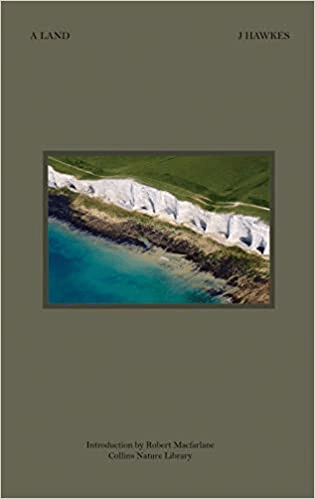
A Land is Jacquetta Hawkes’ seminal work, and a classic piece of British Nature writing. It is the history of the shaping of Britain and its people from the first, lifeless, Pre-Cambrian rocks to the days of the ice-cream carton and the hydrogen bomb.
First, as an archaeologist and geologist, Hawkes paints a picture of the creation of Britain from the very first forming of the earth’s crust, through periods marked by lifeless worlds of rock, water and air, to the first emergence of life that senses its surroundings. The worms and trilobites mark the beginning of the story of life that evolves through the great reptiles, dinosaurs and finally humans. This is science writing at its very best. Engrossing stories, curious facts and powerful narrative combine under the umbrella of poetic writing and unadulterated passion for the subject.
Text reproduced from https://www.amazon.co.uk/Land-Collins-Nature-Library/dp/0007457464/ref=sr_1_1?crid=AD2T61GKSH4K&keywords=jacquetta+hawkes+a+land&qid=1646471800&sprefix=jacquett%2Caps%2C377&sr=8-1 (accessed 01/03/22)

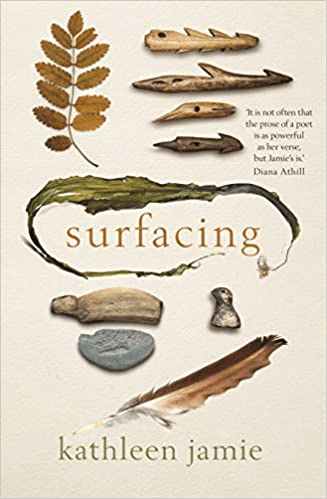
“Under the ravishing light of an Alaskan sky, objects are spilling from the thawing tundra linking a Yup’ik village to its hunter-gatherer past. In the shifting sand dunes of a Scottish shoreline, impressively preserved hearths and homes of Neolithic farmers are uncovered. In a grandmother’s disordered mind, memories surface of a long-ago mining accident and a ‘mither who was kind’.
In this luminous new essay collection, acclaimed author Kathleen Jamie visits archeological sites and mines her own memories – of her grandparents, of youthful travels – to explore what surfaces and what reconnects us to our past. As always she looks to the natural world for her markers and guides. Most movingly, she considers, as her father dies and her children leave home, the surfacing of an older, less tethered sense of herself. Surfacing offers a profound sense of time passing and an antidote to all that is instant, ephemeral, unrooted.”
Text reproduced from https://www.amazon.co.uk/gp/product/1908745819/ref=ppx_yo_dt_b_asin_title_o00_s00?ie=UTF8&psc=1 (accessed 01/03/22)
 denisestartin.co.uk