Parallax

[“It’s dark in here.”] [“Who said that?”]

Silent gravel in the driveway, deafening clock in the hall, everything whispers anxiously. A back is turned to hide its increasing anxiety, compulsive shrugs walk away. In the distance doors exploded from their origin, nothing is being asked or explained. A serene velocity at the mirrors edge hovers in the silver of the ground. The ghostly sublime of a chair hovers in the background then I realised it never went away because it was never there in the first place. A wispy ballad suddenly bursts, brilliantly unique and uniquely brilliant. Lugubriously strings swayed, a power cable fell down, every act efficient as part of its attempt to keep itself alive. The controlled frenzy of the climax seemed all the more potent for its restraint. Compression of ground prevents working within deeper structures  where we dance the rain.

[Oscillating sensations]

An illusion that converts one material into the signifier for another along dislocated points of reference. This is the trap, an anterior document, a document created to sustain an image, an image contained in a scene, a scene without a referent. The wall urges you to remember your compulsion to forget, a psychic event reveals an excess of meaning, a riddle whose clues and secrets are hidden, suppressed by namelessness. This absent content is a fragment that shines like gold. There is no sound we can run to in this prototype theatre, we can only act out to the sides. Blind rage mixes with helter skelter theories and confessional interludes. Appetite runs while reason runs behind, at times this is immensely affecting….beware rollercoaster effects. 

A living creature seeks to fill an empty refuge  where one shining quality lends lustre to another or hides some glaring defect; the act of perception is an act of consumption in which we hazard nothing. Symptoms manifested in the smashing of  windows, the rehearsal of a ventriloquist act in adjoining rooms constructing an emotional temperature… I have tried to inflect my icon with a blank magic.
Parallel

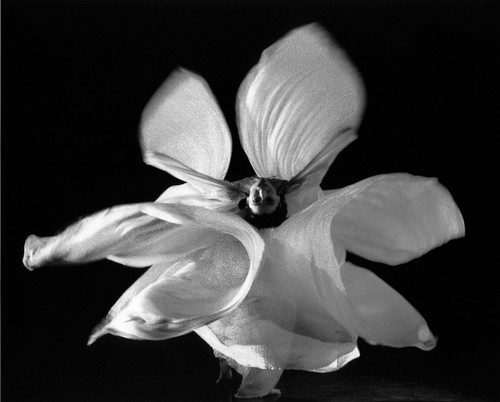
Loie Fuller

“Will I ever be parallel with myself? Can I ever be parallel with myself? I will never be parallel with myself. Do I need to be parallel with myself? I need to be parallel with myself. How important is it that I am parallel with myself? How do I know when I am in parallel with myself? Does it feel good when I am in parallel with myself? Am I complete when I am in parallel with myself? Is this it, when I’m in parallel with myself? When I’m in parallel with myself do I stay in parallel with myself forever? Does the history of myself become parallel with the history of the object kept? What is this hinge or bridge that one builds to become the self that is now?  

What is occurring in this falling [in], to-geth-er, a p a r t, away?  

What is this hinge or bridge that one builds to become the self that is now? Does the history of myself become parallel with the history of the object kept? When I’m in parallel with myself do I stay in parallel with myself forever? Is this it, when I’m in parallel with myself? Am I complete when I am in parallel with myself? Does it feel good when I am in parallel with myself? How do I know when I am in parallel with myself? How important is it that I am parallel with myself? I need to be parallel  with myself. Do I need to parallel with myself? I will never be parallel with myself. Can I ever be parallel with myself? Will I ever be parallel with myself?  Am I in parallel with myself right here, right now in this space with you?”

Currently Reading

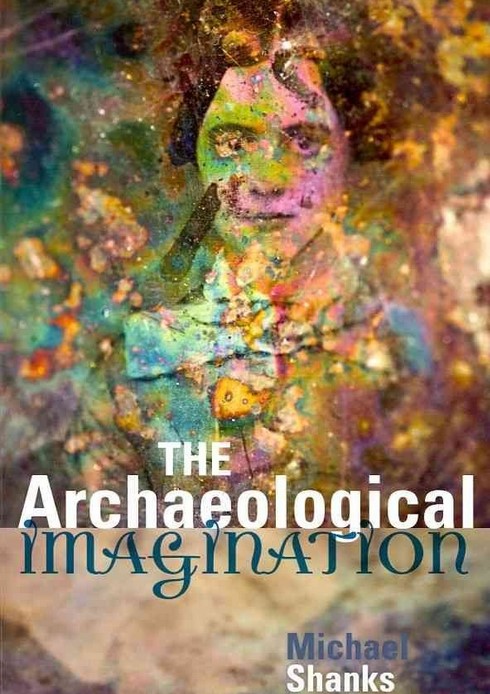
“Archaeology is a way of acting and thinking—about what is left of the past, about the temporality of what remains, about material and temporal processes to which people and their goods are subject, about the processes of order and entropy, of making, consuming and discarding at the heart of human experience. These elements, and the practices that archaeologists follow to uncover them, is the essence of the archaeological imagination.”

In his book Shanks offers the following definition: “To recreate the world behind the ruins on the land, to reanimate the people behind the shard of antique pottery, a fragment of the past: this is the work of the archaeological imagination, a creative impulse and faculty at the heart of archaeology, but also embedded in many cultural dispositions, discourses and institutions commonly associated with modernity. The archaeological imagination is rooted in a sensibility, a pervasive set of attitudes toward traces and remains, towards memory, time and temporality, the fabric of history.” pp.25

Text reproduced from https://www.google.co.uk/books/edition/The_Archaeological_Imagination/a6tJDAAAQBAJ?hl=en&gbpv=0 (accessed 13/08/23)