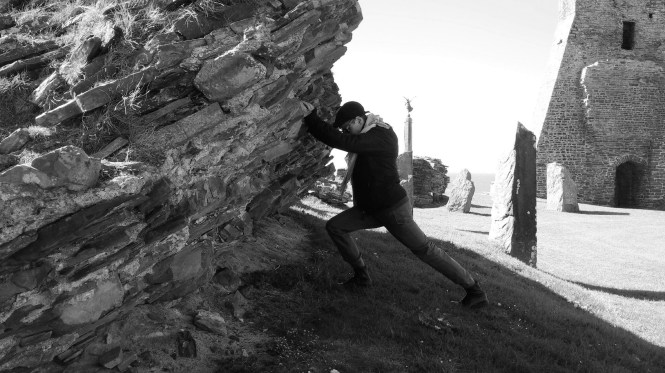
“Pressure pushing down on me, Pressing down on you,” Queen 1982. Image © Denise Startin
“Pressure pushing down on me, Pressing down on you,” Queen 1982. Image © Denise Startin

“In ‘The Natural History of Staffordshire’, Dr Robert Plot, the first keeper of the Ashmolean Museum describes an early account of the county’s pre-industrial pottery manufacturing during the late 17th century. Apart from documenting potters’ practices and processes, Plot details the region’s natural clays that were once fundamental to its rise as a world renowned industrial centre for ceramics. Yet in recent decades, the factories and communities of labour that historically developed around these natural resources have been subject to dramatic downturn. Global economics have resulted in much of the region’s ceramic industry outsourcing to low-cost overseas production.
Today, despite ongoing attempts to regenerate the city of Stoke-on-Trent, the economic fallout and human cost of the decline of traditional industry remain omnipresent throughout the six towns. Plot’s pre-industrial mapping of North Staffordshire in the 1680’s, has been echoed through the artistic research project Topographies of the Obsolete*, which has recently surveyed the region’s post-industrial landscape through a range of multi-media responses primarily centred around the former Spode factory site. Through various phases of on-site practice-led investigation, interconnected strands of discourse emerged that examine the socio-economic impact of globalization upon community and place, the contemporary ruin, and the artist as post-industrial archivist/archaeologist. Topographies of the Obsolete frames a particular point in time through which artists have opened up a different perspective to the complexities of socio–economic decline addressed by politicians, economists, historians and ex-employees. It documents both the aftermath of the Spode factory closure and the repurposing of its post-industrial fabric through processes of culture-led regeneration.
This one-day symposium will reflect upon this recent history. The topics uncovered through Topographies of the Obsolete will be expanded upon by a panel of experts previously unconnected to the project, from the fields of art and design, anthropology, urban sociology, critical theory and cultural geography. It will offer a broad range of inter-disciplinary perspectives surrounding the effects of de-industrialisation upon communities and landscapes, and the urban renewal of such cities through art and culture-led strategies.
*Topographies of the Obsolete is an international artistic research project initiated by Bergen Academy of Art and Design that explores the post-industrial landscape and its associated socio-economic histories, industrial architecture, production remnants through a range of interdisciplinary artistic practice. The project primarily explores how ceramic and clay can be understood as both material and subject in contemporary art practice.”
Text Reproduced from http://topographies.khib.no/events/2015/11/topographies-of-the-obsolete-s-symposium-at-the-ashmolean-museum-of-art-and-archaeology-university-of-oxford/.
Image reproduced from http://spodefactoryart.blogspot.co.uk/ [accessed 04/07/11]
Further Links: Thingness Essay, http://spodefactoryart.blogspot.co.uk/, http://topographies.khib.no/
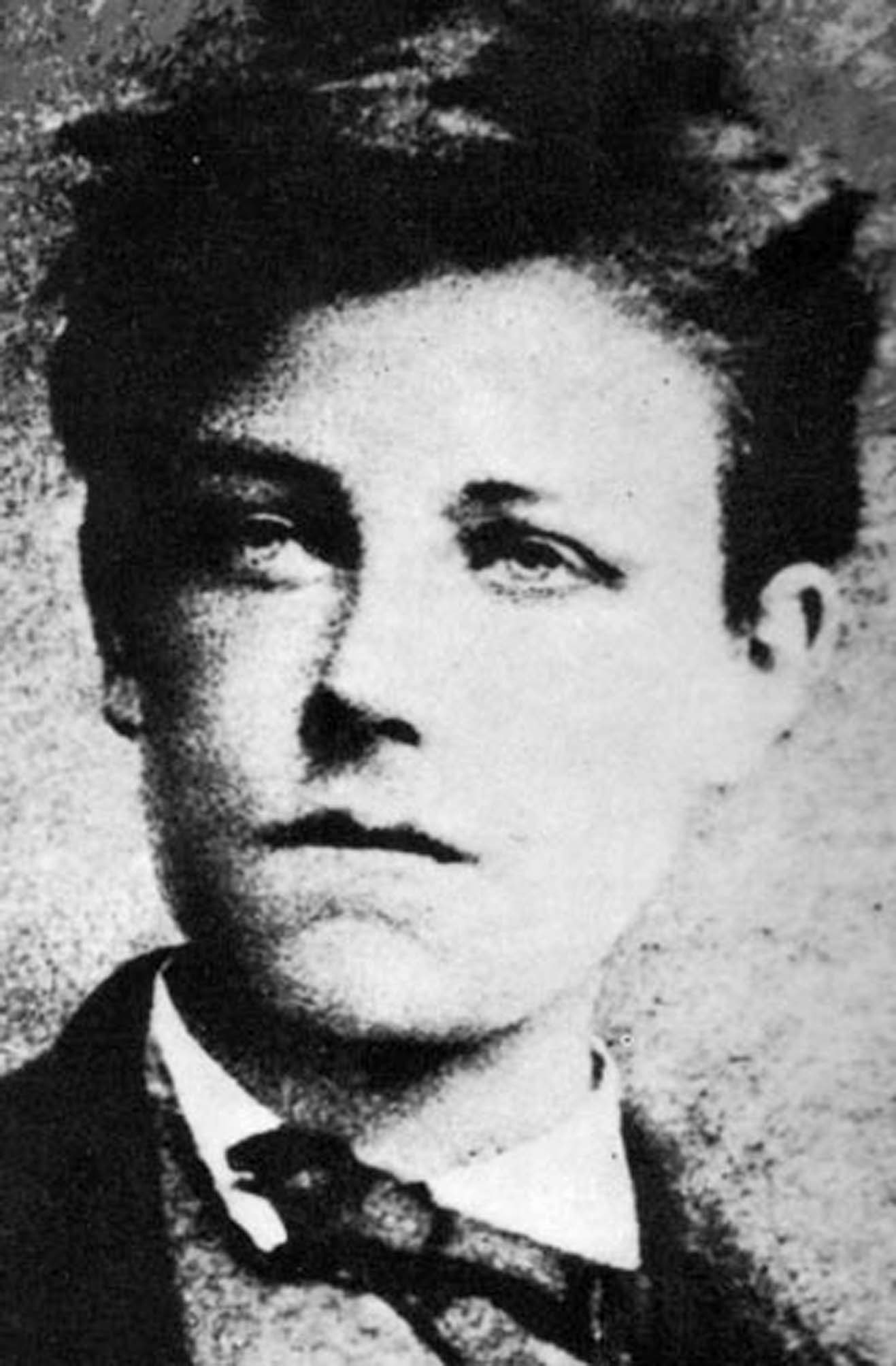
(Illuminations XIV: Les Ponts) [The Bridges]
Grey skies of crystal. A bizarre design of bridges, now straight, now curved, and others descending in oblique angles to meet the former, and these patterns repeating themselves in other well-lit windings of canal, but all so long and weightless that the shores, weighted with domes, sink and contract. Some of these bridges are still covered with hovels. Others bear masts, signals, frail parapets. Minor chords interlace, and fade; ropes rise from the banks. You distinguish a red coat, other clothes perhaps and musical instruments. Are those popular airs, snatches from noble concerts, the remains of public anthems? The water is grey and blue, wide as an arm of the sea. A white ray, falling from on high, annihilates this comedy.
Text quoted from http://www.poetryintranslation.com/PITBR/French/Rimbaud2.htm#_Toc202067626
Image reproduced from http://rickrozoff.wordpress.com/2011/03/30/rimbaud-evil/
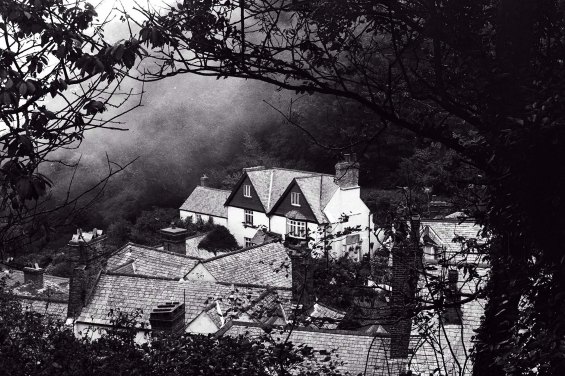
Untitled © Denise Startin
“If a person feels inside a place, he or she is here rather than there, safe rather than threatened, enclosed rather than exposed, at ease rather than stressed. Relph suggests that the more profoundly inside a place a person feels, the stronger will be his or her identity with that place.”
‘Space is multiple. Such multiplicity is both the precondition for and the result of spatial practices. Spatiality and practicality ground one another. There are different ways of attempting to grasp this co-dependent multiplicity. For example,
“…Relph defines four sorts of space, or knowledge about space, produced by different relationships to places. At the first step ‘pragmatic’ spaces are organised by our bodily situation (left or right, up or down). Second is perceptual space, organised through our intentions and centred on us – what we focus upon, what we look at, thus tending to be centred on the observer. Existential space is informed by cultural structures as much as our perceptions – it is space full of social meaning. This space is defined in relationship to some human experience or task. Finally, cognitive space is how we abstractly model spatial relationships.” (Crang, 1998:110). While this is a valuable starting point, recent re-thinkings of the phenomenological heritage, within which Relph lies, may point to a slightly different classification, coordinating person-hood with place-hood. This schema is based on the intercorporeal (as embodied-situated interaction), the intersubjective (as symbolic, performative, narrative interaction), the imaginary (as fantasmal, intracorporeal, medial-virtual interaction) and rational (as geometric, logical, coded interaction), each with their different degrees of freedom. Each of these four dimensions may or may not be well integrated and may well be skewed in various different directions, such that, for example, one’s fantasmal imaginings may begin to dominate and render unsustainable one’s intercorporeal and intersubjective relations. Through integration of these dimensions, spatial practices coordinate, integrate and separate spatialities centred on the self, and its motivated engagement with the world, with the spatialities that derive from geometric and logical calculation and fabrication, the structures of the designed and manufactured world. This is to acknowledge, while re-articulating Heidegger’s focus on care:
“Heidegger does not talk about intentions so much as care. Since we are always engaged with the world, we must focus our attention on particular aspects at any given time. We thus have different types and levels of care for different things at different times. The world might then be seen as comprising different levels of care.” (Crang, 1998: 110). The conclusion that Crang draws from this passage above, in which Relph interprets Heidegger, is that (human) knowledge of the world is always em-placed. It starts from and continues to be based around places as centres of care about the world. Thus, notes Crang, employing this approach suggests that we make sense of the world through the materials at hand, not from abstract schemes.

Heidegger’s Hutte, Todtnauberg, Black Forest, Germany
“…place is that open, cleared yet unbounded region in which we find ourselves gathered together with other persons and things, and which we are opened to the world and the world to us. It is out of this place that space and time both emerge, and yet the place at issue here also has a dynamic character of its own – it is not merely the static appearance of a viewed locale or landscape, but it is rather a unifying, gathering, regioning – place is, in this sense, always a “taking place, a “happening” of place.”
Malpas, Jeff, Heidegger’s Topology, Being, Place, World, Massachussets Institute of Technology, 2008, Chapter 5 Place and Event pp.221. Image reproduced from http://faslanyc.blogspot.co.uk/2011/10/landscape-delicatessen.html

