Micro Residency, Artist Researcher, Archaeology Team, Erddig House & Gardens, Nr. Wrexham, Wales

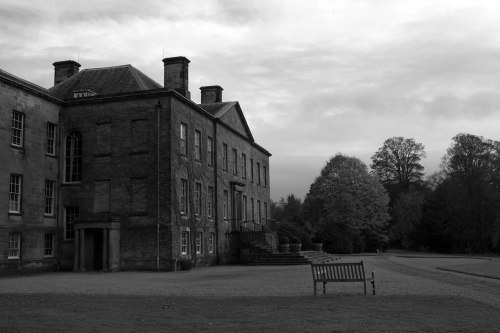
Erddig House, West Front © Denise Startin

I have returned from the Yale Hostel at Erddig (which dates back to the 17th Century) where I  completed a 6 week Micro Residency as Artist Researcher (Interpretation) for the Archaeology Team. I will be posting the results of my time spent at Erddig and extrapolating links between art and archaeology in a series of blogs. I am currently processing the research of which there is a significant amount relating to A] Deep Mapping: Stories in the Landscape, B] The Map & The Territory, C] Documenting the Process and D] Visualising and Representing the Data. This process meant conducting research on and off site utilising the Erddig collection online, the collection in the house itself, field research in the landscape and the Erddig Archives in nearby Flintshire. In the meantime here is a brief overview of the landscape at Erddig, its archaeological monuments and the Archaeological Historic Landscape Survey.

The Landscape
The grounds at Erddig (pronounced Erthig) contain numerous features of Archaeological significance dating back to Early Medieval (5th-10thC) & Medieval times (up to 15thC). The earliest recorded man-made feature within the parkland is Wat’s Dyke which is a Scheduled Ancient Monument. It is currently dated circa 8th Century, although several articles I have consulted cannot seem to corroborate this. Wat’s Dyke is a linear earthwork consisting of a bank & ditch designed to erect a boundary around the land for the purpose of enclosure and defence. It is likely that natural features of the landscape were incorporated into the design of the Dyke allowing a high bank with a ditch to run along the length of a territorial boundary between Wales & England. Wat’s Dyke, approx. 64 kilometres in length, runs through the Erddig estate and along the remaining site of a Motte & Bailey Castle (circa 12th Century). The Motte & Bailey (also a Scheduled Ancient Monument) overlooks the Dyke to the north of Erddig House. The Motte, which is a raised earthwork would have consisted of a strategically placed wooden building perhaps 2 storeys high and the associated Bailey, on a different site nearby, would have served an administrative function i.e stables, outbuildings, forges etc.

Also of Archaeological significance are the Cup and Saucer Waterfall, by landscape  designer William Emes (1774). This cylindrical manmade vertical waterfall and Grade II* Listed Structure is the inflow to John Blake’s patented (1890) Hydraulic Ram Pump nearby (also a Grade II listed structure) which pumps water up to the house and gardens. Other key archaeological features include the Ridge & Furrow (signs of past agricultural use in the parkland) The Kings Mill & Mills Leats (water-mills with their “associated wiers and sluices 18th Century”) [1]. The Designed Parkland (or Pleasure Gardens), at Erddig is a Cadw “Grade I listed Parkland of international importance”. This means that the Erddig landscape is highly significant historically as well as archaeologically, Cadw state there are only approximately 10% of these sites with a Grade I listing*. The Designed Garden, is one of the finest examples (albeit an accurately and carefully reconstructed interpretation of the original design) of a formal 18th Century garden in the ‘Dutch’ style with later Victorian additions. The Archaeological Survey also includes features that have been lost from the designed landscape such as the The Dairy or China House and smaller outbuildings which were demolished due to their state of disrepair. [1]

Continue reading

Wish you Were Here: Micro Residency, Artist Researcher (Interpretation) Erddig House & Gardens

The Bridge in the Park, Erddig House & Gardens, Nr. Wrexham, Wales

The Bridge in the Park, Erddig House & Gardens, Nr. Wrexham, Wales

Micro Residency, Artist Researcher, National Trust, Archaeology Team, Erddig House & Gardens, Nr Wrexham, Wales 15th – 31st October.

In 1870-72, John Marius Wilson’s Imperial Gazetteer of England and Wales described Erddig like this:

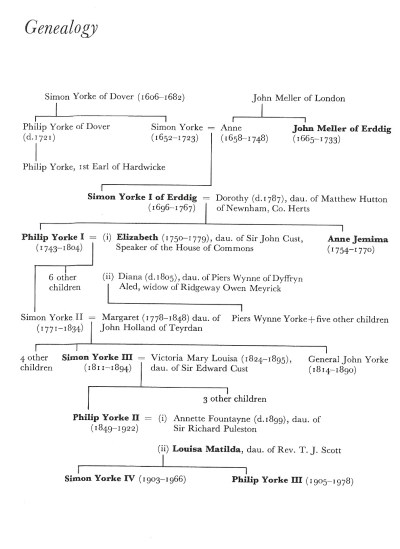
“ERTHIG, or Erddig, a township in Gresford parish, Denbigh; on Offa’s Dyke, 2 miles SW of Wrexham. Pop., 117. Houses, 31. Erthig Hall is the seat of the Yorkes, -of whom was Philip -Yorke, author of “The Royal Tribes of Wales;” has, on the walls and ceilings of one of its rooms, the heraldic bearings of the tribes; and occupies a charming situation.” [1]

I have recently spent the week at the Yale Hostel about a mile from Erddig (pronounced Erthig) House & Gardens as Artist Researcher (Interpretation) assisting the monitoring of the Archaeological Monuments in the grounds of Erddig which has a formal walled garden and covers 485 hectares equalling 1,200 acres. The collection at Erddig is the 2nd largest in the UK, bequeathed to the Trust under the provision that no item be discarded. Supporting the Field Archaeology Team my remit is to contribute artistically to the undertaking of the Archaeological and Historic Landscape Survey at Erddig. My contribution includes A] Deep Mapping: Stories in the Landscape, B] The Map & The Territory: Utilising items in the collection to interpret the Landscape C] Documenting the Process: in a format that can be understood by the public D] Visualising and Representing the Data: making recommendations regarding the concrete representation of the Historic Buildings, Sites and Monuments Record which is essentially a digital database of the archaeological monuments in the historic parkland.

As a visual artist my artistic practice is site specific whether this site be actual, physical, textual, fictional or virtual. Both contextually and historically sensitive the role of place and place making is central to my work. Within this there is a tacit acknowledgement that the concept of place is constructed from a complex network of relations i.e symbolic, social, political, familial, local, national and historical. Place is central to the sensitive concept of belonging and home which contribute to a person’s autobiographical identity. This profoundly affects how that identity is situated and has significant impact on emotional wellbeing. Within my work I take a methodical, detailed, and extensively researched approach to the curation of material in order to construct comprehensive documents of place in the form of installed environments. In many respects I am a custodian or caretaker who respectfully recuperates, conserves and restores micro histories, narratives, objects and images that have been orphaned, discarded or forgotten. Legacy, whilst it may not always be visible, is a constant presence whether this relates to National Trust custodianship, archaeological practice, the historic parkland at Erddig, personal history or artistic practice. The rich tapestry that is art history, an artists’ conceptual trajectory, their historical timeline, the time of their work, the time of its making, the context in which one is making and their contemporaries all add up to what the literary critic Harold Bloom called, in the book of the same name, the anxiety of influence. Art does not occur in isolation, it is always made in ‘situ’. As a printmaker there is no such thing as a blank piece of paper, one always approaches it knowing that contextually, historically, artistically and technologically that it is already replete; it is a dialogue not a monologue.

Similarly the National Trust’s investment in significant cultural, historical and natural places, the people who populate them and the communities that surround them ensure our heritage is preserved as well as shared by enabling people to contribute and collaborate in its preservation. Personally speaking the research aims to investigate the intersection between art and archaeology, whereby art can also be a form of historiography that re-contextualises our relations to the past as a form of memorial or restoration. For that reason I will also be mining the art historical legacy relating to the site specific and the correlation between an aspect of historical archaeological practice and conceptual art, the concept of the grid. This concrete and in depth engagement with Erddig, generously facilitated by Kathy Laws: Archaeologist at the National Trust, will develop a more comprehensive understanding of what it means to be site specific, not just artistically & imaginatively, but historically, physically, technologically and contextually. This can only improve the depth of my work as an artist engaged with concepts of place, contexts, histories and heritage both private and public.

[1] http://www.visionofbritain.org.uk/place/3124

Unit 2J, FarGo Village, Open Studio Weekend

Rachel Kelly, Site Manager and Jo Truslove, Project marketing Manager at FarGo Village, Coventry

Rachael Kelly, Site Manager and Jo Truslove, Project Marketing Manager at FarGo Village, Coventry

Denise Startin Unit 2J, FarGo Village, Open Studio Weekend, Far Gosford Street, Coventry, CV1 5EA

“The destination for independent shopping and creative arts in Coventry is on its way.”

Opening on 27th September 2014, Fargo Village will bring a whole new dimension to the city offering niche and unique retailers, artists’ studios, creative workspace, crafts, cafes, markets and entertainment space. Affordable rents will allow new businesses to set up, thrive and survive in an attractive environment, in a community of like minded people.

We are bringing a piece of the London cool scene of Camden and Brick Lane to Coventry. Twenty years ago these were run down areas of London but with investment into the creative industries they have now become major attractions bringing in visitors from all over the world and in turn supporting the local economy. To emulate some of that success here would give Coventry a huge boost in perception and appeal to locals and visitors. Fargo Village will inject energy and fun into Coventry.”

Denise Startin, former graduate of Coventy University and recent graduate of the Royal College of Art, MA Printmaking 2013 will be holding an Open Studio at the launch weekend where elements of her MA Show will be on display. Unit 2J is upstairs on the balcony at the rear of the Market Hall. For a recent article on the development of FarGo including views from the tenant’s, image gallery & FarGo’s Project Marketing Manager Jo Truslove click here, download the Launchflyer or visit the website at www.fargovillage.co.uk.

Text quoted from http://www.fargovillage.co.uk/. For more information about the creative business tenants please visit http://www.fargovillage.co.uk/tenants/. Image reproduced from http://www.coventrytelegraph.net/news/business/smes/coventrys-new-fargo-village-launches-7816480

Save

Choreographic Objects

||HOST||The Royal Standard as part of the Liverpool Biennial27th October - 4th November 2012

||HOST||
The Royal Standard as part of the Liverpool Biennial
27th October – 4th November 2012
Sovay Berriman, Royal College of Art Alumni 2003

Choreographic Objects by William Forsythe

An object is not so possessed by its own name that one could not find another or better therefore.
– Rene Magritte

“Choreography is a curious and deceptive term. The word itself, like the processes it describes, is elusive, agile, and maddeningly unmanageable. To reduce choreography to a single definition is not to understand the most crucial of its mechanisms: to resist and reform previous conceptions of its definition.  There is no choreography, at least not as to be understood as a particular instance representing a universal or standard for the term. Each epoch, each instance of choreography, is ideally at odds with its previous defining incarnations as it strives to testify to the plasticity and wealth of our ability to re-conceive and detach ourselves from positions of certainty. Continue reading

Spatial Architectonics

Loie Fuller

Loïe Fuller, physical poet, 1862-1928

“Space – my space – is not the context of which I constitute the ‘textuality’: instead it is first of all my body, and then it is in my body’s counterpart or ‘other’, it’s mirror image or shadow: it is the shifting intersection between that which touches, penetrates, threatens or benefits my body on the one hand, and all other bodies on the other. Thus we are concerned, once again, with gaps and tensions, contacts and separations, Yet, through and beyond these various effects of meaning, space is actually experienced, in its depths, as duplications, echoes and reverberations, redundancies and doublings up…”

Text reproduced from The Production of Space, Henri Lefebvre, Trans. Donald Nicholson-Smith, Blackwell Publishing UK, 1991: pp.184

Image reproduced from http://www.metmuseum.org/collections/search-the-collections/287807 where you will also find more information on Loïe Fuller