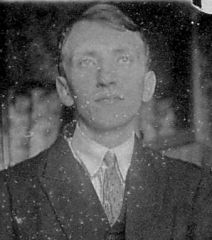
Maurice Blanchot

‘A word may give me its meaning, but first it suppresses it. For me to be able to say,
‘This woman’ I must somehow take her flesh and blood reality away from her,
cause her to be absent, annihilate her. The word gives me the being, but it gives it
to me deprived of being. The word is the absence of that being, its nothingness,
what is left of it when it has lost being – the very fact that it does not exist.”

Blanchot, The Gaze of the Orpheus: pp41-42

Text reproduced from pdf of Rachel Louis Clapham’s Study Room Guide in In (W)reading Performance Writing, Image reproduced from http://www.mauriceblanchot.net/blog/

Mount Analogue

Image cropped from_Mount Analogue_René Daumal

Mount Analogue: A Novel of Symbolically Authentic Non-Euclidean Adventures in Mountain Climbing by René Daumal 1908-1944.

In Daumal’s unfinished symbolic Novella a group of explorer’s come together to embark upon a quest to find the Mount Analogue of the Novel in a Yacht named the Impossible. Mount Analogue, a peak that reaches toward heaven although real in every sense of the term in that it it exists, has geographic co-ordinates and a population that are completely hidden from view. It can only be bought into view when the sun’s rays hit the earth at a particular point of view. The exhibition’s leader is Father Sogol or in otherwords the Logos, both fantastic, allegorical and metaphysical, it is a journey of faith. Continue reading

Subjects of dispersal

Hands:Holding by Rune T

‘Foucault uses the language of space to highlight the formative effects of discourse and the instability of the plane it constitutes. Foucault’s analytics and politics are inextricably linked to creating an alternative physics of space. His alternative spatial text-ure both represents itself as a more accurate depiction of the real work of power and shifts the paradigmatic grounds for conceiving power. Power has generally been conceived as a dichotomous structure pairing intent and result, cause and effect, oppressor and oppressed. But Foucault levels the dimensionality of the social edifice, making power, knowledge, and subjects alike the temporary internal effects of a dispersed, evanescent field. The subject loses its organic solidity to appear like a bubble within a perpetually plastic substance. Subjects appear ‘in-different’ neither casually prior to a power’s mechanism, not imaginative outside its perpetually [re]formative web: Continue reading