The Annotated Wuthering Heights

Emily Brontë’s Wuthering Heights has been called the most beautiful, most profoundly violent love story of all time. At its center are Catherine and Heathcliff, and the self-contained world of Wuthering Heights, Thrushcross Grange, and the wild Yorkshire moors that the characters inhabit. “I am Heathcliff”, Catherine declares. In her introduction Janet Gezari examines Catherine’s assertion and in her notes maps it to questions that flicker like stars in the novel s dark dreamscape. How do we determine who and what we are? What do the people closest to us contribute to our sense of identity? The Annotated Wuthering Heights provides those encountering the novel for the first time as well as those returning to it with a wide array of contexts in which to read Brontë’s romantic masterpiece. Gezari explores the philosophical, historical, economic, political, and religious contexts of the novel and its connections with Brontë’s other writing, particularly her poems. The annotations unpack Brontës allusions to the Bible, Shakespeare, and her other reading; elucidate her references to topics including folklore, educational theory, and slavery; translate the thick Yorkshire dialect of Joseph, the surly, bigoted manservant at the Heights; and help with other difficult or unfamiliar words and phrases. Handsomely illustrated with many color images that vividly recreate both Brontë’s world and the earlier Yorkshire setting of her novel, this newly edited and annotated text will delight and instruct the scholar and general reader alike.

Image and text reproduced from Amazon (accessed 18/12/25)

Art + Archive

Art + Archive provides an in-depth analysis of the connection between art and the archive at the turn of the twenty-first century. The book examines how the archive emerged in art writing in the mid-1990s and how its subsequent ubiquity can be understood in light of wider social, technological, philosophical and art-historical conditions and concerns. Deftly combining writing on archives from different disciplines with artistic practices, the book clarifies the function and meaning of one of the most persistent artworld buzzwords of recent years, shedding light on the conceptual and historical implications of the so-called archival turn in contemporary art.

Text and image reproduced from Amazon

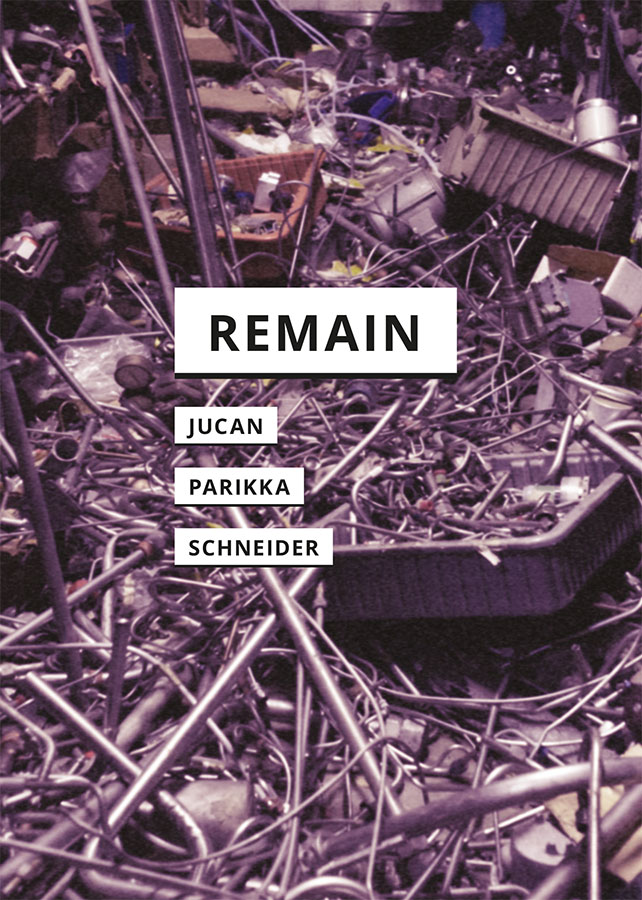
Remain

As new, as current, as now—this is primarily our understanding of technologies and their mediating of our social constructions. But past media and past practices continue to haunt and inflect our present social and technical arrangements. To trace this haunting, two performance theorists and a media theorist engage in this volume with remains and remainders of media cultures through the lenses of theatre and performance studies and of media archaeology. They address the temporalities and materialities of remain(s), the production of obsolescence in relation to the live body, and considerations of cultural memory as well as of infrastructure and the natural history of media culture.

Dust – The Archive and Cultural History

In this witty, engaging and challenging book, Carolyn Steedman has produced a highly original and sometimes irreverent investigation into the development of modern history writing. Dust is about the practice and writing of history. Dust considers the immutable, stubborn set of beliefs about the material world, past and present, inherited from the nineteenth century, with which modern history writing attempts to grapple. Drawing on over five years worth of her own published and unpublished writing, the author has produced a sustained argument about the way in which history writing belongs to the currents of thought shaping the modern world. Steedman begins by looking at the attention paid to the archive by those working in the humanities and social sciences in recent years, what has become known as the practice of ‘archivisation’. By definition, the archive is the repository of ‘that which will not go away’, and the book goes on to suggest that, just like dust, the ‘matter of history’ can never go away or be erased. Historians who want to think about what it is they do will find this work enlightening, and this book is essential reading for all undergraduates and postgraduates studying historiography, and history and theory.

Text and image repsoduced form Amazon (acccessed 29/10/25)

Fiction as Method

See the world through the eyes of a search engine, if only for a millisecond; throw the workings of power into sharper relief by any media necessary; reveal access points to other worlds within our own. In the anthology Fiction as Method, a mixture of new and established names in the fields of contemporary art, media theory, philosophy, and speculative fiction explore the diverse ways fiction manifests, and provide insights into subjects ranging from the hive mind of the art collective 0rphan Drift to the protocols of online self-presentation. With an extended introduction by the editors, the book invites reflection on how fictions proliferate, take on flesh, and are carried by a wide variety of mediums—including, but not limited to, the written word. In each case, fiction is bound up with the production and modulation of desire, the enfolding of matter and meaning, and the blending of practices that cast the existing world in a new light with those that participate in the creation of new openings of the possible.

Text and image reproduced from https://www.sternberg-press.com/product/fiction-as-method/ (accessed 23/10/25)