This is a book about English art like no other. Forget the tired rogues’ gallery of lords and ladies, forget the tall ships and haywains. These images cut to the heart of England’s psychic landscapes to portray an Albion unhinged, where magic and rebellion and destruction are the horses to which the country is hitched. On these fabled shores we are all castaways, whether our family has lived here for four thousand years or for four. Stephen Ellcock unleashes the magic and rebellion of England’s psychic landscapes through the power of images.
Here you will find depictions of ancient trackways, chalk carvings and standing stones, of animal-masked community rituals, of streets set ablaze in protest, of occult dreams and psychedelic prophecies. There are over 200 images by artists ranging from William Blake, J.M.W. Turner and Samuel Palmer to Paul Nash, Louis Wain, Bill Brandt, Derek Jarman and Ithell Colquhoun to present-day visionaries such as Paula Rego, Cathy de Monchaux, George Shaw, Jamie Reid, Matt Collishaw, Tacita Dean, Lina Iris Viktor, Yinka Shonibare, Nick Waplington, Dan Hillier, Nicola Tyson, Sutapa Biswas and Chila Kumari Burman. The mind-blowing selection of images is accompanied by short texts by Mat Osman, exploring magic and mazes, ghosts and gardens, shipwrecks and cities. These poetic renderings of a spectral isle, together with Stephen Ellcock’s hallucinatory visual journey, reclaim Albion as an eternally inspiring and anarchic domain – an England on fire.
“I walked recently through the North York Moors national park and along the Yorkshire coast, reaching Scarborough, and climbed towards its castle high on a clifftop, and to the grave of Anne Brontë, who died aged 29 and is buried in a churchyard beneath the castle. By the sea she so loved, it was easy to see and feel how the landscape of the north so powerfully shaped the literature and lives of the Brontës. This evocative book encourages people to engage with the places that proved so inspirational. As I walk, Anne’s haunting last words to her sister Charlotte echo through my mind: “Take courage.”
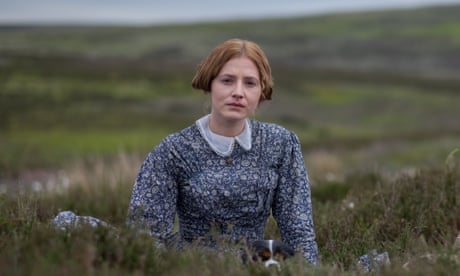
“I’ll walk where my own nature would be leading: it vexes me to choose another guide,” Emily Brontë declared. This trailblazing spirit led her to forge a unique path through literature. Here, she becomes a posthumous guide to Michael Stewart as he follows in her footsteps – along with the footsteps of her sisters, brother Branwell and father Patrick – in a series of vividly chronicled walks that explore the geographical and emotional terrain of their writing. Stewart travels through the north of England, across moors and meadows, up mountains and through cities and villages and along coastal paths. He also voyages into the inner lives of the Brontës, showing how external place shaped their internal landscapes, how the wild fuelled their imagination.
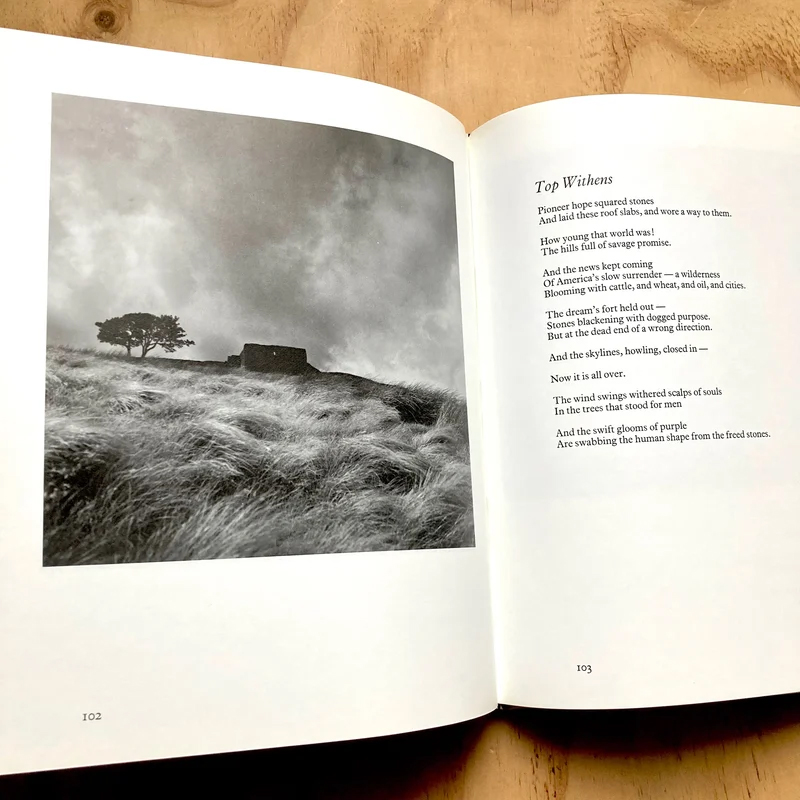
He begins his walks in the Brontë birthplace, Thornton, in west Yorkshire, where Patrick spent his “happiest days” before the untimely death of his wife Maria and two eldest daughters. He also follows part of the Pennine Way to the ruin of Top Withens, thought to have inspired Emily’s farmhouse location of Wuthering Heights. He captures how for Emily “the moors were a place of awe and fascination. It was a land that was alive with a terrible destructive beauty.” These engaging present-tense walks include an excellent account of recreating the walk that Mr Earnshaw took in 1771 when he travelled from Wuthering Heights to Liverpool – Stewart ventures via Littleborough and Manchester with his dog Wolfie, and has some hair-raising wild camping experiences.
“It is a walking book, but it is also a social and literary history of the North,” Stewart writes. Along the way, he perceptively excavates the past, exploring how it was in the north that the Industrial Revolution took off, “thanks to a combination of soft water, steep hills and cheap labour”. As well as fascinating historical context, he paints a vivid portrait of the present day, too, as he walks through landscapes both bleak and beautiful, equally adept at capturing the gloom of an industrial estate and “a brilliant blue and golden orange kingfisher”, which makes him think of a Gerard Manley Hopkins poem. He compellingly conjures the force of the winds, the earthy smell of peat bogs, the haunting call of the curlew, the sound of skylarks.
“The idea of being authors was as natural to us as walking,” Charlotte said. Woven through his Brontës journey, Stewart also explores how he developed a love of literature and became an author himself with the sisters at the heart of his books. He recalls how his fascination with the novel Wuthering Heights began when Kate Bush’s single reached No 1 in the pop charts in 1978. His mother was reading the novel while studying an English literature O-level at night school, having left school at 15. “She told me what the story was about. She told me about how, one summer night, after three days of travel on foot, Mr Earnshaw brought a dark-skinned orphan back from the streets of Liverpool to his farm in Yorkshire. She told me about how his daughter Cathy spat at the boy and his son Hindley booted him.”
Stewart borrowed the book from the local library and read it on the bus journey to work in a factory in Manchester. In adulthood he moved to live in Thornfield, the Brontë birthplace, and wrote a novel, Ill Will: The Untold Story of Heathcliff, during his research spending hours walking the moors. He also devised the Brontë Stones project for which Bush wrote a poem dedicated to Emily, left in the landscape.
“I close my eyes and see the landscape in my mind,”Stewart writes. The book is a terrific tribute to the Brontës – and to the landscapes that shaped their literature. It also beautifully shows how landscape grows in the imagination and lays bare the “invisible” world of the heart and mind, and how the places we inhabit shape the people we become. It will send the reader back to Bush’s glorious “Wuthering Heights” and to the Brontës’ brilliant books, and will inspire us to roam the wily, windy wildernesses captured so hauntingly in their work.”
“Ted Hughes (1930-1998) was born at 1 Aspinall Street, Mytholmroyd, in the West Riding of Yorkshire on the 17th August 1930. Ted was a pupil at the Burnley Road School until he was seven, when his family moved to Mexborough, in South Yorkshire. As a child he spent many hours exploring the countryside around Mytholmroyd, often in the company of his older brother, Gerald, and these experiences and the influences of the landscape were to inform much of his later poetry.
In ‘The Rock’, an autobiographical piece about his early childhood, Hughes writes about Scout Rock, whose cliff face provided ‘both the curtain and back-drop to existence‘. The area continued to be a powerful source of inspiration in his poetry long after he had left Yorkshire. Hughes described the experience of looking out of the skylight window of his bedroom on 1 Aspinall Street onto the Zion Chapel. The Chapel is long gone, but Zion Terrace remains, its name a reminder of more God-fearing times.
In his classic and richly personal collection Remains of Elmet: A Pennine Sequence (1979), with photographs by Fay Godwin, Hughes suggests that the Calder Valley was originally the kingdom of Elmet, the last Celtic land to fall to the Anglo-Saxons. A second, revised edition was published as Elmet in 1994.
Many of Hughes’s other poems also relate to the Calder Valley. ‘Six Young Men’, for example, was written at Hughes’s parents’ house at Heptonstall Slack in 1956. The poem describes a photograph belonging to Hughes’s father of six of his friends on an outing to Lumb Falls, taken just before the First World War.”
In the seventeenth century antiquarianism was a well-respected profession and antiquarian works were in demand, particularly amongst the gentry, who were especially interested in establishing lineage and the descent of land tenure. Although intended primarily as a source of information about who owned what and where, they often contained fascinating descriptions of the English landscape. Charles Lancaster has examined the town and county surveys of this period and selected the most interesting examples to illustrate the variety and richness of these depictions. Organised by region, he has provided detailed introductions to each excerpt. Including such writers as John Stow, William Dugdale, Elias Ashmole, Daniel Defoe, Gilbert White and Celia Fiennes, this is a book that will appeal to anyone with an interest in both national and local history and to lovers of English scenery.
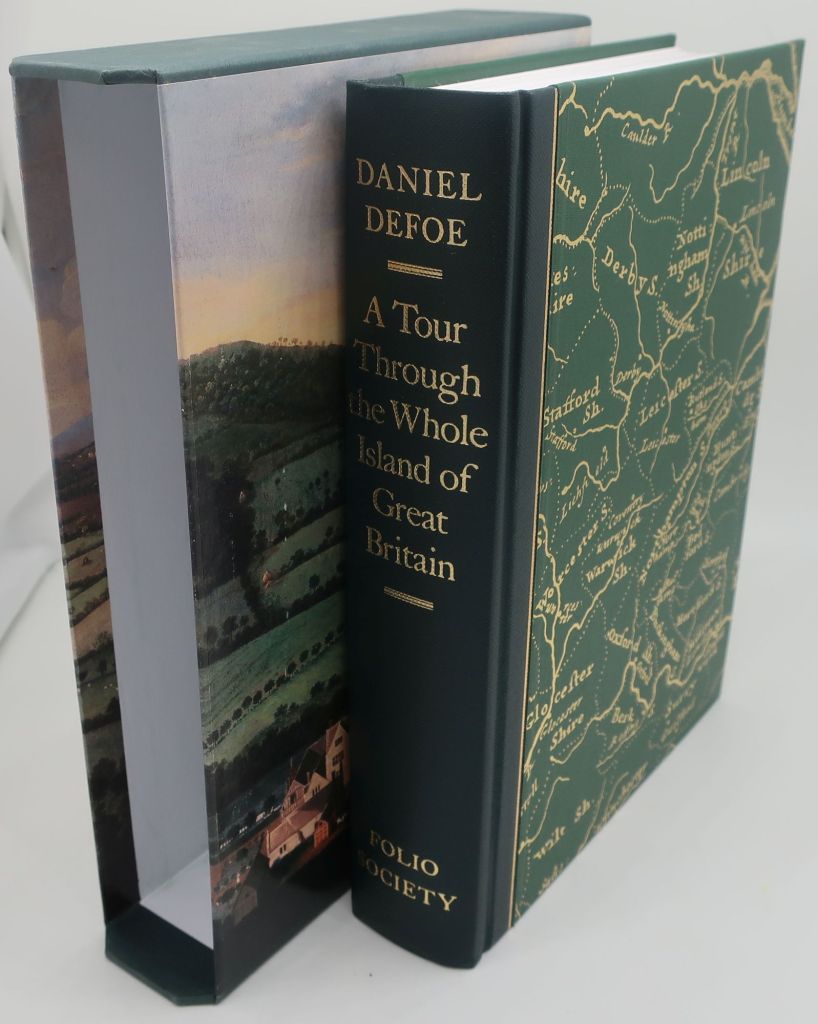
“Britain in the early eighteenth century: an introduction that is both informative and imaginative, reliable and entertaining. To the tradition of travel writing Daniel Defoe brings a lifetime’s experience as a businessman, soldier, economic journalist and spy, and his Tour (1724-6) is an invaluable source of social and economic history. But this book is far more than a beautifully written guide to Britain just before the industrial revolution, for Defoe possessed a wild, inventive streak that endows his work with astonishing energy and tension, and the Tour is his deeply imaginative response to a brave new economic world. By employing his skills as a chronicler, a polemicist and a creative writer keenly sensitive to the depredations of time, Defoe more than achieves his aim of rendering ‘the present state’ of Britain.”




 denisestartin.co.uk