Goodbye to all that

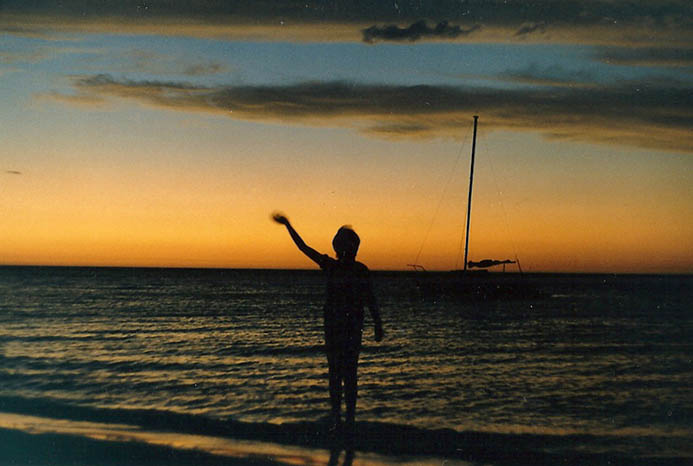
Wish you were here © Denise Startin

Wish you were here © Denise Startin

There was a child went forth – Walt Whitman

“The hurrying tumbling waves, quick broken crests, slapping. The strata of color’d clouds, the long bar of maroon-tint, away solitary by itself – the spread of purity it lies motionless in. The horizon’s edge, the flying sea-crow, the fragrance of salt marsh and shore mud; these became part of that child who went forth everyday, and who now goes, and will always go forth every day.”

Wishing each and everyone one of you a robust and peripatetic New Year. Have a safe trip.

Extract fromLeaves of Grass, Walt Whitman 1855 A Textual Variorum of the Printed Poems, Volume I: Poems 1855-1856 Sculley Bradley, Blodgett H. W et al, eds. NY: New York University Press, 1980.

Merry Christmas Every Bodies/Thanks for following

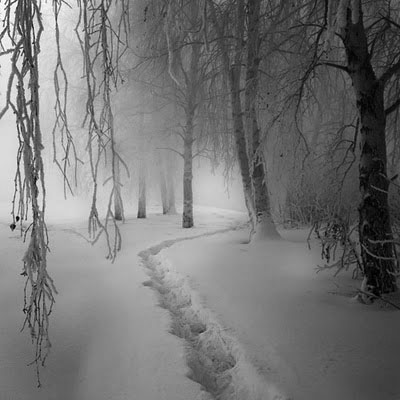
Winter Path

Winter Path

“Did I Love a dream?

My doubt, accumulation of a former night, ends up
As many a subtle branch, that having remained the true
Woods themselves, proves, alas! that I offered myself alone.”

Extract from “L’après-midi d’un faune”, The Afternoon of a Faun 1875 by Stéphane Mallarmé, quoted in The Poetics of Occasion, Mallarmé and the Poetry of Circumstance, Marian Zwerling Sugano, Stanford University Press, California, 1992:pp.38.

Image reproduced from http://muckmiremarsh.blogspot.co.uk/, accessed 22122013

100 Notes, 100 Thoughts, No.68 The Procedures of Love

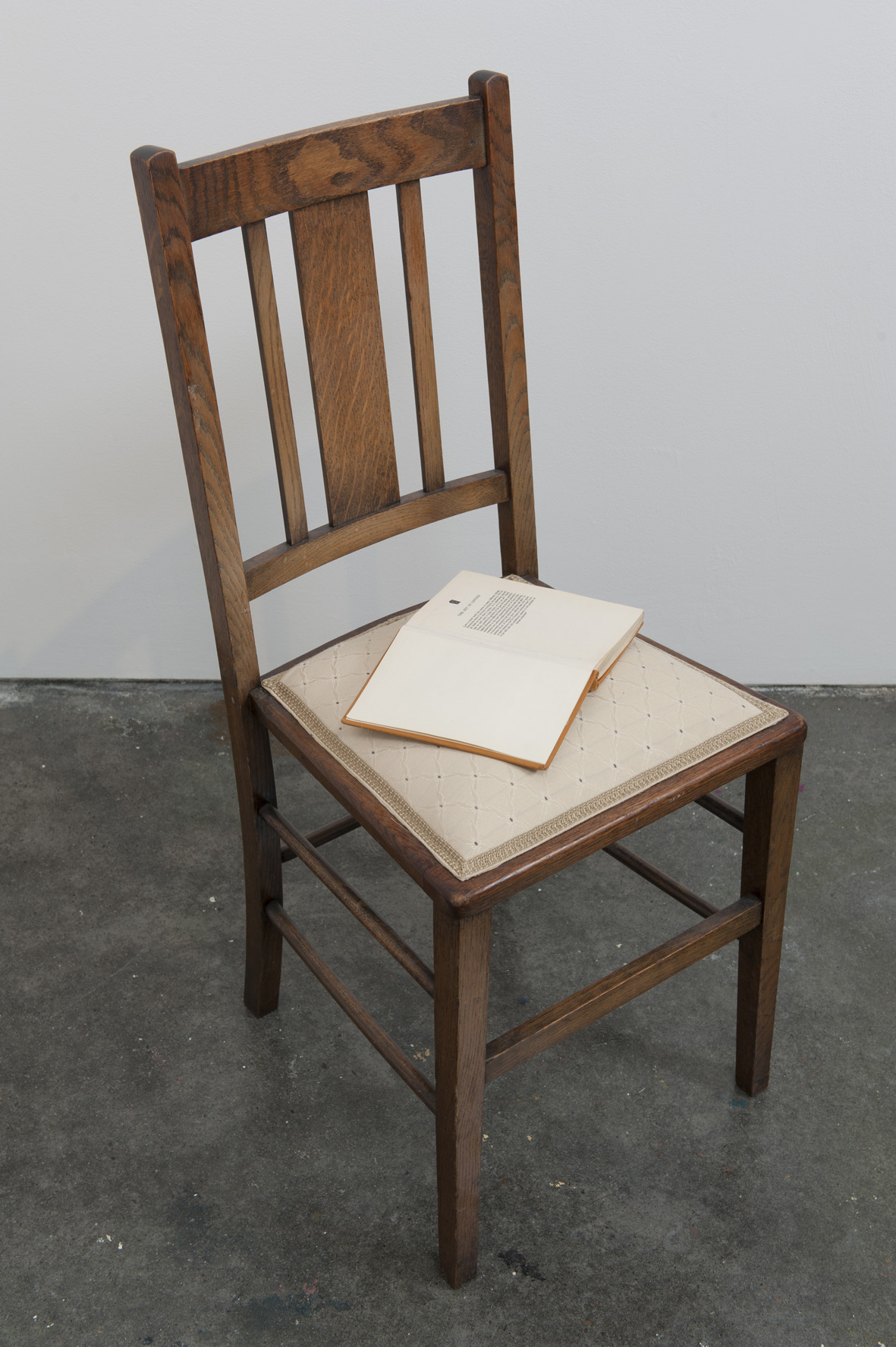
Reclaimed Antique Oak Chair, The Art of Loving by Erich Fromm

Reclaimed Antique Oak Chair, The Art of Loving by Erich Fromm. © Denise Startin Show RCA 2013

The Procedures of Love – No. 068 Michael Hardt, dOCUMENTA (13)

“To understand how love can be the central, constitutive mode and motor of politics” is philosopher Michael Hardt’s primary aim in his notebook. “The Procedures of Love” looks at love as a project with its own temporality, which involves processes of composition and decomposition. A political concept of love revives the revolutionary event and the ceremony of return, also outside the private realm. In this sense, love is examined as a phenomenon, which is intimate and social at the same time, embracing multiplicities and choreographing movements. Following Jean Genet (1910–1986), we must “open up the field” for events in a ritualized way, says Hardt, in order to introduce them and “make” them. In addition, a political connotation of the term “love” can only become effective through institutions that make the ceremonies of recurrence an experience. Ceremonies transform the temporality of events, as the recurrence of social encounter happens each time unforeseeably, despite familiar patterns.”

For an interview with Michael Hardt on the Politics of Love click here.

Text reproduced from http://d13.documenta.de/#publications/?tx_publications_pi1[details]=236&cHash=e1a46ff8d93e4312dde0787f269c42d1

“In which the patagrapher regains his rights”

DS_Untitled_2011

© Denise Startin

” In the heart of the night shines the anti-glimmer – the powerful sea of all waves – of all life the sea is strong – the shadow gleams the night eats fear – the well of truth has no way out – the sea gleams with no glimmer – under the night upon the night oh clang – oh clang declang degong and boom – and clamour oh word

here we are total

inscribed in the fearless heart of the night of the flesh – and in the veins and in the nerves – of all the beasts our mothers our sisters – in the forests of our thoughts – inscribed but in living fire – eternal instantaneous – fire you tell yourself – fire you tell me – all is said but eternally

speak!”

René Daumal, Pataphysical Essays, Trans. Thomas Vosteen (Cambridge, Massachusetts, Wakefield Press, 2012), p.58-59