De Certeau

‘At the outset I shall make a distinction between space (espace) and place [lieu] that delimits a field. A place (lieu) is the order (of whatever kind) in accord with which the elements are distributed in relationships of co-existence. It thus excludes the possibility of two things being in the same location (place). The ‘law’ of the proper rules in the place: the elements taken into consideration are beside one another, each situated in its own ‘proper’ and distinct location, a location it defines. A place is thus an instantaneous configuration of positions. It implies an indication of stability.

A space exists when one takes into consideration vectors of direction, velocities and time variables. Thus space is composed of intersections of mobile elements. It is in a sense actuated by the ensemble of movements deployed within it. Space occurs as the effect produced by the operations that orient it, temporalise it, and make it function in a polyvalent unity of conflictual programmes or contractual proximities. On this view in relation to place, space is like the word when it is spoken, that is when it is caught in the ambiguity of an actualization…situated as the act of a present (or of a time)…’

Michel De Certeau quoted in Rendell, J, Art and Architecture, A Space between where Rendell writes ‘that in arguing for a dynamic space constituted through practice place becomes fixed and passive in his writings.’

De Certeau in Practices of everyday life [1984] distinguishes between place [lieu] and space [espace]. De Certeau writes:

‘A place [lieu] is the order of whatever kind in accord with which the elements are distributed in relationships of co-existence…A place is thus an instantaneous configuration of positions. It implies an indication of stability. A space exists when one takes into consideration the vetors of direction, velocities and time variables..In short...space is a practice place. [1984:117]

Text quoted from Spaces of Consumption: From margin to centre. For the full article click here.

Deleuze

‘to write certainly is not to impose a form [of expression] on the matter of lived experience […] writing is a question of becoming, always incomplete, always in the midst of being formed, and goes beyond the matter of liveable or lived experience. It is a process, that is, a passage of Life that traverses both the liveable and the lived.’

Deleuze Essays Critical and Clinical pp.1

‘Judgment prevents the emergence of any new mode of existence. For the latter creates itself through its own forces, that is, through the forces it is able to capture, and is valid in and of itself inasmuch as it brings the new combination into existence. If it is so disgusting to judge, it is not because everything is of equal value, but on the contrary what has value can be made or distinguished only by defying judgement. What expert judgement, in art, could ever bear on the work to come? It is not a question of judging other existing beings, but of sensing whether they return us to the miseries of war, to the poverty of the dream, to the rigors of organisation. As Spinoza has said, it is a problem of love and hate, not of judgement […] this is not subjectivism, since to pose the problem in terms of forces, and not on other terms, already surpasses all subjectivity.’

Deleuze Essays Critical and Clinical pp.135

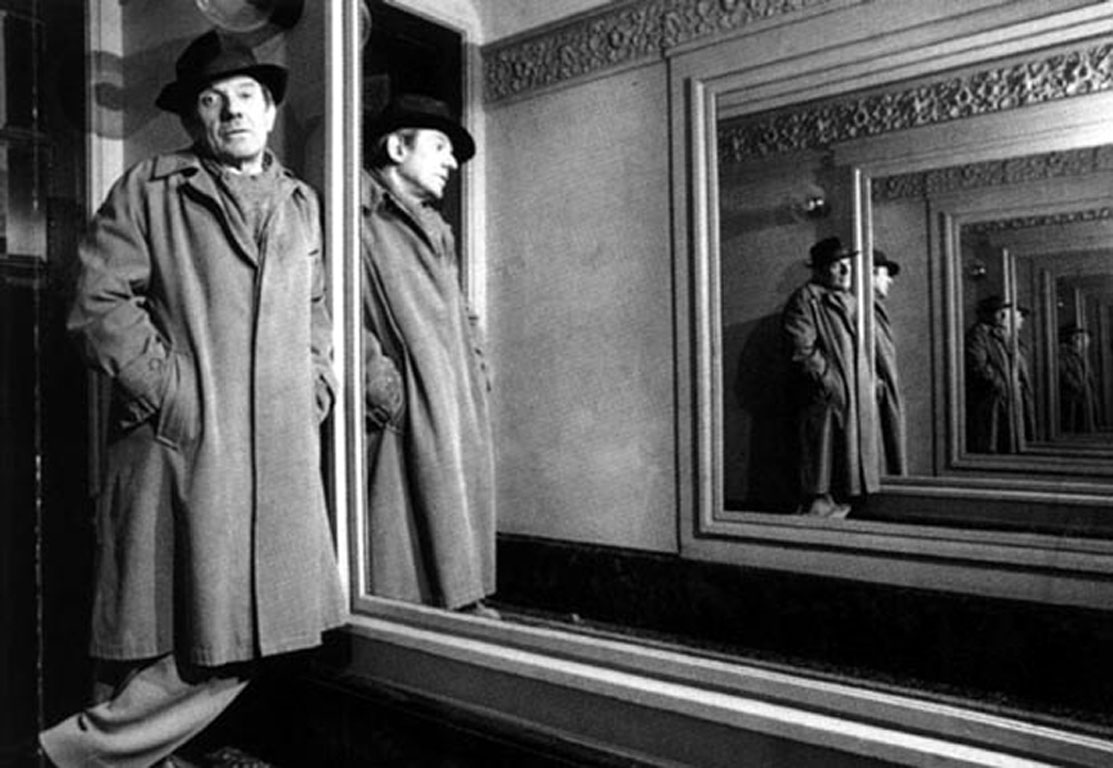
Image reproduced from http://thefunambulist.net/category/philosophy/deleuze/

Spinoza

‘Before becoming active, we must select and link together passions that increase our power of action. But such passions are related to images of objects that agree in nature with us […] if we consider their origin, common notions find in imagination the very condition of their formation […] thus these ideas may themselves in some respects be likened to images.’

Spinoza and Expressionism pp.294

Merleau-Ponty

‘I am not in space and time, nor do I conceive space and time; I belong to them, my body combines with them and includes them. The scope of this inclusion is the measure of that of my existence; but in any case it can never be all embracing. The space and time which I inhabit are always in their different ways indterminate horizons which contain other points of view. The synthesis of both time and space is a task that always has to be performed afresh.’

The Architectonic of Philosophy, Kavanaugh L, 2007:pp265

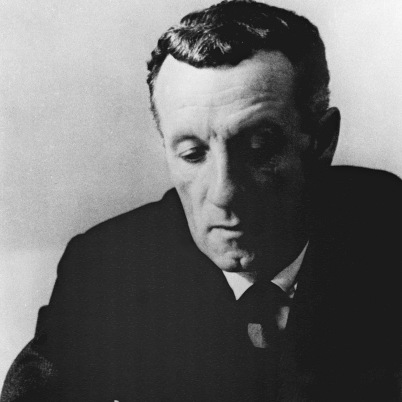
Image reproduced from http://www.biography.com/people/maurice-merleau-ponty-9406460