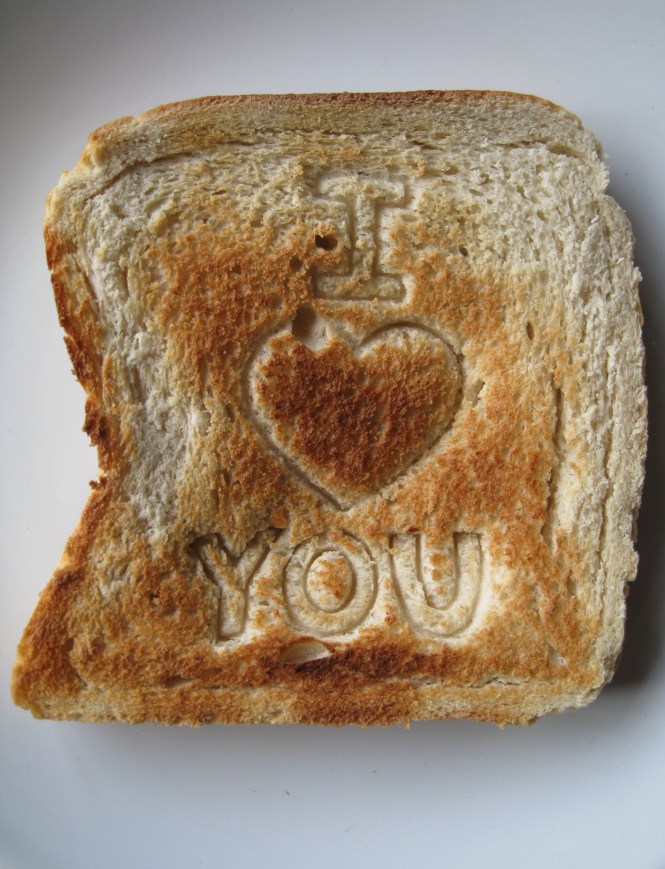
Currently Reading – Nadja, André Breton

Léona Delcourt (Nadja), 1920s. Source: Jacques Rigaut

“One of the most iconic works of the French surrealist movement begins with the question “Who am I?“

It is based on Breton’s actual interactions with a young woman, Nadja (actually Léona Camille Ghislaine Delacourt 1902–1941),[1] over the course of ten days, and is presumed to be a semi autobiographical description of his relationship with a patient of Pierre Janet. The book’s non-linear structure is grounded in reality by references to other Paris surrealists and includes 44 photographs.

The narrator, named André, ruminates on a number of Surrealist principles, before ultimately commencing on a narrative account, generally linear, of his brief ten-day affair with the titular character Nadja. She is so named “because in Russian it’s the beginning of the word hope, and because it’s only the beginning,” but her name might also evoke the Spanish “Nadie,” which means “No one.” The narrator becomes obsessed with this woman with whom he, upon a chance encounter while walking through the street, strikes up conversation immediately. He becomes reliant on daily rendezvous, occasionally culminating in romance (a kiss here and there). His true fascination with Nadja, however, is her vision of the world, which is often provoked through a discussion of the work of a number of Surrealist artists, including himself. While her understanding of existence subverts the rigidly authoritarian quotidian, it is later discovered that she is mad and belongs in a sanitarium. After Nadja reveals too many details of her past life, she in a sense becomes demystified, and the narrator realizes that he cannot continue their relationship.

In the remaining quarter of the text, André distances himself from her corporeal form and descends into a meandering rumination on her absence, so much so that one wonders if her absence offers him greater inspiration than does her presence. It is, after all, the reification and materialization of Nadja as an ordinary person that André ultimately despises and cannot tolerate to the point of inducing tears. There is something about the closeness once felt between the narrator and Nadja that indicated a depth beyond the limits of conscious rationality, waking logic, and sane operations of the everyday. There is something essentially “mysterious, improbable, unique, bewildering” about her; this reinforces the notion that their propinquity serves only to remind André of Nadja’s impenetrability. Her eventual recession into absence is the fundamental concern of this text, an absence that permits Nadja to live freely in André’s conscious and unconscious, seemingly unbridled, maintaining her paradoxical role as both present and absent. With Nadja’s past fixed within his own memory and consciousness, the narrator is awakened to the impenetrability of reality and perceives a particularly ghostly residue peeking from under its thin veil. Thus, he might better put into practice his theory of Surrealism, predicated on the dreaminess of the experience of reality within reality itself.”

Text quoted from https://en.wikipedia.org/wiki/Nadja_(novel) (accessed 28/11/22)

Image reproduced from https://artandthoughts.fr/2014/02/06/andre-bretons-nadja/ (accessed 28/11/22)

The Contingent Object

Richard Serra. Joe: Torqued Spiral, 2000. Weatherproof steel. 13 ½ x 45 x 36 ½ feet. Plate thickness: 2 inches. Collection of the Pulitzer Foundation for the Arts, Saint Louis. Photo by Dirk Reinartz. © 2008 Richard Serra/Artists Rights Society, New York.

Abstract forms and spatial experience

The function of copying or transcription

The play between abstraction and representation,

Equivalents – Fall

Artifacts and relics.

The cast and the copy; a function of authorship and reproduction.

Participation as a function of the original

Participation as an act of design or arrangement

Participation as a challenge to authority,

Participation as a vehicle for heterogeneity

Avalanche

Or performance

Of the fragmented mark

Of the symbolic equivalent

Of play between absence and presence

Performing the failure of the mark or trace of bodily action

The Shadow [Detective]

Fingerprint

The Shadow [Detective] collecting commodities and subjects as a basis for subsequent practices.

Slumber

Reproduction as a basis for quotation and reference

Reproduction as mediation and transformation of

Perpetual Photos and Plaster Surrogates

Originals decay or deteriorate.

Mortar and Pestle

Diagrams construct an ephemeral site in place of the object

Diagrams as a form of delay

Diagrams as a form of intent:  

Viewing Matters, Face to Face in the Public Toilets

‘May I Help You?’

‘Yes, I would like a bag of donuts and 3 urinals please.’

 ‘Not Here’

Avalanche

Lick, Lather and Gnaw at impermanence as the index

Lick, Lather and Gnaw at the contingent object

Lick, Lather and Gnaw at the experience

Lick Lather and Gnaw at the material evidence of authenticity

Gnaw at organic materials

Gnaw at chocolate, lard and soap

And yet still there looms a galvanized iron wall and a straight single tube where there dances the

Preserved Head of a Bearded Woman decorated with a String of Puppies

Puppies which need a lot of care and attention

What is this Strange Fruit [for David]?

Painted Bronze, Fountain Meltdown

The scrap metal process separates idea from material truth: an Island within an Island

No amount of Litanies can stop this Statement of Esthetic Withdrawal

The artist’s hand now becomes an object of desire along with Neon Templates of the Left Half of My Body Taken at Ten-Inch Intervals.

Drowned Monuments and Shared Fate; a function of external evidence like Every Building on the Sunset Strip

Short Circuit – Casting, Splashing, Torqued Ellipses

a simple ‘verb list’

Remade readymades,

Readymade readymades

Eureka!

Image reproduced from https://imagejournal.org/article/gravity-and-grace/ (accessed 25/11/22)

…it clings…

denise_grant 005b

Ob[l]ituary 2013 – 31st July 2017 (it’s not an end but it has to end)

“If you asked me now who I am, the only answer I could give with any certainty would be my name. For the rest: my loves, my hates, down even to my deepest desires, I can no longer say these emotions are my own, or stolen from those I once so desperately wished to be.” – Evelyn Waugh, Brideshead Revisited

you would not be there to witness the gift bestowed upon me…yet… Albert’s Hall was thronging, hundreds of feet were pounding and my partner punctuated the air…yet…that moment in the spotlight was silent and empty like your grave…

and in that breath I swallowed your death…

…and you cling…

 …yet…there would be no warm embrace, no look of confusion, elation, swelling pride, bewildered furrows, eyebrows acting in amazement, the joy of light and tears in your eyes, on your cheek, no nervous energy coursing round your bodies, no celebratory gustatory delights, no fire to alight your memory
…and you cling…

without speech, in silent voice, telling me how proud you were, how happy you were, whilst the worry lay buried, you would not, could not, speak to me about the future or how you would not, could not, support me

…and you cling…

you would never know I was there, that for one small significant moment the ‘kid’ did good, beyond your wildest dreams, beyond her wildest dreams, yet she would continue to bear this lack, lick this porous festering wound for the rest of her life in utter silence…open wounds are susceptible to infection…in the mud decrepit dangers lurk…

…and you cling…there is no vocabulary to hush this conflict…detached poems speak voices of the dead

….and you cling…and her fury renders her speechless

…and it clings…a stain on the tip of her tongue…a ghost building, silhouettes of words [where] a certain set of gestures are housed

…and it stings

like any clandestine affair my glasses aren’t rose tinted, they are cracked, splintered, broken, smothered in the dirt of you, black excretions of filth exuding through the cracks, the grime of you inhabits […] the stench of you burns […]

in my nostrils, rolls around like grit in my eyes, feels like ash in my mouth; I roll your name around lovingly on my tongue, caressing you

..and it clings…

i roll you around in my mouth and you grate, setting my teeth on the edge. The grime of you inhabits every pore, dirty, filthy little memories secreted away, skin seething like ants

…and you cling…and it stings

no amount of washing can erase your sweet aroma, your putrid stench, your incessant demands, your impenetrability, your indifference, your pushiness, your excess, we sold our souls for you, I had holes in my soles for you, I have holes in my soul for you

...and it stings…and you cling

still you beckoned me with your availability, your parlor games, your desire to cater to every whim, the promise to fulfill any fantasy. Your body gorged my vision, replete with the extent of you, I could never see the end of you, never see beyond you, never get outside you, never get inside you…yet…always the feeling of you moving inside me

…and it stings…and you cling…and it rings

every day over and over, no touch can sooth or break this fever, no difference between aching and waking. What happens if your today keeps exploding? What went wrong with tomorrow? Where is your moment? Has it gone?

and you cling…and you cling…and you cling…and it rings…and it stings…and the past […] and so it begins

i have not uttered a word of this to anyone, not even to myself…

...and you cling, and the nightingale sings, and the melancholy rings, and the past […] and the future stings…and the falling begins…

i have lost my place, i’ll never be myself again

After her…After him…After the Great Wen*

© Denise Startin 2016

*The Great Wen is a pejorative term coined by William Cobbett in 1830 in reference to London.

Save

Save

Save

Save

Save

Save

Save

Save

Save

Save

Save

Save

Save

Save

Save

Save

Save

Save

Save

Save

Save

Save

F.E.A.R = False Evidence Appearing Real

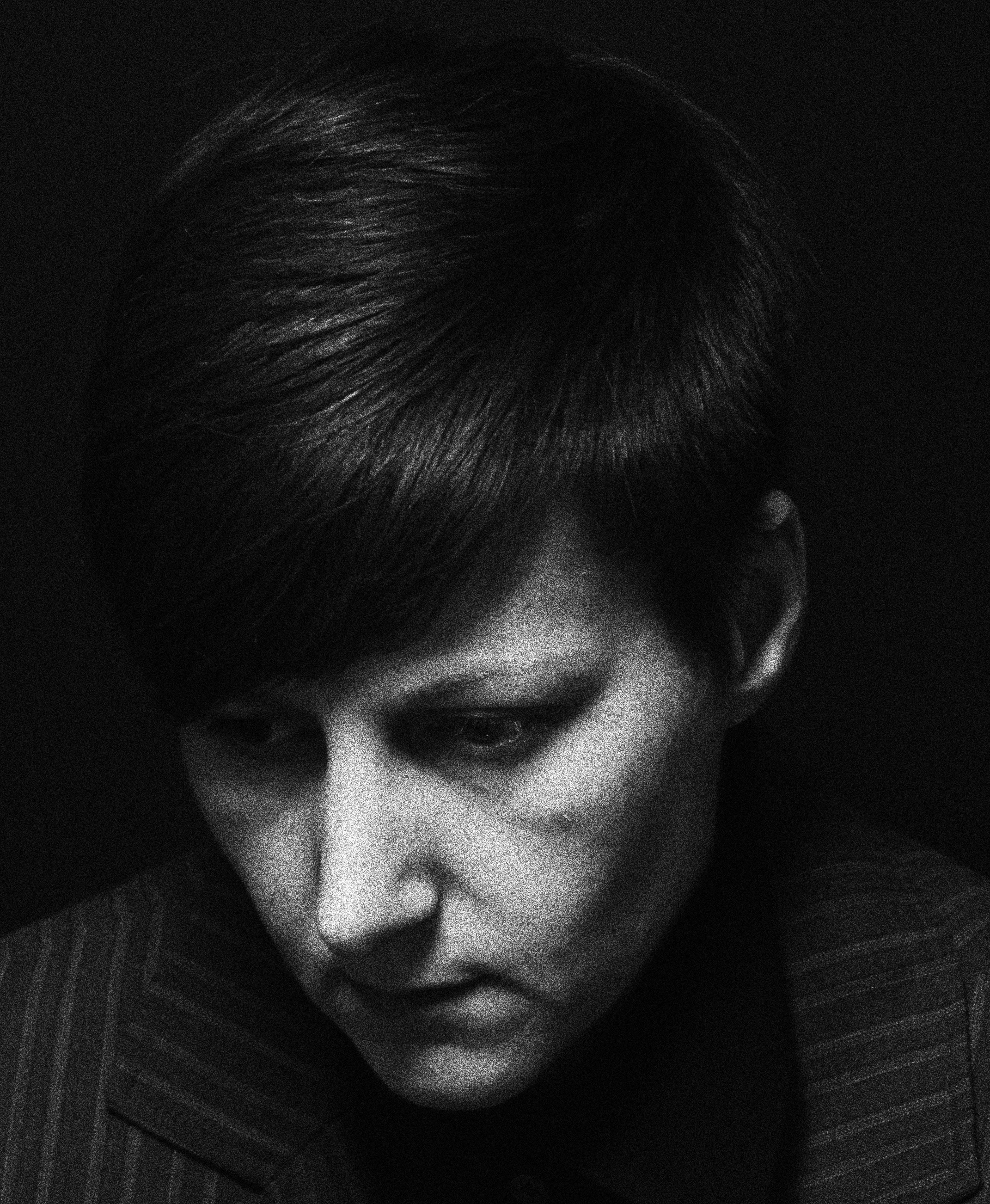
Untitled © Denise Startin

Untitled © Denise Startin

“I MUST NOT FEAR. FEAR IS THE MIND KILLER.
FEAR IS THE LITTLE-DEATH THAT BRINGS TOTAL OBLITERATION.

– I WILL FACE MY FEAR.

I WILL PERMIT IT TO PASS OVER AND THROUGH ME.
AND WHEN IT IS GONE I WILL TURN THE INNER EYE TO SEE ITS PATH.
WHERE THE FEAR HAS GONE THERE WILL BE NOTHING.

ONLY I WILL REMAIN.”

FRANK HERBERT – DUNE