Godland

Harshness is transformed into beauty and then terror by this extraordinary film from Icelandic director Hlynur Pálmason about a 19th-century Danish pastor sent to establish a new church on Iceland’s remote south-eastern coast. I left the cinema dazed and elated by its artistry; it is breathtaking in its epic scale, magnificent in its comprehension of landscape, piercingly uncomfortable in its human intimacy and severity. There is such superb compositional sense in the still life tableau shots and the almost archaeological sense of time, creating something deeply mysterious and unbearably sad. There are echoes of Werner Herzog’s Aguirre, the Wrath of God, Roland Joffé’s The Mission, Lisandro Alonso’s Jauja – and even Howard Hawks’s Red River.

Pálmason announces in the opening credits that the story was inspired by the supposed discovery in Iceland of seven glass-plate photographs of people and places taken there at the end of the 19th century. While the claim is a deadpan fiction, his screen has an almost square 1.33:1 aspect ratio, perhaps in honour of the still photograph motif. This smaller-size, in such contradistinction to the movie’s CinemaScope ambition and spectacle, gives a density to the viewing experience.

Elliott Crosset Hove plays Lucas, a highly-strung young clergyman instructed by his bishop to travel to a pioneer community in Iceland (then a Danish dependency), superintend the church-building and install himself as parish priest. Lucas makes this arduous journey first by sea and then overland with horses, taking among his luggage a huge and burdensome cross, climbing mountains and fording rivers with it. But Lucas has a secular-ethnographic project to go with the imperial Christian mission: he dreams of taking the first pictures there, capturing the people with new technology. His cumbersome tripod goes on his back, its three spiked feet poking up behind his head, a version of the points of a crucifix. The camera is Lucas’s ordeal as he visits his stations of the cross.

Driven to the edge of madness by hardship and physical pain, Lucas has a thwarted friendship – or something more – with his translator (Hilmar Gudjónsson), and finally finds an erotic connection with Anna (Vic Carmen Sonne), the daughter of the local parishioner, who takes him in. But his life is dominated by his cantankerous, contemptuous Icelandic guide Ragnar, a tough, weatherbeaten veteran tremendously played by Ingvar Sigurdsson, the cop from Pálmason’s previous film A White, White Day. Palmasón shows that Lucas is humanised and possibly even redeemed by his encounters at journey’s end, particularly his relationship with his quasi-host, the level-headed widower Carl (a shrewdly judged performance from Jacob Lohmann), who is bemused by Lucas’s self-harming decision to come to Iceland in the most difficult way possible, and then suspicious of his potential designs on his eldest daughter. Anna’s younger sister Ida (Ída Mekkín Hlynsdóttir) has an attractively emollient role and her relationship with Lucas is gentle and sweet and brings out the nearest Lucas has to warmth.

The film’s mightiest figure is the implacable Ragnar. Far from helping Lucas across the terrain, Ragnar embodies it; he is the very personification of its hostility. As an Icelander, he hates the high-handed Dane with his book-learning. Lucas comes in turn to hate and fear him. And yet Pálmason shows that Ragnar softens imperceptibly even as he sabotages Lucas; he needs someone to confess his terror of God to while exorcising a lifetime of buried rage. In Godland, these emotions are projected out on to the stunning, daunting landscape to the accompaniment of spine-meltingly beautiful choral music. That austere, boxy screen looks like a window on to a vast, unfathomable world.

https://www.theguardian.com/film/2023/apr/05/godland-review-hlynur-palmason (accessed 08/12/23)

Parallax

[“It’s dark in here.”] [“Who said that?”]

Silent gravel in the driveway, deafening clock in the hall, everything whispers anxiously. A back is turned to hide its increasing anxiety, compulsive shrugs walk away. In the distance doors exploded from their origin, nothing is being asked or explained. A serene velocity at the mirrors edge hovers in the silver of the ground. The ghostly sublime of a chair hovers in the background then I realised it never went away because it was never there in the first place. A wispy ballad suddenly bursts, brilliantly unique and uniquely brilliant. Lugubriously strings swayed, a power cable fell down, every act efficient as part of its attempt to keep itself alive. The controlled frenzy of the climax seemed all the more potent for its restraint. Compression of ground prevents working within deeper structures  where we dance the rain.

[Oscillating sensations]

An illusion that converts one material into the signifier for another along dislocated points of reference. This is the trap, an anterior document, a document created to sustain an image, an image contained in a scene, a scene without a referent. The wall urges you to remember your compulsion to forget, a psychic event reveals an excess of meaning, a riddle whose clues and secrets are hidden, suppressed by namelessness. This absent content is a fragment that shines like gold. There is no sound we can run to in this prototype theatre, we can only act out to the sides. Blind rage mixes with helter skelter theories and confessional interludes. Appetite runs while reason runs behind, at times this is immensely affecting….beware rollercoaster effects. 

A living creature seeks to fill an empty refuge  where one shining quality lends lustre to another or hides some glaring defect; the act of perception is an act of consumption in which we hazard nothing. Symptoms manifested in the smashing of  windows, the rehearsal of a ventriloquist act in adjoining rooms constructing an emotional temperature… I have tried to inflect my icon with a blank magic.

Parallel

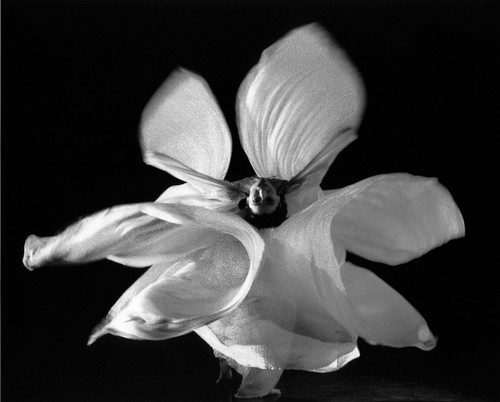
Loie Fuller

“Will I ever be parallel with myself? Can I ever be parallel with myself? I will never be parallel with myself. Do I need to be parallel with myself? I need to be parallel with myself. How important is it that I am parallel with myself? How do I know when I am in parallel with myself? Does it feel good when I am in parallel with myself? Am I complete when I am in parallel with myself? Is this it, when I’m in parallel with myself? When I’m in parallel with myself do I stay in parallel with myself forever? Does the history of myself become parallel with the history of the object kept? What is this hinge or bridge that one builds to become the self that is now?  

What is occurring in this falling [in], to-geth-er, a p a r t, away?  

What is this hinge or bridge that one builds to become the self that is now? Does the history of myself become parallel with the history of the object kept? When I’m in parallel with myself do I stay in parallel with myself forever? Is this it, when I’m in parallel with myself? Am I complete when I am in parallel with myself? Does it feel good when I am in parallel with myself? How do I know when I am in parallel with myself? How important is it that I am parallel with myself? I need to be parallel  with myself. Do I need to parallel with myself? I will never be parallel with myself. Can I ever be parallel with myself? Will I ever be parallel with myself?  Am I in parallel with myself right here, right now in this space with you?”

An Altered Landscape

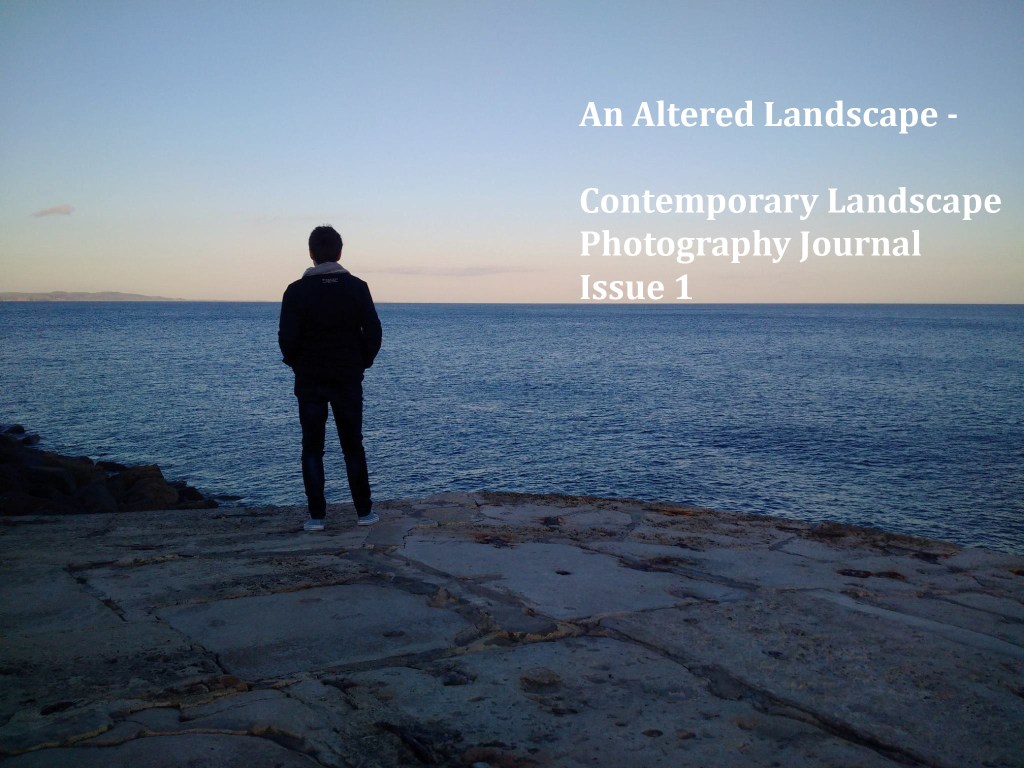
I am pleased to announce my work Hints for British Tourists has been chosen for Issue 1 of the Contemporary Landscape Photography Journal – An Altered Landscape. Hints for British Tourists is the re-staging and fictional expansion of a found pamphlet containing instructions for travel. Presented as photographic documentation the work is a meditation on travel, tourism, time and memory.