Episode 2: To Have and to Hold

I found a lock of hair in a glass case. The label said ‘Believed to be Emily’s’. Not Emily Brontë’s hair. Not a lock of hair. But hair, possibly Emily’s. The uncertainty is the most honest part. I think about the word believed, as if belief could bind the strands of hair to her scalp, as if glass could hold the heat of her breath. I hold it in my mind like a relic, a relic of a relic. Does the history of myself become parallel with the history of the object kept? What is this hinge or bridge that one builds to become the self that is now? I read Charlotte’s letters. I read Gaskell’s biography. I read the footnotes. I wonder how many women have been footnoted out of their own stories?

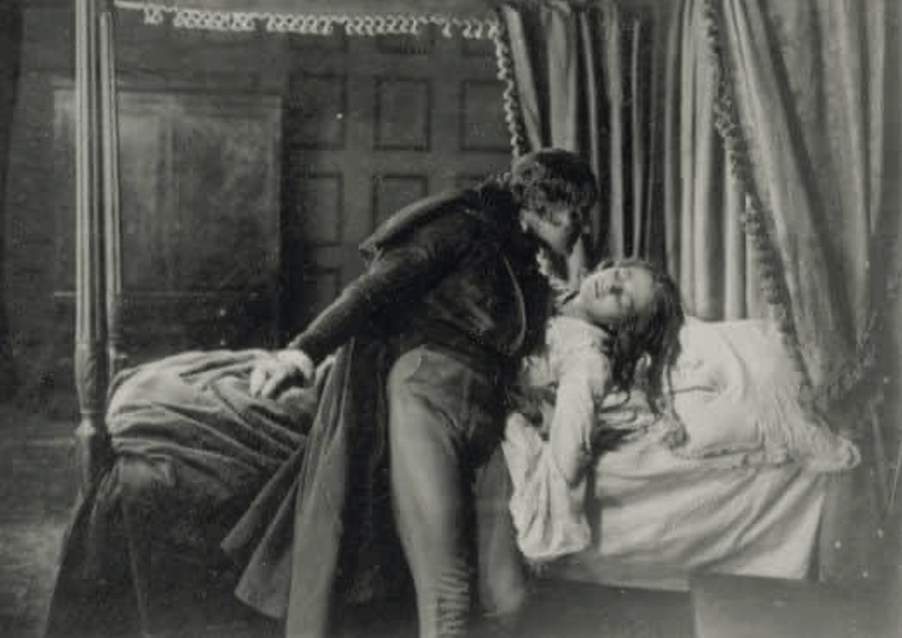
[Emily writes] She writes: “I have dreamed in my life, dreams that have stayed with me ever after, and changed my ideas; they have gone through and through me, like wine through water, and altered the colour of my mind.” I wonder if the same is true of objects. If they pass through us, staining the mind, altering the hue of memory. I wonder what Emily would have thought of her life behind glass. I wonder if Wuthering Heights was her own collection — of storms, of silences, of things too wild to hold. She never wanted to be seen, she wanted to vanish into the moor. And yet here she is, pinned like a butterfly. This is the trap: an anterior document, a document created to sustain an image, an image contained in a scene, a scene without a referent. What is occurring in this falling in together, apart, away?

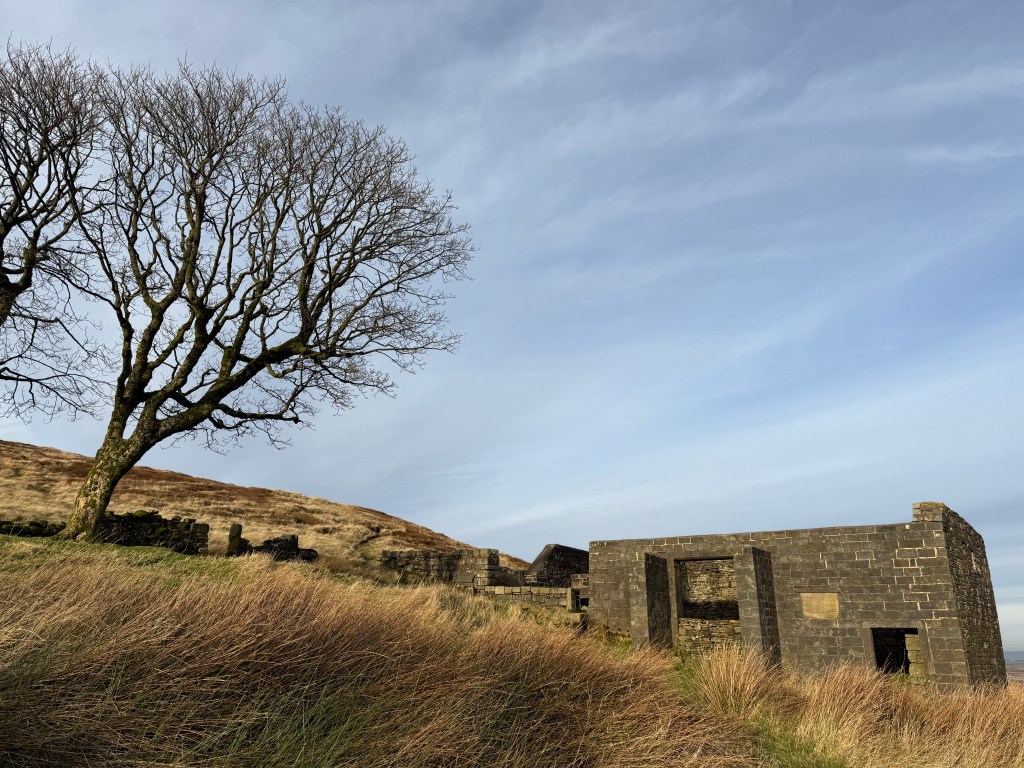
There is a desire to recuperate the forgotten, the abandoned, the fragmentary, the lost but it is a fool’s errand. I am both wild goose and chase. I wonder if collecting is a form of violence or is it a form of love? The human heart has hidden treasures, in silence sealed, in secret kept. Surely to collect is to love without reciprocity, to name without being known, to hold without being held. But the collection is not a sanctuary, it is a séance, a summoning of what refuses to stay buried. The photograph is torn, the letter is foxed, the lock of hair curls like a question mark. Even the archive has a body and it is failing. I hold a stone from the path to Top Withens, it feels like a breath caught in the throat. It fits in my palm like a secret. Or a wound. Or a promise I can’t keep. I don’t know if it’s hers. I don’t know if it’s mine. But I keep it. To have. To hold. To lose. And still, it slips through.

Walking, Writing and Performance

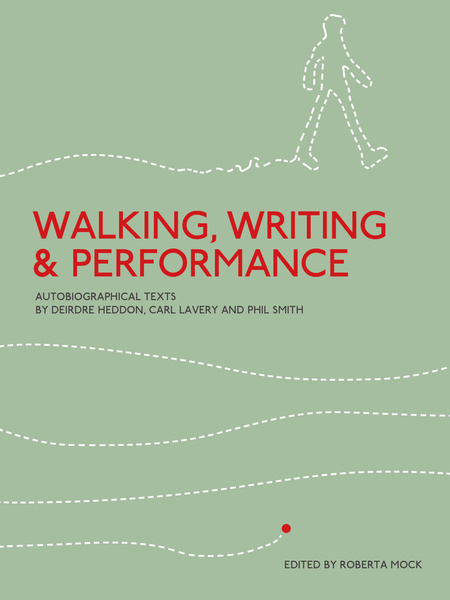
This collection charts three projects by performance-makers who generate autobiographical writing by taking walks. It includes performance texts and photographs, as well as essays by the artists that discuss processes of development, writing and performance.The Crab Walks and Crab Steps Aside are performances made by Phil Smith based on an initial exploratory walking of an area of South Devon where he was taken for childhood holidays and then on to Munich, Herm and San Gimignano. Both shows were accompanied by the distribution of maps seeking to provoke the audience to make their own exploratory walks. Mourning Walk is a performance that relates to a walk Carl Lavery made to mark the anniversary of his father’s death. Lavery shows how a secret can be both shared and hidden through the act of communication as he explores “an ethics of autobiographical performance”. In Tree, the result of a multi-disciplinary collaborative process, Dee Heddon occupies a single square foot of soil, and discovers that by standing stationary and looking closely she can travel across continents and centuries, making unexpected connections through an extroverted autobiographical practice.The work of all three artists, taken together and separately, raises important issues about memory, ritual, life writing, textuality, subjectivity, and site in performance.

Image and text reproduced from https://www.intellectbooks.com/walking-writing-and-performance (accessed 07/12/24)

Iain Sinclair and Psychogeography

“Iain Sinclair’s classic early text, Lud Heat, explores mysterious cartographic connections between the six Hawksmoor churches in London. In a unique fusion of prose and poetry, Sinclair invokes the mythic realm of King Lud, who according to legend was one of the founders of London, as well as the notion of psychic ‘heat’ as an enigmatic energy contained in many of its places. The book’s many different voices, including the incantatory whispers of Blake and Pound, combine in an amalgamated shamanic sense that somehow works to transcend time. The transmogrifying intonations and rhythms slowly incorporate new signs, symbols and sigils into the poem that further work on the senses. This was the work that set the ‘psychogeographical’ tone for much of Sinclair’s mature work, as well as inspiring novels like Hawksmoor and Gloriana from his peers Peter Ackroyd and Michael Moorcock, and Alan Moore’s From Hell.”

“In 1841 the poet John Clare fled an asylum in Epping Forest and walked eighty miles to his home in Northborough. He was searching for his lost love, Mary Joyce – a woman three years dead …In 2000 Iain Sinclair set out to recreate Clare’s walk away from madness. He wanted to understand his bond with the poet and escape the gravity of his London obsessions. Accompanied on this journey by his wife Anna (who shares a connection with Clare), the artist Brian Catling and magus Alan Moore – as well as a host of literary ghosts, both visionary and romantic – Sinclair’s quest for Clare becomes an investigation into madness, sanity and the nature of the poet’s muse.”

“Dining on Stones is Iain Sinclair’s sharp, edgy mystery of London and its environs Andrew Norton, poet, visionary and hack, is handed a mysterious package that sees him quit London and head out along the A13 on an as yet undefined quest. Holing up in a roadside hotel, unable to make sense of his search, he is haunted by ghosts: of the dead and the not-so dead; demanding wives and ex-wives; East End gangsters; even competing versions of himself. Shifting from Hackney to Hastings and all places in-between, while dissecting a man’s fractured psyche piece by piece, Dining on Stones is a puzzle and a quest – for both writer and reader.”

Text reproduced from Amazon and World of Books (accessed 14/11/24)

Currently Reading

A fictional account of a walking tour through England’s East Anglia, Sebald’s home for more than twenty years, The Rings of Saturn explores Britain’s pastoral and imperial past. Its ten strange and beautiful chapters, with their curious archive of photographs, consider dreams and reality. As the narrator walks, a company of ghosts keeps him company – Thomas Browne, Swinburne, Chateaubriand, Joseph Conrad, Borges – conductors between the past and present. The narrator meets lonely eccentrics inhabiting tumble-down mansions, and hears of the furious coastal battles of two world wars. He tells of far-off China and the introduction of the silk industry to Norwich. He walks to the now forsaken harbor where Conrad first set foot on English soil and visits the site of the once-great city of Dunwich, now sunk in the sea, where schools of herring swim. As the narrator catalogs the transmigration of whole worlds, the reader is mesmerized by change and oblivion, survival and memories. Blending fiction and history, Sebald’s art is as strange and beautiful as the rings of Saturn, created from fragments of shattered moons.”–Publisher’s description