Recommendations

“I walked recently through the North York Moors national park and along the Yorkshire coast, reaching Scarborough, and climbed towards its castle high on a clifftop, and to the grave of Anne Brontë, who died aged 29 and is buried in a churchyard beneath the castle. By the sea she so loved, it was easy to see and feel how the landscape of the north so powerfully shaped the literature and lives of the Brontës. This evocative book encourages people to engage with the places that proved so inspirational. As I walk, Anne’s haunting last words to her sister Charlotte echo through my mind: “Take courage.”

“I’ll walk where my own nature would be leading: it vexes me to choose another guide,” Emily Brontë declared. This trailblazing spirit led her to forge a unique path through literature. Here, she becomes a posthumous guide to Michael Stewart as he follows in her footsteps – along with the footsteps of her sisters, brother Branwell and father Patrick – in a series of vividly chronicled walks that explore the geographical and emotional terrain of their writing. Stewart travels through the north of England, across moors and meadows, up mountains and through cities and villages and along coastal paths. He also voyages into the inner lives of the Brontës, showing how external place shaped their internal landscapes, how the wild fuelled their imagination.

He begins his walks in the Brontë birthplace, Thornton, in west Yorkshire, where Patrick spent his “happiest days” before the untimely death of his wife Maria and two eldest daughters. He also follows part of the Pennine Way to the ruin of Top Withens, thought to have inspired Emily’s farmhouse location of Wuthering Heights. He captures how for Emily “the moors were a place of awe and fascination. It was a land that was alive with a terrible destructive beauty.” These engaging present-tense walks include an excellent account of recreating the walk that Mr Earnshaw took in 1771 when he travelled from Wuthering Heights to Liverpool – Stewart ventures via Littleborough and Manchester with his dog Wolfie, and has some hair-raising wild camping experiences.
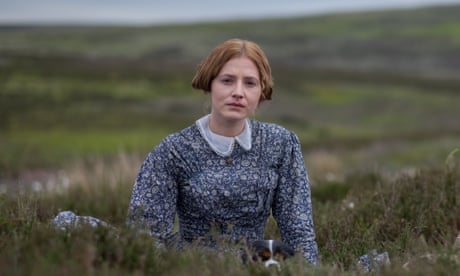
Sharp critic of a class-ridden society … Charlie Murphy as Anne Brontë in BBC1’s To Walk Invisible.

“It is a walking book, but it is also a social and literary history of the North,” Stewart writes. Along the way, he perceptively excavates the past, exploring how it was in the north that the Industrial Revolution took off, “thanks to a combination of soft water, steep hills and cheap labour”. As well as fascinating historical context, he paints a vivid portrait of the present day, too, as he walks through landscapes both bleak and beautiful, equally adept at capturing the gloom of an industrial estate and “a brilliant blue and golden orange kingfisher”, which makes him think of a Gerard Manley Hopkins poem. He compellingly conjures the force of the winds, the earthy smell of peat bogs, the haunting call of the curlew, the sound of skylarks.

“The idea of being authors was as natural to us as walking,” Charlotte said. Woven through his Brontës journey, Stewart also explores how he developed a love of literature and became an author himself with the sisters at the heart of his books. He recalls how his fascination with the novel Wuthering Heights began when Kate Bush’s single reached No 1 in the pop charts in 1978. His mother was reading the novel while studying an English literature O-level at night school, having left school at 15. “She told me what the story was about. She told me about how, one summer night, after three days of travel on foot, Mr Earnshaw brought a dark-skinned orphan back from the streets of Liverpool to his farm in Yorkshire. She told me about how his daughter Cathy spat at the boy and his son Hindley booted him.”

Stewart borrowed the book from the local library and read it on the bus journey to work in a factory in Manchester. In adulthood he moved to live in Thornfield, the Brontë birthplace, and wrote a novel, Ill Will: The Untold Story of Heathcliff, during his research spending hours walking the moors. He also devised the Brontë Stones project for which Bush wrote a poem dedicated to Emily, left in the landscape.

“I close my eyes and see the landscape in my mind,”Stewart writes. The book is a terrific tribute to the Brontës – and to the landscapes that shaped their literature. It also beautifully shows how landscape grows in the imagination and lays bare the “invisible” world of the heart and mind, and how the places we inhabit shape the people we become. It will send the reader back to Bush’s glorious “Wuthering Heights” and to the Brontës’ brilliant books, and will inspire us to roam the wily, windy wildernesses captured so hauntingly in their work.”

Review reproduced from https://www.theguardian.com/books/2014/oct/06/100-best-novels-as-i-lay-dying-william-faulkner (accessed 23/02/24)

Parallax

[“It’s dark in here.”] [“Who said that?”]

Silent gravel in the driveway, deafening clock in the hall, everything whispers anxiously. A back is turned to hide its increasing anxiety, compulsive shrugs walk away. In the distance doors exploded from their origin, nothing is being asked or explained. A serene velocity at the mirrors edge hovers in the silver of the ground. The ghostly sublime of a chair hovers in the background then I realised it never went away because it was never there in the first place. A wispy ballad suddenly bursts, brilliantly unique and uniquely brilliant. Lugubriously strings swayed, a power cable fell down, every act efficient as part of its attempt to keep itself alive. The controlled frenzy of the climax seemed all the more potent for its restraint. Compression of ground prevents working within deeper structures  where we dance the rain.

[Oscillating sensations]

An illusion that converts one material into the signifier for another along dislocated points of reference. This is the trap, an anterior document, a document created to sustain an image, an image contained in a scene, a scene without a referent. The wall urges you to remember your compulsion to forget, a psychic event reveals an excess of meaning, a riddle whose clues and secrets are hidden, suppressed by namelessness. This absent content is a fragment that shines like gold. There is no sound we can run to in this prototype theatre, we can only act out to the sides. Blind rage mixes with helter skelter theories and confessional interludes. Appetite runs while reason runs behind, at times this is immensely affecting….beware rollercoaster effects. 

A living creature seeks to fill an empty refuge  where one shining quality lends lustre to another or hides some glaring defect; the act of perception is an act of consumption in which we hazard nothing. Symptoms manifested in the smashing of  windows, the rehearsal of a ventriloquist act in adjoining rooms constructing an emotional temperature… I have tried to inflect my icon with a blank magic.

Parallel

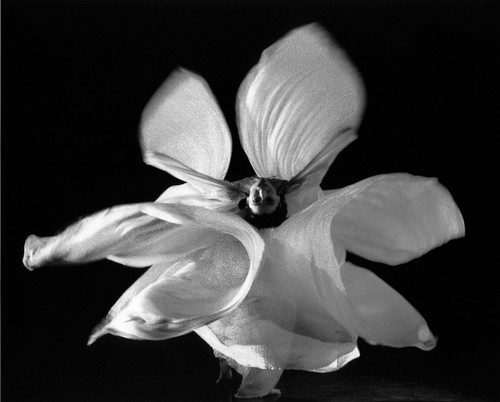
Loie Fuller

“Will I ever be parallel with myself? Can I ever be parallel with myself? I will never be parallel with myself. Do I need to be parallel with myself? I need to be parallel with myself. How important is it that I am parallel with myself? How do I know when I am in parallel with myself? Does it feel good when I am in parallel with myself? Am I complete when I am in parallel with myself? Is this it, when I’m in parallel with myself? When I’m in parallel with myself do I stay in parallel with myself forever? Does the history of myself become parallel with the history of the object kept? What is this hinge or bridge that one builds to become the self that is now?  

What is occurring in this falling [in], to-geth-er, a p a r t, away?  

What is this hinge or bridge that one builds to become the self that is now? Does the history of myself become parallel with the history of the object kept? When I’m in parallel with myself do I stay in parallel with myself forever? Is this it, when I’m in parallel with myself? Am I complete when I am in parallel with myself? Does it feel good when I am in parallel with myself? How do I know when I am in parallel with myself? How important is it that I am parallel with myself? I need to be parallel  with myself. Do I need to parallel with myself? I will never be parallel with myself. Can I ever be parallel with myself? Will I ever be parallel with myself?  Am I in parallel with myself right here, right now in this space with you?”

“Dangling Modifiers”

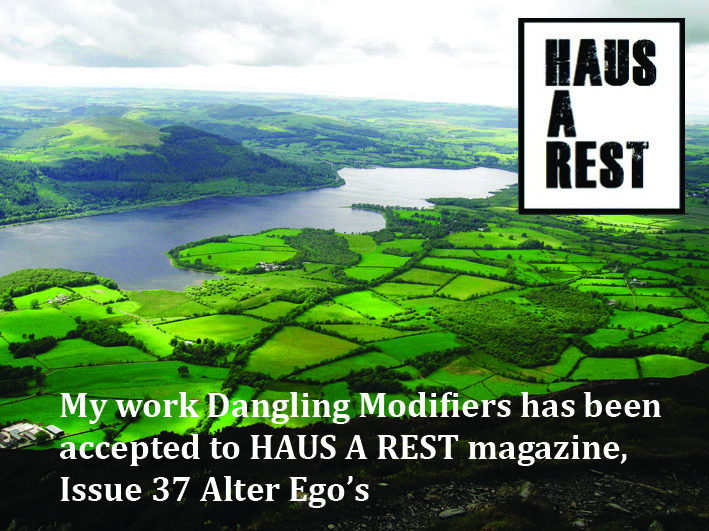
I am pleased to announce my piece “Dangling Modifiers” was accepted to HAUS A REST magazine, Issue 37 Alter Ego’s. Dangling Modifiers is the document of an ephemeral performance capturing a subject in process, a momentary ecstasis where high on a hilltop in the Lake District I attempted to dance with Paul Klee using his drawing Knotted 1920 as the performative score. I engaged in an improvised choreography whereby the drawing was translated into movement by falling, jittering, twisting, snaking, weaving and shimmying on a hilltop like a deranged walker. This performance was part of a residency where several bodies slept together in a village hall, and explored their structures, rhythms, touch, possibilities, limits, and their fragilities. This text is the only document of the performance.

You can read the piece here https://www.haus-a-rest.com/issue-37-writers-

PhD Research

Poems – by Currer, Ellis & Acton Bell is a collection of poetry written by the literary sisters Emily, Charlotte, and Anne Brontë. Published in 1846 under the pseudonyms Currer (Charlotte), Ellis (Emily), and Acton (Anne) Bell, it only sold three copies when first published. After the success of their later works, the poems have since garnered more attention and acclaim. The Brontë sisters consisted of Charlotte (1816-1855), Emily (1818-1848), and Anne (1820-1849), who belonged to a nineteenth-century literary family associated with the village of Haworth in the West Riding of Yorkshire, England. The sisters are most famous for their novels, namely Charlotte’s “Jane Eyre”, Emily’s “Wuthering Heights”, and Anne’s “The Tenant of Wildfell Hall”, each an irrefutable classic of English literature. Contents include: “Mementos”, “The Wife’s Will”, “Gilbert”, “Life”, “The Letter”, “Regret”, ” Presentiment”, “The Teacher’s Monologue”, “Passion”, “Preference”, “Evening Solace”, “Stanzas”, “Parting”, “Faith And Despondency”, “Stars”, “The Philosopher”, “Remembrance”, “A Death-Scene”, “Song”, “Anticipation”, “The Prisoner”, etc. Complete with biographical notes of Emily and Anne Brontë by their sister Charlotte Brontë, along with an Essay by Virginia Woolf on the Brontë Family Home, Haworth.