
Upcoming
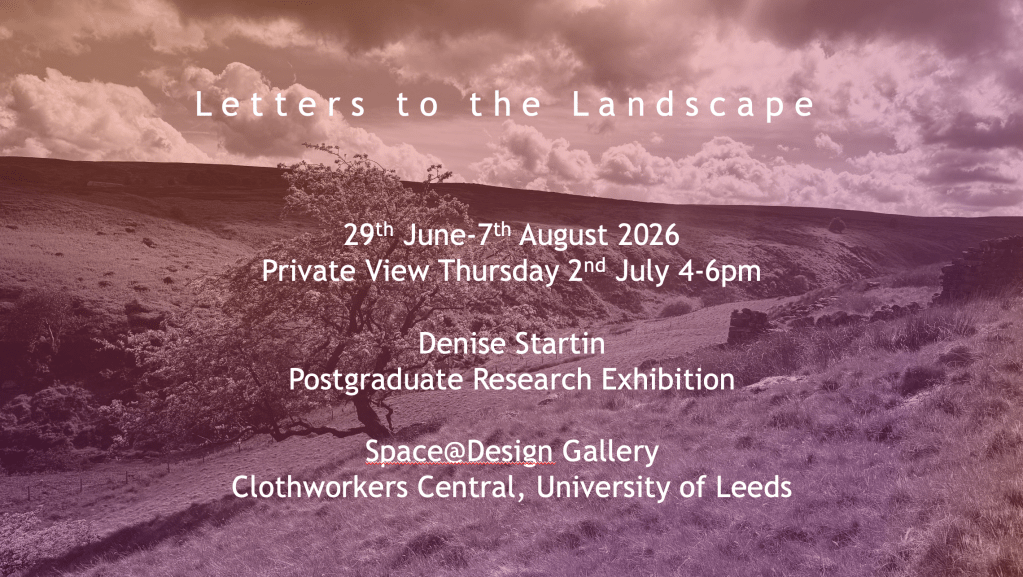
Letters to the Landscape investigates the entangled relations between Brontë Country and the imaginative terrain of Emily Brontë’s Wuthering Heights (1847), situating the moorland as a site where cultural memory, literary inheritance, and embodied fieldwork converge. Operating at the intersection of autobiography, polyphony, and archival drift, the project examines how landscapes function as repositories of memory and projection, and how they mediate the unstable boundaries between fact, fiction, and historical imagination.
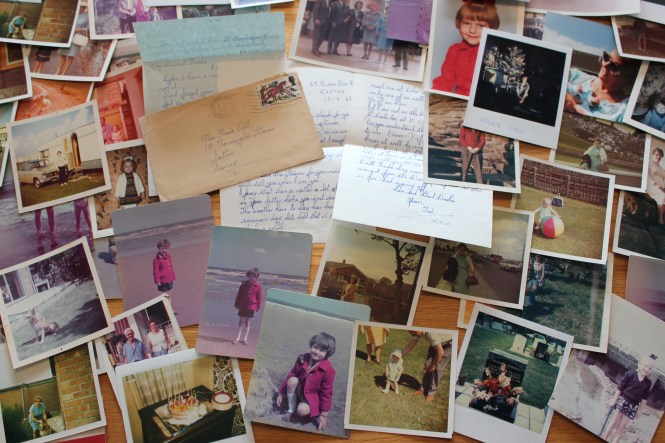
The research develops a mode of performative archival practice that reframes the archive as a haunted, migratory space rather than a fixed repository. Through the gathering and reanimation of postcards, letters, photographs, and field notes, the project mobilises archival fragments as gestures — provisional, affective, and resistant to evidentiary closure. These materials are activated through a choreography of walking, (re)collecting, re‑enacting, writing, reciting, and remembering, producing a form of speculative historiography in which remnants refuse to settle and meaning remains in motion.
The film adopts an episodic structure that mirrors the temporal and spatial logic of fieldwork. Its meditations and detours on place, collecting, pilgrimage, and return enact a methodology grounded in drift, repetition, and the recursive labour of remembering. The moorland is approached as landscape as witness — a terrain that absorbs and refracts cultural narratives, and a medium through which memory is contested, re‑authored, and felt.
Central to the research is the fictional artist duo Vale & Howlette, who operate as narrative interlocutors, structuring devices, and speculative tools. Their pseudonymous perspectives enable a slippage between researcher and archive, past and present, document and invention. As explorers, (mis)guides, and mnemonic surrogates, they facilitate a mode of inquiry that is materially grounded yet imaginatively expansive, allowing the archive to function as a site of resonance, resistance, and re-imagination.
The project privileges fragment, rupture, and affective resonance over institutional fixity, proposing a methodology of situated refusal — a way of inhabiting the archive and the Brontë imaginary without claiming it. Letters to the Landscape contributes to practice‑based research by articulating how embodied fieldwork, fictional apparatus, and archival speculation can generate new modes of historiographic thinking and new forms of artistic knowledge.
I am pleased to announce I will be presenting at the above conference in April, responding to the panel Art History: Facts and Fiction? My paper is entitled: Excavating the Ephemeral through Performative Archival Practice: Fact, Fiction and Fieldwork.
This panel explores a neglected tradition in art history: the strategic use of fictional elements in scholarly writing. We seek to examine the scope of this underexplored practice and consider the benefits, challenges and legacies of such creative strategies. The use of such elements in art history is long-standing. Vasari, for example, drew on Italian novelistic traditions in The Lives of the Artists to craft compelling historical narratives, an aspect of art historical writing that is often overlooked.
Yet, as Hayden White observed, the writing of history is ‘at once poetic, scientific and philosophical.’ Fictional perspectives have been employed in the humanities more widely to challenge prevailing conceptions and to address archival gaps. Examples include Clifford Geertz’s ‘faction,’ which addresses the fiction of the neutral anthropological observer and Saidiya Hartman’s critical fabulation, which blends historical research with critical theory and fictional narrative to amplify suppressed voices, particularly those of enslaved people. Donna Haraway’s speculative fabulation also needs to be mentioned here, which combines fact and fiction to explore complex issues and imagine possible futures, while Gerald Vizenor’s ‘Native American slipstream’ employs time travel and alternate realities to explore ‘Indigenous’ worldviews, perspectives on history and conception of futurity.
We welcome papers that explore fictional elements in art history, visual culture, and material culture studies, examining specific applications and/or their relationship to broader interdisciplinary trends in the humanities. We invite presentations on both personal experiences with employing such strategies as well as critical analysis of such work in the field.
Our Annual Conference brings together international research and critical debate about art, art history and visual cultures. This key annual event is an opportunity to keep up to date with new research, hear leading keynotes, broaden networks and exchange ideas.
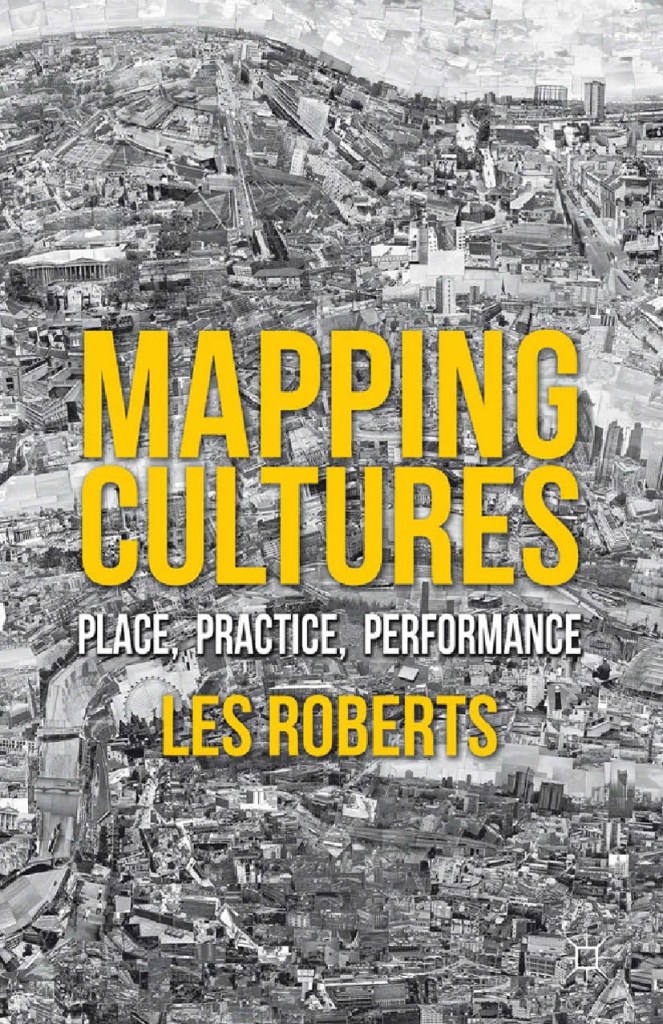
Mapping Cultures is a collection of essays exploring the diverse practices and cultures of mapping on the one hand, and the mapping of different forms of cultural practice on the other. The book draws on a wide range of disciplinary perspectives, including critical cartography, social anthropology, film and cultural studies, literary studies, art and visual culture, marketing, architecture, and popular music studies. Underpinning the theoretical and methodological approaches of all the contributions is a close engagement with mapping both as a mode of cultural and spatial analysis, and as a point of critical intersection in which ideas and practices of cartography are challenged, re-envisioned and brought into play with a broad range of theoretical perspectives. The collection is loosely organized around three main thematic sections: the cartographic textualities of space, landscape and place; mappings of performance and urban memoryscapes; and the practical, aesthetic and performative cartographies of critical spatial enquiry.

