Metamorphosis of the Feminine – The Bloody Chamber, Angela Carter and Kiki Smith

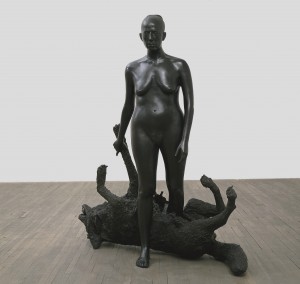
Kiki Smith, Rapture, 2001, Bronze, 67 1/4 x 62 x 26 1/2 inches Edition of 3

Kiki Smith, Rapture, 2001, Bronze, 67 1/4 x 62 x 26 1/2 inches
Edition of 3

“It’s a resurrection/birth story; ‘Little Red Riding Hood’ is a kind of resurrection/birth myth.”

The Bloody Chamber by Angela Carter is a collection of short stories in which Carter re-appropriates the fairy tale in the service of the feminine to re-work patriarchal constructions of gender from within the genre. Female protagonists constantly transgress the boundaries of the patriarchal and the received definition of the fairy tale moral in relation to the feminine (i.e the innocent female child and the sacrificial female). The primary story after which the collection is named is a re-working of Bluebeard by Charles Perrault and was influenced by Carter’s readings of the Marquis De Sade. Carter asserts that Sade “put pornography in the service of women, or, perhaps, allowed it to be invaded by an ideology not inimical to women …” [1]. This extremely brief presentation aims to highlights connections between the representation of female experience in Visual Art and The Bloody Chamber. Continue reading

The view from Nowhere: Dislocated, re-located, discombobulated

[sic] amore

[sic] amore (© Gammie)

Hello Every Bodies

Since I am now post MA, RCA life I have to confess the life element of this statement is sorely lacking due to the fact that I have re-located (to a house on the top of a hill in the middle of nowhere that feels positively rural after living in London for 3 years). I am simply left dangling post MA, RCA……Rather disconcertingly I can actually hear myself thinking, this re-location may be good for the soul but it may also be that I am slowly committing creative suicide. Anyway to take hold of one’s dislocation, discombobulation and direct one’s dangle I am exploring those areas of my practice that somehow never saw the light of day on the MA in practice but were fully present in the thesis (Barthes, Cixous, Kristeva, Irigaray et al). I am undertaking a Social Studies Certificate in Feminism, Gender and Sexuality in Literature and the study of women’s writing and how it has engaged with, and continues to transform and challenge the politics of gender, sex, and sexuality. Continue reading

100 Notes, 100 Thoughts, No.68 The Procedures of Love

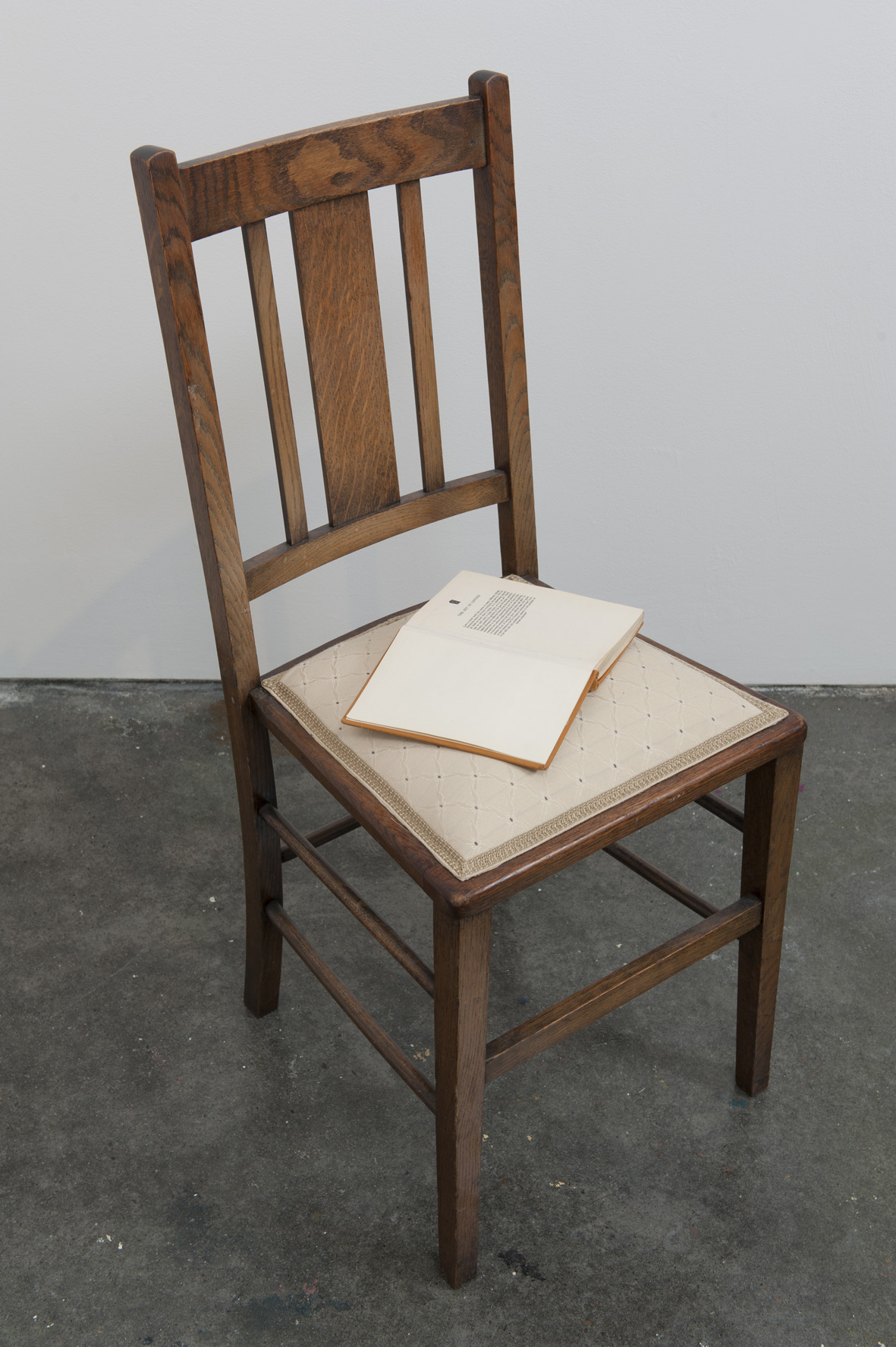
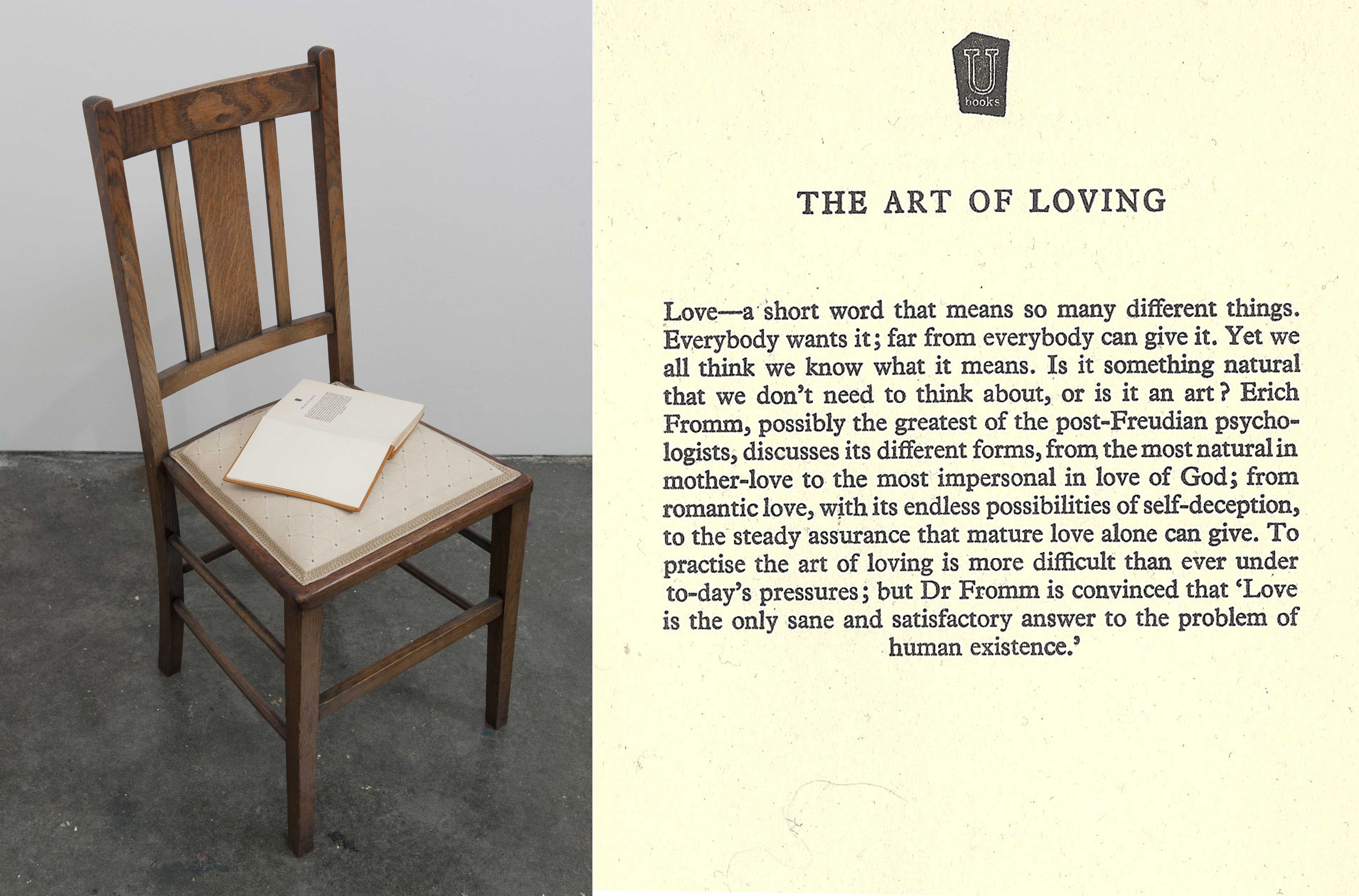
Reclaimed Antique Oak Chair, The Art of Loving by Erich Fromm

Reclaimed Antique Oak Chair, The Art of Loving by Erich Fromm. © Denise Startin Show RCA 2013

The Procedures of Love – No. 068 Michael Hardt, dOCUMENTA (13)

“To understand how love can be the central, constitutive mode and motor of politics” is philosopher Michael Hardt’s primary aim in his notebook. “The Procedures of Love” looks at love as a project with its own temporality, which involves processes of composition and decomposition. A political concept of love revives the revolutionary event and the ceremony of return, also outside the private realm. In this sense, love is examined as a phenomenon, which is intimate and social at the same time, embracing multiplicities and choreographing movements. Following Jean Genet (1910–1986), we must “open up the field” for events in a ritualized way, says Hardt, in order to introduce them and “make” them. In addition, a political connotation of the term “love” can only become effective through institutions that make the ceremonies of recurrence an experience. Ceremonies transform the temporality of events, as the recurrence of social encounter happens each time unforeseeably, despite familiar patterns.”

For an interview with Michael Hardt on the Politics of Love click here.

Text reproduced from http://d13.documenta.de/#publications/?tx_publications_pi1[details]=236&cHash=e1a46ff8d93e4312dde0787f269c42d1

The Victorian Tactile Imagination, Birkbeck 19-20th July 2013

tumblr_mhycwzaAkp1qjehcpo1_500

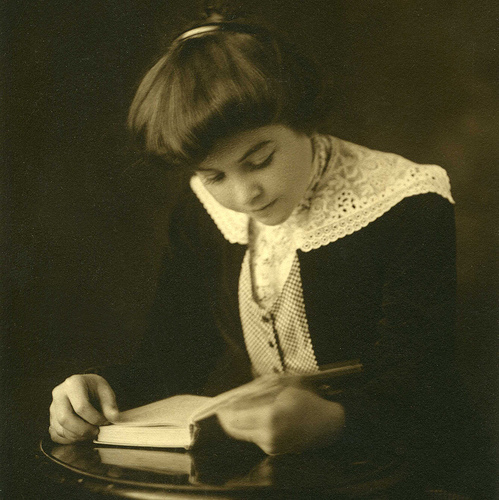
“This conference will explore the various ways in which the Victorians conceptualised, represented, experienced, performed and problematized touch. What does touch signal in nineteenth-century art and literature, and how is it variously coded? How are hands and skin – tactile appendages and surfaces – imagined in the period? By investigating the Victorian imaginary of touch, the conference will address and reappraise some of the key concepts and debates which have shaped Victorian studies in the past twenty years – in particular the emphasis on visuality as the dominant mode via which subjectivities and power were effected in the period: not least Jonathan Crary’s influential thesis that the nineteenth century witnessed a pervasive ‘separation of the senses’. The conference aims to investigate instead the workings of a more textured vision and reanimate the interoperability of sight and touch in nineteenth century culture.

The conference will also extend and build upon recent critical studies that have begun to explore nineteenth-century tactility in relation to material culture, bodies, and the emotions. By focusing closely on touch and tactility, it aims to establish whether and in what terms we might talk about a Victorian ‘aesthetics of touch’, and to explore how touch constructs and disrupts, for example, class and gender identities. It will also consider the historical trajectories of touch, asking, for example, in what ways does touch mark or blur the divide between Victorianism and Modernism?”

Text reproduced from http://www.bbk.ac.uk/english/our-research/research_cncs/our-events/the-victorian-tactile-imagination. Image reproduced from http://www.tumblr.com/tagged/victorian%20women