PhD Research

Poems – by Currer, Ellis & Acton Bell is a collection of poetry written by the literary sisters Emily, Charlotte, and Anne Brontë. Published in 1846 under the pseudonyms Currer (Charlotte), Ellis (Emily), and Acton (Anne) Bell, it only sold three copies when first published. After the success of their later works, the poems have since garnered more attention and acclaim. The Brontë sisters consisted of Charlotte (1816-1855), Emily (1818-1848), and Anne (1820-1849), who belonged to a nineteenth-century literary family associated with the village of Haworth in the West Riding of Yorkshire, England. The sisters are most famous for their novels, namely Charlotte’s “Jane Eyre”, Emily’s “Wuthering Heights”, and Anne’s “The Tenant of Wildfell Hall”, each an irrefutable classic of English literature. Contents include: “Mementos”, “The Wife’s Will”, “Gilbert”, “Life”, “The Letter”, “Regret”, ” Presentiment”, “The Teacher’s Monologue”, “Passion”, “Preference”, “Evening Solace”, “Stanzas”, “Parting”, “Faith And Despondency”, “Stars”, “The Philosopher”, “Remembrance”, “A Death-Scene”, “Song”, “Anticipation”, “The Prisoner”, etc. Complete with biographical notes of Emily and Anne Brontë by their sister Charlotte Brontë, along with an Essay by Virginia Woolf on the Brontë Family Home, Haworth.
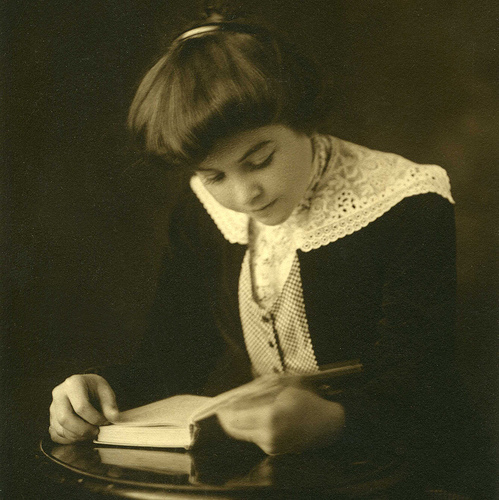
The Victorian Tactile Imagination, Birkbeck 19-20th July 2013

tumblr_mhycwzaAkp1qjehcpo1_500

“This conference will explore the various ways in which the Victorians conceptualised, represented, experienced, performed and problematized touch. What does touch signal in nineteenth-century art and literature, and how is it variously coded? How are hands and skin – tactile appendages and surfaces – imagined in the period? By investigating the Victorian imaginary of touch, the conference will address and reappraise some of the key concepts and debates which have shaped Victorian studies in the past twenty years – in particular the emphasis on visuality as the dominant mode via which subjectivities and power were effected in the period: not least Jonathan Crary’s influential thesis that the nineteenth century witnessed a pervasive ‘separation of the senses’. The conference aims to investigate instead the workings of a more textured vision and reanimate the interoperability of sight and touch in nineteenth century culture.

The conference will also extend and build upon recent critical studies that have begun to explore nineteenth-century tactility in relation to material culture, bodies, and the emotions. By focusing closely on touch and tactility, it aims to establish whether and in what terms we might talk about a Victorian ‘aesthetics of touch’, and to explore how touch constructs and disrupts, for example, class and gender identities. It will also consider the historical trajectories of touch, asking, for example, in what ways does touch mark or blur the divide between Victorianism and Modernism?”

Text reproduced from http://www.bbk.ac.uk/english/our-research/research_cncs/our-events/the-victorian-tactile-imagination. Image reproduced from http://www.tumblr.com/tagged/victorian%20women