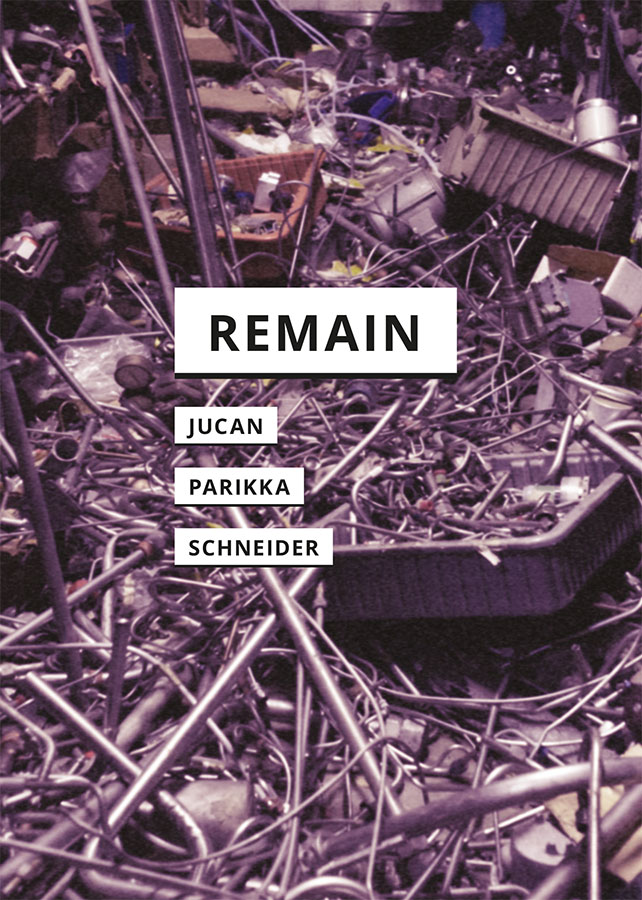
As new, as current, as now—this is primarily our understanding of technologies and their mediating of our social constructions. But past media and past practices continue to haunt and inflect our present social and technical arrangements. To trace this haunting, two performance theorists and a media theorist engage in this volume with remains and remainders of media cultures through the lenses of theatre and performance studies and of media archaeology. They address the temporalities and materialities of remain(s), the production of obsolescence in relation to the live body, and considerations of cultural memory as well as of infrastructure and the natural history of media culture.
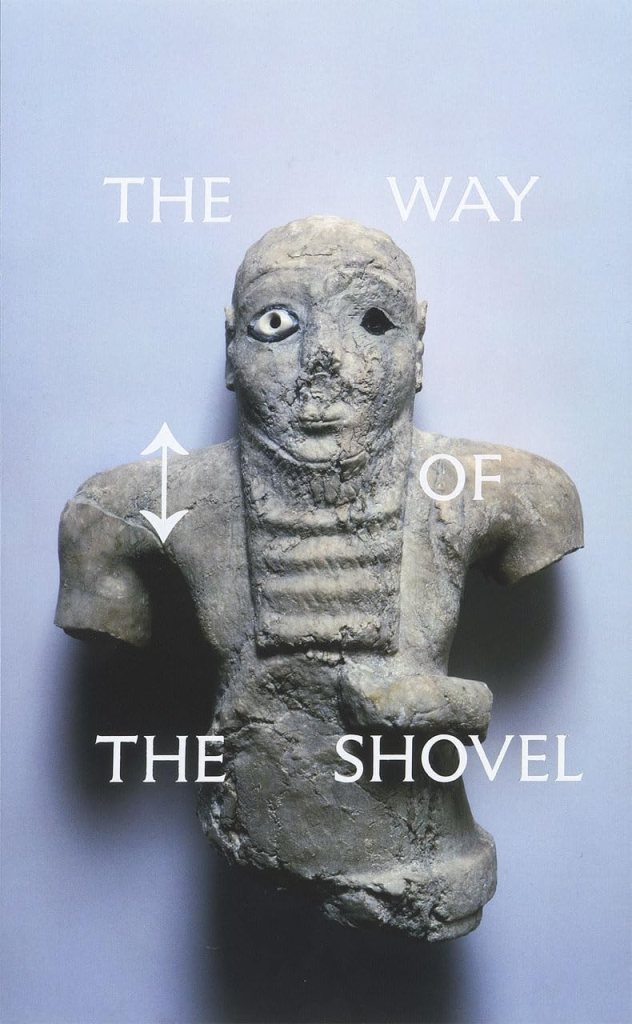
“Contemporary art is often obsessed with the new, but it has recently begun to turn to projects centering on research and delving into archives, all in the name of seeking and questioning historical truth. From filmmakers to sculptors to conceptualists, artists of all stripes are digging into the rubble of the past. In this catalog that accompanies an exhibition at the Museum of Contemporary Art Chicago in the fall of 2013, Dieter Roelstraete gathers a diverse range of international artists to explore the theme of melding archival and experiential modes of storytelling – what he calls “the archaeological imaginary” – particularly in the wake of 9/11. The Way of the Shovel offers a well-constructed balance among excursions into the situation of contemporary art, broad philosophical arguments around the subjects of history and the archive, and cultural analysis. Roelstraete’s opening essay maps the critical terrain, while Ian Alden Russell explores the roots of archaeology and its manifestations in twentieth-century art, Bill Brown examines artistic practices that involve historical artifacts and archival material, Sophie Berrebi offers a critique of the “document” as seen in art after the 1960s, and Diedrich Diederichsen writes on the monumentalization of history in European art. The book features work by both established and young artists, and thoughtful entries by Roelstraete accompany the exhibition catalog, along with statements from artists Moyra Davey, Rebecca Keller, Joachim Koester, Hito Steyerl, and Zin Taylor. The first exhibition to showcase this innovative approach to some of the most intriguing art of the past decade, The Way of the Shovel is indispensable for anyone seeking to understand the forces driving contemporary art.”
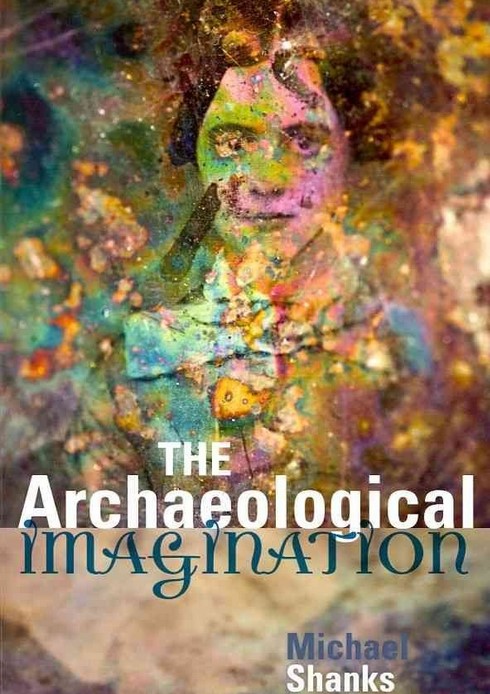
“Archaeology is a way of acting and thinking—about what is left of the past, about the temporality of what remains, about material and temporal processes to which people and their goods are subject, about the processes of order and entropy, of making, consuming and discarding at the heart of human experience. These elements, and the practices that archaeologists follow to uncover them, is the essence of the archaeological imagination.”
In his book Shanks offers the following definition: “To recreate the world behind the ruins on the land, to reanimate the people behind the shard of antique pottery, a fragment of the past: this is the work of the archaeological imagination, a creative impulse and faculty at the heart of archaeology, but also embedded in many cultural dispositions, discourses and institutions commonly associated with modernity. The archaeological imagination is rooted in a sensibility, a pervasive set of attitudes toward traces and remains, towards memory, time and temporality, the fabric of history.” pp.25
So I’m having to do some fairly niche reading for my PhD, which starts in October, since I am investigating a concept from the 16th-17th centuries although it’s provenance is much older than that and begins with Ptolemy’s Geographia (149AD). I am tracing it’s roots and development through British History and Antiquarianism (the historical precursor to Archaeology) which flourished in the 17th century and was part of an epic effort to map Britain, one famous example being William Camden’s Brittania (1586). With its overriding pre-occupation with place Camden’s Brittania, arranged chronologically, is a county-by-county survey of England & Wales which travels from the South to the North and represents a new ‘topographical-historical method’ (Mendyk 1986 cited in Rohl 2011: 22).
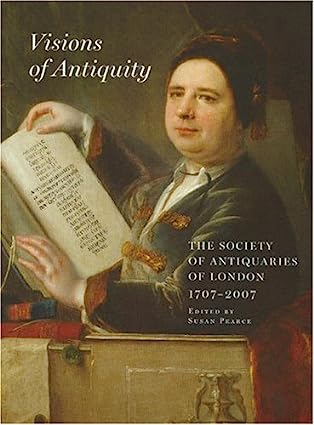
The book articulates the image of the antiquary in 17thC England, it’s relation to the graphic arts, art and antiquity in the long 19th Century, the interpetation of ancient objects, prehistory in the 19thC, nineteenth-century antiquarian culture and the project of archaeology, antiquaries and conservation of the landscape, grand excavation projects of the twentieth century and antiquaries and the professionalization of archaeology.
I am hard at work on my Bibliography and see some exciting trips to the Bodleian library, Oxford in the future.
Archaeological plan of the sanctuary of Asklepios on Kos (Kiapokas 1999, 164) superimposed on a satellite image.
“There are ten things that I can say about these deep maps.
First. Deep maps will be big – the issue of resolution and detail is addressed by size.
Second. Deep maps will be slow – they will naturally move at a speed of landform or weather.
Third. Deep maps will be sumptuous – they will embrace a range of different media or registers in a sophisticated and multilayered orchestration.
Fourth. Deep maps will only be achieved by the articulation of a variety of media – they will be genuinely multimedia, not as an aesthetic gesture or affectation, but as a practical necessity.
Fifth. Deep maps will have at least three basic elements – a graphic work (large, horizontal or vertical), a time-based media component (film, video, performance), and a database or archival system that remains open and unfinished.
Sixth. Deep maps will require the engagement of both the insider and outsider.
Seventh. Deep maps will bring together the amateur and the professional, the artist and the scientist, the official and the unofficial, the national and the local.
Eighth. Deep maps might only be possible and perhaps imaginable now – the digital processes at the heart of most modern media practices are allowing, for the first time, the easy combination of different orders of material – a new creative space.
Ninth. Deep maps will not seek the authority and objectivity of conventional cartography. They will be politicized, passionate, and partisan. They will involve negotiation and contestation over who and what is represented and how. They will give rise to debate about the documentation and portrayal of people and places.
Tenth. Deep maps will be unstable, fragile and temporary. They will be a conversation and not a statement.”

 denisestartin.co.uk