archives
AAH Symposium – Beyond the Visual

Re-citing the Archive: Fieldwork, Fiction and the Politics of Memory
This paper proposes a speculative feminist historiography that re-cites the archive through embodied fieldwork, fictional personae, and the politics of memory. Drawing on site-specific research, situated within Brontë Country, West Yorkshire I explore how sensory gestures—walking, touching, re-enacting—activate archival fragments and reframe landscape as a mnemonic field. The archive here is not a static repository but a haunted space—one that migrates across media, bodies, and temporalities. By foregrounding the performative dimensions of archival practice — writing, walking, re-collecting, recollecting, reciting, re-citing and remembering, the archive, in this context, is a multisensory terrain and a site of negotiation, where memory is contested, reanimated, and re-authored.
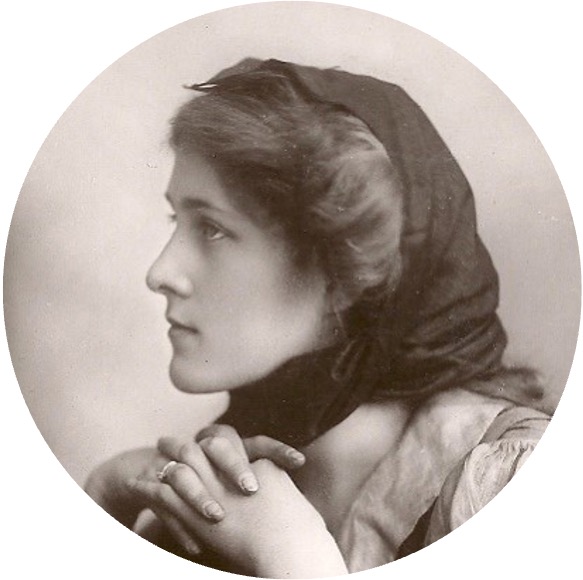
Central to this inquiry is the figure of Phyliss Dare, a fictional persona who enables a methodological slippage between researcher and archive, past and present, fact and fiction. Dare operates as both structuring device and speculative method, enabling a mode of citation that foregrounds absence, polyphony, and narrative slippage. Her presence as explorer, travel guide, writer, and photographer allows for a reframing of fieldwork as fictional encounter, one that destabilises linear historiography and opens space for embodied speculation. Through Dare the archive becomes a stage for performance, where gestures of citation are enacted rather than merely recorded.
Rather than reconstructing a lost narrative or a singular past, the work proposes a historiography in which archival gestures become vehicles of resonance, resistance and reanimation. By triangulating fieldwork, fiction, and citation, I argue for a historiographic practice that is both materially grounded and imaginatively expansive. This method foregrounds the politics of memory, whose stories are told, whose gestures are preserved, and insists on the archive as a live site of encounter. In doing so, it offers a framework for engaging with historical material not only recovered as evidence, but re-situated within a living, shifting terrain where bodies landscapes and narratives converge.
Fiona Tan – Footsteps 2023-2024

“Footsteps (2022) is a 97-minute video installation made by Fiona Tan at the invitation of Amsterdam’s Eye Filmmuseum. The work combines archival film footage from the museum’s collection with a voiceover of letters written to the artist by her father while she was a student in the late 1980s. Tan added a soundtrack to the film material that reflects the action and events taking place, bringing the century-old footage to life. As we listen to the artist’s father (voiced by actor Ian Henderson) write about the fall of the Soviet Union, civil unrest in China, and the everyday lives of the artist’s relatives in Australia, we watch men and women toil the land and harvest the sea, we see cows in the field and old men smoking pipes, sailboats moving across the horizon, and the emergence of industry and urbanisation.
Assembled from hundreds of hours of footage spanning 1896 to the late 1920s, Footsteps begins with the haunting sound of a church bell accompanied by a sequence of moving images: sun and clouds, a crowd on a beach, a young girl in traditional Dutch dress, vividly hand-coloured, and the gloomy churn of the sea. Soon we hear the voice of a man utter ‘August 2nd, 1988’, a date that is almost a century after the earliest footage in the film, followed by the first of the letters from Tan’s father. A tapestry of life in early twentieth-century Netherlands unfolds, after about 30 minutes we witness the rise of factories and technology on an industrial scale, the inevitable creep of modernity. The film portrays a society being overwhelmed by enormous, relentless machines and the need to feed and service them. The letters to the artist from her father discuss their family, the global political situation, his own memories of learning Dutch geography and history while growing up in Indonesia while also encouraging the young Fiona Tan as she goes through periods of self-doubt.
Although the footage captures a nation as it makes a transition from an agrarian to an industrial society, what emerges from the film is not a portrait of the Netherlands at the dawn of modernity nor an autobiography of the artist, but a poignant study of how anyone might contend with political and technological change. Although the letters are intimate, they are also as historically compelling as the archival footage. The juxtaposition of the personal and global invites the viewer to reflect on both the significance and the ephemerality of all lives – at the dawn of the century, in the recent past, and in the present day.
Exhibited alongside Footsteps are two prints from Tan’s Technicolor Dreaming series, which relate closely to the film. Tan selected the images for the prints by instinct; some of them are taken from the film, others from the Eye Filmmuseum’s archive. The images have an ethnographical quality, capturing daily life in the Netherlands in the early 20th century. The prints are informed by Tan’s interest in early filmmakers’ obsession with colour, when frames were hand coloured in a lengthy, elaborate process using small brushes and stencils. Unlike in printmaking, perfect registration was not possible. Likewise, in the prints, ‘the colours have their own life, dancing on top of the image’, as Tan describes it. The prints were created in a two-step process: first the black-and-white photographic material was printed from a photogravure plate; in a second step, carefully considered selections of the images were printed in colour from a second, smaller copper plate hand-painted using spit bite.”

Images and text reproduced from https://www.frithstreetgallery.com/exhibitions/223-fiona-tan-footsteps/ (accessed 18/01/24)
New Reading
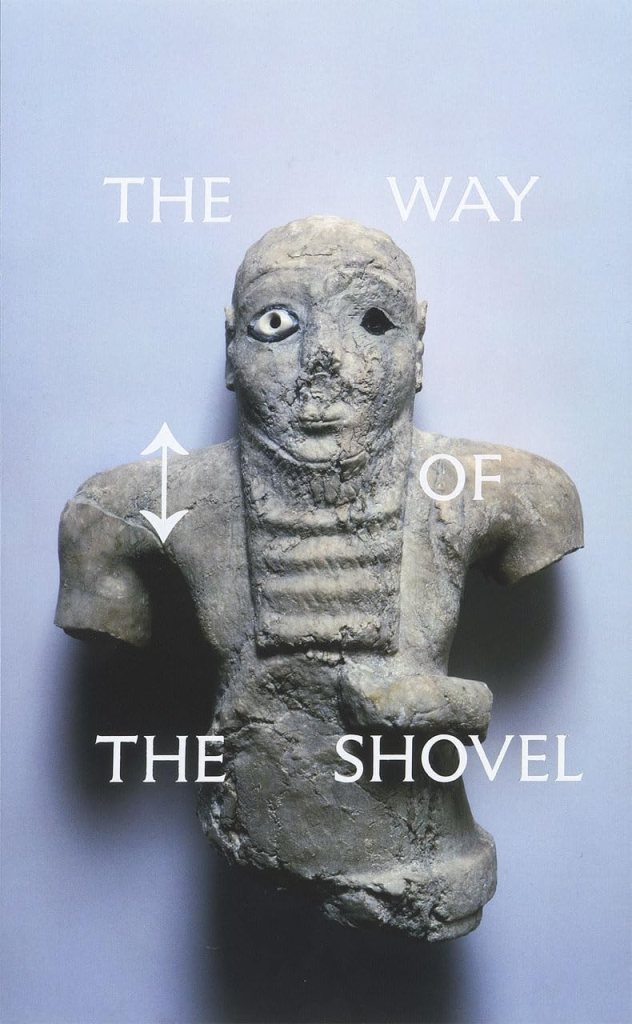
“Contemporary art is often obsessed with the new, but it has recently begun to turn to projects centering on research and delving into archives, all in the name of seeking and questioning historical truth. From filmmakers to sculptors to conceptualists, artists of all stripes are digging into the rubble of the past. In this catalog that accompanies an exhibition at the Museum of Contemporary Art Chicago in the fall of 2013, Dieter Roelstraete gathers a diverse range of international artists to explore the theme of melding archival and experiential modes of storytelling – what he calls “the archaeological imaginary” – particularly in the wake of 9/11. The Way of the Shovel offers a well-constructed balance among excursions into the situation of contemporary art, broad philosophical arguments around the subjects of history and the archive, and cultural analysis. Roelstraete’s opening essay maps the critical terrain, while Ian Alden Russell explores the roots of archaeology and its manifestations in twentieth-century art, Bill Brown examines artistic practices that involve historical artifacts and archival material, Sophie Berrebi offers a critique of the “document” as seen in art after the 1960s, and Diedrich Diederichsen writes on the monumentalization of history in European art. The book features work by both established and young artists, and thoughtful entries by Roelstraete accompany the exhibition catalog, along with statements from artists Moyra Davey, Rebecca Keller, Joachim Koester, Hito Steyerl, and Zin Taylor. The first exhibition to showcase this innovative approach to some of the most intriguing art of the past decade, The Way of the Shovel is indispensable for anyone seeking to understand the forces driving contemporary art.”
 denisestartin.co.uk