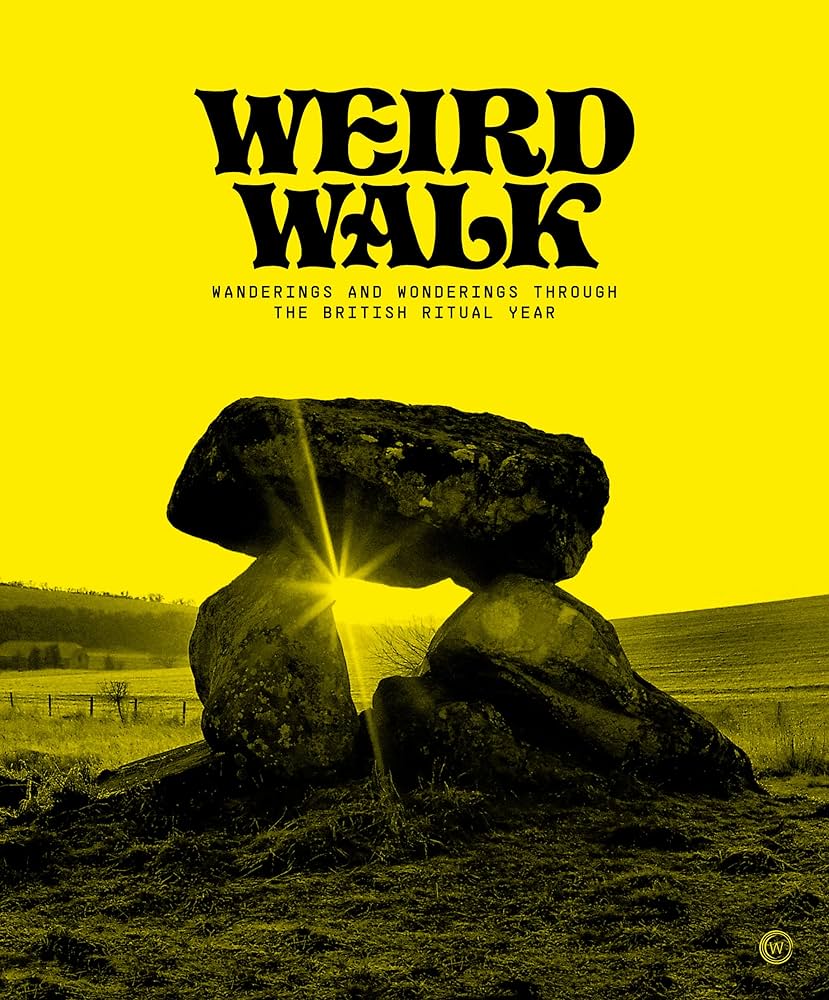
By walking the ancient landscape of Britain and following the wheel of the year, we can reconnect to our shared folklore, to the seasons and to nature. Let this hauntological gazetteer guide you through our enchanted places and strange seasonal rituals. SPRING- Watch the equinox sunrise light up the floating capstone of Pentre Ifan and connect with the Cailleach at the shrine of Tigh nam Bodach in the remote Highlands. SUMMER- Feel the resonance of ancient raves and rituals in the stone circles of southwest England’s Stanton Drew, Avebury and the Hurlers. AUTUMN- Bring in the harvest with the old gods at Coldrum Long Barrow, and brave the ghosts on misty Blakeney Point. WINTER- Make merry at the Chepstow wassail, and listen out for the sunken church bells of the lost medieval city of Dunwich. The first book by iconic zine creators and cultural phenomenon Weird Walk. This is a superbly designed guide to Britain’s strange and ancient places, to standing stones and pagan rituals, and to the process of re-enchantment via weird walking.
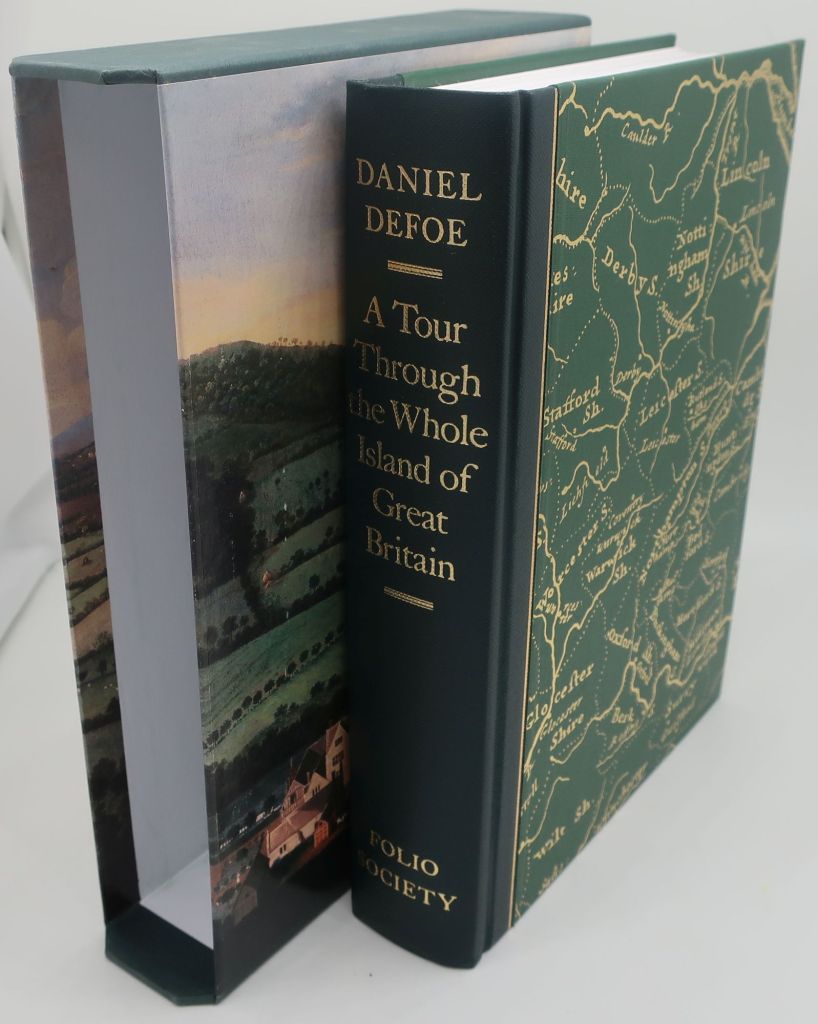
“Britain in the early eighteenth century: an introduction that is both informative and imaginative, reliable and entertaining. To the tradition of travel writing Daniel Defoe brings a lifetime’s experience as a businessman, soldier, economic journalist and spy, and his Tour (1724-6) is an invaluable source of social and economic history. But this book is far more than a beautifully written guide to Britain just before the industrial revolution, for Defoe possessed a wild, inventive streak that endows his work with astonishing energy and tension, and the Tour is his deeply imaginative response to a brave new economic world. By employing his skills as a chronicler, a polemicist and a creative writer keenly sensitive to the depredations of time, Defoe more than achieves his aim of rendering ‘the present state’ of Britain.”
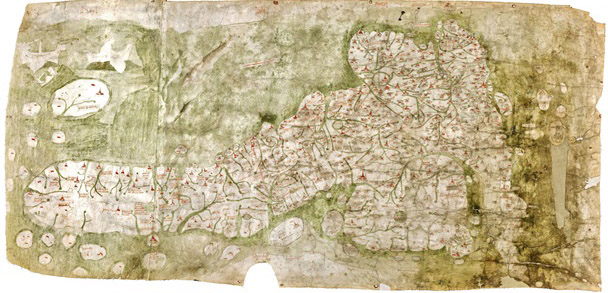
“The printer and publisher John Nichols described Richard Gough in a long tribute after his death as ‘the Father of British Topography’. More recently scholars have recognised him as the leading antiquary of his day. Gough was one of the first to recognise the importance of old maps in helping to understand the history of particular places and wrote a pioneering account of the development of British maps in the second edition of his British Topography (1780). This is the oldest map of Britain at the Bodleian Library, Oxfordshire (exact date unknown, approx. 14th Century). In addition, the topographical collection bequeathed by Gough to Oxford University in 1809 is one of the most important in the Bodleian Library, outstanding for the visual material received as well as the printed books and manuscripts. Among the maps is the earliest depiction of Britain in recognisable form (now known as the Gough Map) and large portions of the unique Sheldon tapestry map woven in the 1590s.
His Anecdotes of British Topography (1768) was the first comprehensive national bibliography of the subject and a remarkable achievement for one individual. It provided a gazetteer of sources relating to the local history and antiquities of each county, covering not just printed books and manuscripts but also maps and illustrations often with comments about dates, artists and when he acquired items. An enlarged second edition in two volumes was published in 1780 under the title of British Topography. Gough was one of the first to recognise the importance of old maps in helping to understand the history of particular places and wrote a pioneering account of the development of British maps in the second edition of his British Topography (1780).”
1] Richard Gough, British Topography. Or, an Historical Account of what has been done for Illustrating the Topographical Antiquities of Great Britain and Ireland, London, J. Nichols and T. Payne, 1780. The completed part of the 3rd edition was destroyed in 1808 by a fire in Nichol’s printing works. However the Bodleian has a copy of the 2nd edition with useful later additions by Gough (Gough Gen.Top. 363–5).
2] Peter Barber, ‘King George III’s topographical collection: a Georgian view of Britain and the world’, in Kim Sloan and Andrew Burnett (eds), Enlightenment: Discovering the World in the Eighteenth Century, London, British Museum, 2003, pp. 158–65.
3] The most useful guide to Gough’s topographical drawings is Maurice Barley, A Guide to British Topographical Collections, [London], Council for British Archaeology, 1974, pp. 95–8.
William Hole’s frontispiece (from the Folger Shakespeare Library [http://luna.folger.edu/luna/servlet/s/7ihql3])
“Poly-Olbion is an expansive poetic journey through the landscape, history, traditions and customs of early modern England and Wales. Originally published in two parts (1612, 1622), it is also a richly collaborative work: Michael Drayton’s 15,000-line poem, which navigates the nation county by county, is embellished by William Hole’s thirty exquisite engraved county maps, and accompanied for its first eighteen ‘songs’ by the young John Selden’s remarkable prose ‘Illustrations’. Drayton was a close associate of Shakespeare and Ben Jonson, and his Poly-Olbion crystallizes early modern ideas of nationalism, history and memory.”
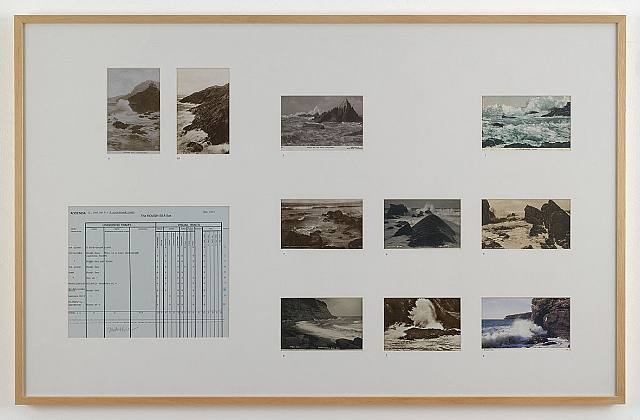
Susan Hiller, Addenda to Dedicated to the Unknown Artists: Addenda II, Section 6: A rock-bound coast 1977
Following on from the last exhibition The World Turned Upside Down, Buster Keaton, Sculpture and the Absurd the next touring Exhibition at the Mead Gallery opening 17th Jan 2014, Warwick Arts Centre is Uncommon Ground, “the most comprehensive exhibition of British Land Art to date. Featuring the work of 24 of some of the most important artists and artist groups working in the UK between the mid-1960s and late-1970s, the exhibition demonstrates how the term ‘Landscape’ was questioned and transformed by artists during this period to become the ground for radical artistic experiment.” The exhibition has been curated Joy Sleeman (Slade), Writer and Curator Ben Tuffnell (Author of Land Art), Nicholas Alfrey (University of Nottingham). Artists featured include Hamish Fulton, Richard Long and Ian Hamilton Finlay. This exhibition dovetails with current reading regarding Feminism, Sexuality and Gender in Literature, Alice Munro: Lives of Girls and Women, where the Landscape itself is character, backdrop and conduit, the route by which the narrative travels although of course women are almost conspicuously absent from this exhibition save one, Susan Hiller, whose incorporation could be perceived as curatorially problematic.

 denisestartin.co.uk