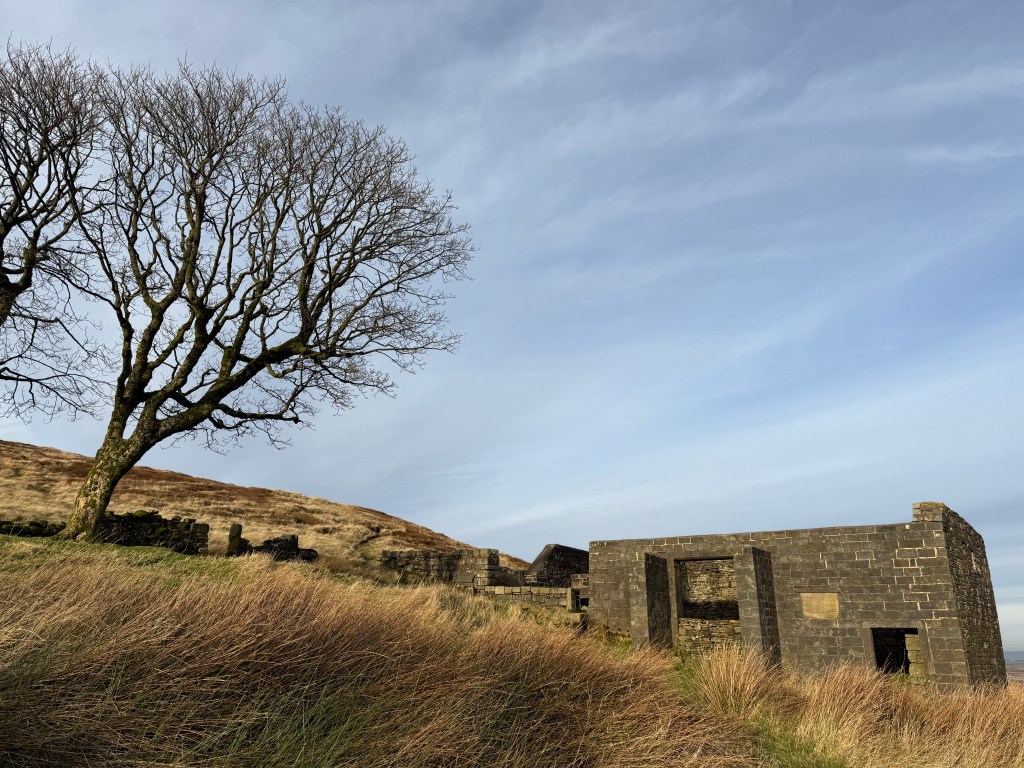
The ice on the path snapped, crackled and splintered underneath the soles of their walking boots. The ground was frozen solid. She felt as though she were walking with two blocks of ice strapped to her feet. She could feel the ground in her knees. The sound of her boots walking on frozen ground was like the crunching of bones. The chill of the wind sweeping across the moors caused her teeth to chatter in her head like a pair of castanets. Emily writes, she writes: “I lingered under that benign sky watched the moths fluttering among the heather and harebells, listened to the soft wind breathing through the grass”. I remembered there is a spot mid barren hills where winter howls still, bringing a chill to the marrow.
By this time her toes were numb and every step was agony, her boots were rather too small, she made a reluctant pilgrim. She had lost track of time by stopping to take photographs on the way but photographs of what exactly? A seemingly vast, empty and undifferentiated landscape that she experienced as a rupture or a disjunction. The landscape was not easy to assimilate. it remained resolute and other. She was in the middle of it but couldn’t get into it, so she remained steadfastly on it for the duration of the walk. Time and space expanded in multiple directions on the Moors like the ripples on a pond. Three hours of walking felt like three years of living. The closer they got to Top Withens the further away it seemed to. Be. For an age it remained a tiny speck on the horizon.
He disappeared over a mound and briefly she found herself alone with naught but a wuthering wind whistling around her eardrums and flapping against her face. How exactly was she to report any of this back to George? She was famished.
On the 18th of May 1893, Top Withens was struck by lightning during a thunderstorm. Holes were made in the wall, the roof was partially torn off, flags were cracked, and around 30 windows were almost completely removed. A portion of slate was thrown far from the house by the wind, and in the kitchen the blade of a knife had been fused by the heat.
 denisestartin.co.uk