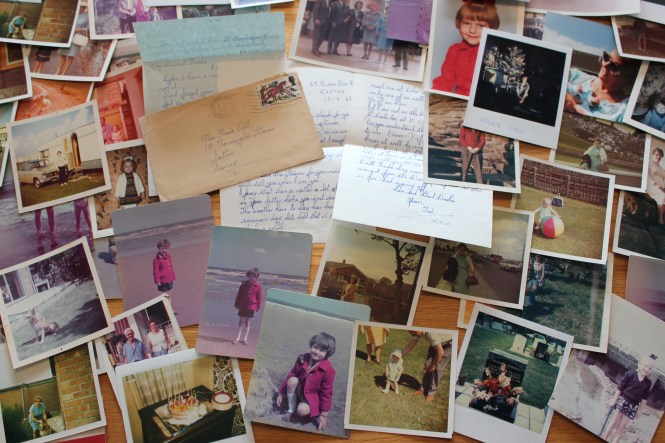
Contemporary artists are increasingly challenging the boundaries of the archive and authorship through fictional strategies and non-traditional materials. This paper offers a methodological reflection on the use of fictional personae as narrative interlocutors within my practice-led PhD research, demonstrating how non-traditional archives can challenge, extend, and reimagine art history’s archival practices. I argue that the strategic adoption of fictional personae forms a critical methodology for reimagining archival practice and opening historiography up to the speculative. Here, fictionalisation functions as ‘de-archiving’, investigating silences, absences and contested narratives within memory and history. Drawing on theoretical perspectives such as Saidiya Hartman’s critical fabulation, Donna Haraway’s speculative fabulation, and Hayden White’s conception of historiography as poetic and philosophical, I demonstrate how fictional personae developed in my project Letters to the Landscape, 2025, through the pseudonymous artist duo Vale & Howlette facilitate a performative, polyphonic engagement with a physical archive assembled from eBay. These materials instigate embodied fieldwork as détournement and processes of archival reinvention, challenging what constitutes an archive and whose histories are preserved. My approach resonates with artists such as Erika Tan, Walid Raad, Susan Hiller, and The Otolith Group, who use found or fabricated archives to critique dominant histories. By asking how using fictional personae and digital archives like eBay can reshape narrative and memory in art history, I argue that integrating fictional methodologies with non-traditional archives constitutes a form of critical, speculative historiography, one that not only reimagines narrative, memory, history and identity but also offers a transferable model for artistic and scholarly enquiry.
 denisestartin.co.uk