Revised Artist’s statement based on PhD research

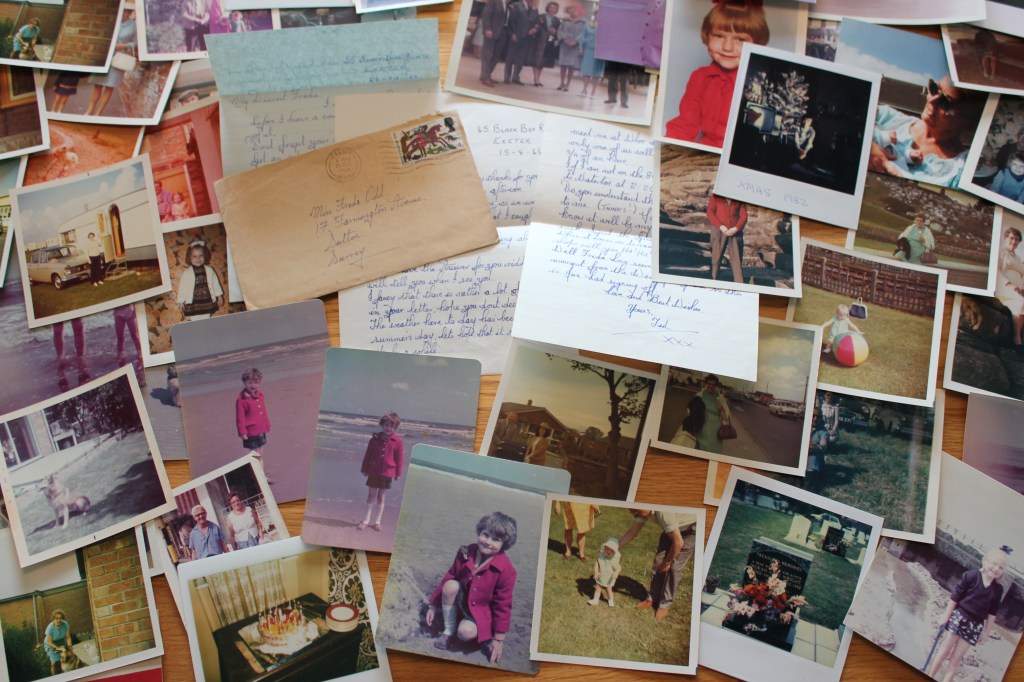
Film Still: Letters to the Landscape, Moving Image, approx.25 minutes. Found photographs, polaroids and letters from the Director’s Collection, curated by Victoria Hermita, Keeper of the Collection, Editor and P.A to the Director, George Howlette

Denise Startin is an artist, writer, and researcher who stages an interdisciplinary and performative archival practice through embodied fieldwork, dramatis personae, and the politics of memory. Working across moving image, photography, installation, site-specific interventions, and performance writing, she explores how archival fragments, textual, visual, and artefactual, can be reinterpreted through sensory gestures and narrative slippage. Her work reframes the archive not as a static repository but as a haunted, migratory space, one that moves across media, bodies, and temporalities. Through walking, (re)collecting, re-enacting, writing, re-citing, reciting and remembering, she activates the landscape as a mnemonic terrain and the archive as a site of negotiation, where memory is contested, reanimated, and re-authored.

Central to her methodology is the use of dramatis personae who act as narrative interlocutors, structuring devices and speculative tools that enable a slippage between researcher and archive, past and present, fact and fiction. These rhetorical figures operate as explorers, (mis)guides, and mnemonic surrogates, enabling a mode of fieldwork that is both materially grounded and imaginatively expansive. Through them, the archive becomes a vehicle of resonance, resistance, and reimagination, staging historiographic instability and opening space for embodied speculation, where gestures of citation are enacted rather than merely recorded. Her current research, undertaken as part of a practice-based PhD at the University of Leeds, is situated in Brontë Country, West Yorkshire, and investigates place as a medium of cultural memory and a terrain where bodies, landscapes, and narratives converge. The work privileges fragment, rupture, and affective resonance over institutional fixity, proposing a methodology of situated refusal, a way of inhabiting the archive without claiming it. This approach foregrounds the politics of memory, whose stories are told, whose gestures are preserved, and insists on the archive as a live site of encounter.
Re-citing the Archive: Fieldwork, Fiction and the Politics of Memory

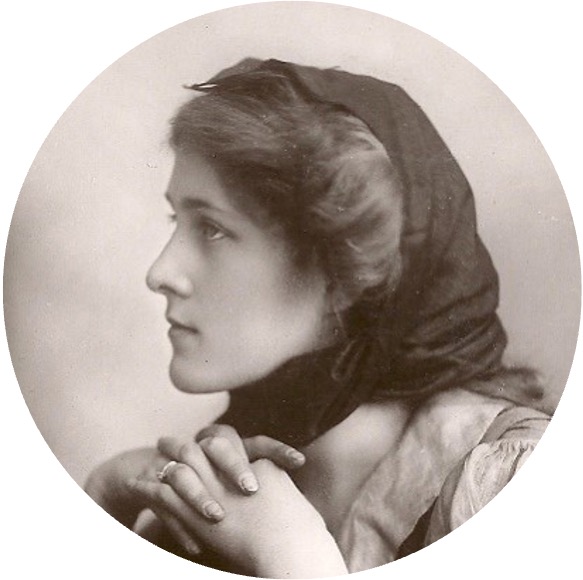
Fieldwork as Fiction: Phyllis Dare, explorer, travel guide, writer, and photographer

This paper proposes a speculative feminist historiography that re-cites the archive through embodied fieldwork, fictional personae, and the politics of memory. Drawing on site-specific research, situated within Brontë Country, West Yorkshire I explore how sensory gestures—walking, touching, re-enacting—activate archival fragments and reframe landscape as a mnemonic field. The archive here is not a static repository but a haunted space—one that migrates across media, bodies, and temporalities. By foregrounding the performative dimensions of archival practice — writing, walking, re-collecting, recollecting, reciting, re-citing and remembering, the archive, in this context, is a multisensory terrain and a site of negotiation, where memory is contested, reanimated, and re-authored.

Central to this inquiry is the figure of Phyliss Dare, a fictional persona who enables a methodological slippage between researcher and archive, past and present, fact and fiction. Dare operates as both structuring device and speculative method, enabling a mode of citation that foregrounds absence, polyphony, and narrative slippage. Her presence as explorer, travel guide, writer, and photographer allows for a reframing of fieldwork as fictional encounter, one that destabilises linear historiography and opens space for embodied speculation. Through Dare the archive becomes a stage for performance, where gestures of citation are enacted rather than merely recorded.

Rather than reconstructing a lost narrative or a singular past, the work proposes a historiography in which archival gestures become vehicles of resonance, resistance and reanimation. By triangulating fieldwork, fiction, and citation, I argue for a historiographic practice that is both materially grounded and imaginatively expansive. This method foregrounds the politics of memory, whose stories are told, whose gestures are preserved, and insists on the archive as a live site of encounter. In doing so, it offers a framework for engaging with historical material not only recovered as evidence, but re-situated within a living, shifting terrain where bodies landscapes and narratives converge.

Paper 9: Michael Drayton’s Topographies: Ideas Mirrour (1594) and Poly-Olbion (1612-1622), María Vera-Reyes

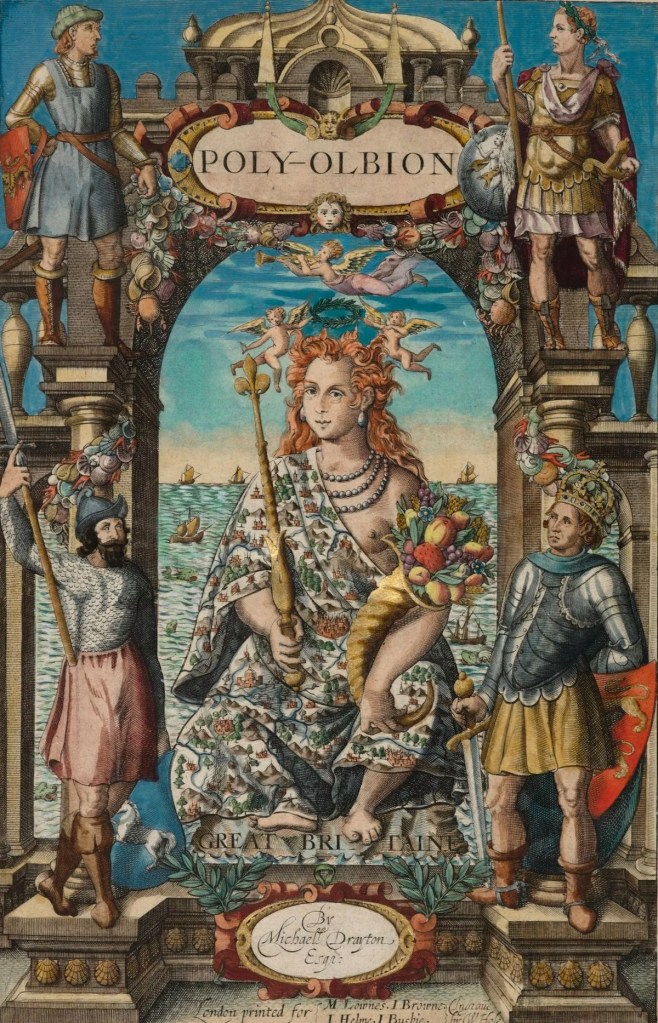
Poly-Olbion frontispiece

INTRODUCTION:

The purpose of this article is a comparative analysis of Drayton’s poems Ideas Mirrour and Poly-Olbion tracing echoes of the former in his latter richly chorographical work. For the purpose of this analysis the main focus is on Poly-Olbion as a prime exemplar of a chorographic work and I also aim to draw out strands that specifically follow the concept of the body as it pertains to one of my research questions: If a sensory physical mapping of place occurs prior to representation where is the body in the process of chorography and how do we address the political implications of the embodied in the act of representation? It appears this question is complex as bodies often appear symbolically in rich and intricate intertextual and iconotextual relationships. The body it seems emerges as a chimera hiding in plain sight like Poe’s purloined letter. A chorographic text such as Poly-Olbion offers tangible clues as to how this problematic might be addressed through practice.

POLY-OLBION (1612-1622):

Poly-Olbion is an expansive poetic journey through the landscape, history, traditions and customs of early modern England and Wales. Originally published in two parts (1612, 1622), it is also a richly collaborative work: Michael Drayton’s 15,000-line poem navigates the nation county by county and is embellished by William Hole’s thirty engraved county maps. It is accompanied for its first eighteen ‘songs’ by John Selden’s prose illustrations. Drayton was a contemporary of Shakespeare and Ben Jonson, and Poly-Olbion crystallizes early modern ideas of nationalism, history and memory.

Drayton’s Early Sonnets, Poly-Olbion and Chorography:

Reyes outlines how Drayton’s epic Poly-Olbion was influenced and connected to his earlier sonnets particularly Ideas Mirrour (1594) later published as Idea (1599-1631) which both reflect and explore his interest in the history and topography of his country and celebrate ‘the discovery of England.p.1002The central trope in the allegorical Idea is fluvial and Drayton draws on ‘chorographic techniques to represent the beloved.’ p.1003 The central figure Idea, as an ideal representation of woman contained within the ideal geography of the English landscape, is embedded in the River Anker which runs through Drayton’s home county of Warwickshire and later appears in Poly-Olbion ‘where the poet finds the woman that he had originally praised under the poetic name of Idea.’p.1014

In Poly-Olbion Reyes identifies close connections to distant genres including sonnet, sequence, perspective, pastoral, epic, the heroic, lyrical and topographical as Poly-Olbion comes to represent the ‘eroticisation of the landscape’. whilst simultaneously trying to reify Drayton’s English identity. p.1003 Developments at the time facilitated this vision in the ‘revival of geographical writings and advancements in cartography’ and the renaissance of chorographic works in the 16th-17th Centuries, the most notable exemplar of the genre being William Camden’s Brittania (1586) pp.1003-4. Other proponents of the descriptive and primarily textual approach to history and travel narrative included the antiquarian works of John Leland’s Itinerary (1549) and William Lambarde’s A perambulation of Kent (1576). The rise of the ‘body politic’ and the ‘vision of the allegorical body’ supported ‘a spatial construction of national identity.’ p.1004 The rediscovery of Strabo and Ptolemy presupposed the encyclopedist approach to the genre but one whose methodologies ‘favoured a qualitative and localist point of view with a pictorial quality.’  P.1004

Reyes states that ‘Drayton’s interest in topography and the human body was driven by the Golden age of cosmography and cartography in England […] and reflected the idea of a human being as a microcosmos.’ p..1006 According to D K Smith (XXXX no date given) in the 16th-17th Centuries this ‘resulted in a new cartographical epistemology and a cartographic imagination that provided English authors with a new set of metaphors and rhetorical tropes related to space and it’s embodiment.’ P.1006 Reyes states ‘the conception of the body as space determined the aesthetics of Poly-Olbion’. She cites Traub (XXXX no date given) ‘the description of human figures became a common aesthetic in Renaissance cartographies – ‘maps began to imply that bodies may be a terrain to be charted and is responsible for the chorographic function of human figures.’ P.1006 The ‘representation of the human body came to be seen as a ‘conglomerate of delimited spaces’. P1006 According to Reyes this explains the ‘anthropomorphizing representations of rivers, hills, mountains and forests’ in the maps of Poly-Olbion and that this representation of space is commensurate with a topographical representation of the body. P.1006 Between Ideas Mirrour and Poly-Olbion there is a ‘reciprocal movement from the topographical representation of the human body and the personification of the landscape’. P.1006. This personification of the landscape is represented in the above engraving, the frontispiece to Poly-Olbion which Helgerson (XXXX no date given) states is ‘a goddess like woman dressed in a map’ holding the horn of plenty, which symbolizes prosperity, and who stands as ‘a living embodiment of nature.’ P.1010

Map of Yorkshire, England, 1622 from Poly-Olbion

Fig.1

Image reproduced from https://www.walesonline.co.uk/news/wales-news/trend-grown-up-colouring-been-11487014 (accessed 06/02/24)

Fig.2

https://fineartamerica.com/featured/poly-olbion-map-of-yorkshire-england-1622-michael-drayton.html (accessed 07/02/24)

PhD Synopsis

Brontë Country Map

The Chorography of Place: Mapping new ecologies of landscape, memory, history and visual culture.

This PhD by practice aims to explore chorography’s relevance as an organising principle in contemporary artistic practice and critically address the historic yet neglected role of chorography in the documentation of place. Chorography, or place writing, is the artistic representation of a regional map which originated in Classical Geography (c.149AD). This field-based approach and detailed descriptor of place takes region as it’s lens and qualitatively maps characteristics of the locale by examining the constituent parts of that place. If a sensory physical mapping of place occurs prior to representation where is the body in the process of chorography?

There is a need to distinguish this act from its documentation and re-presentation to provide new theories, forms and applications by addressing the political implications of the embodied in the act of representation. To provide a contemporaneous account the performative relations between the body, mapping and place; the mobile, embodied and situated are therefore central to a contemporary interpretation of chorography.

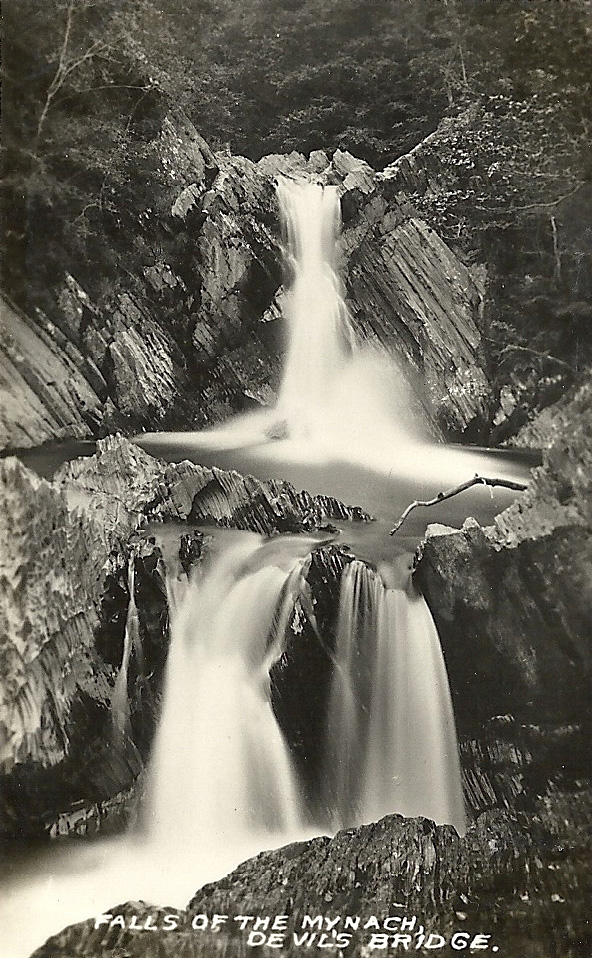
To enact these relations sites chosen for their historic, symbolic or mythological significance include Brontë Country which straddles West Yorkshire and the East Lancashire Pennines, the Devil’s Bridge in Wales and St. Michael’s Mount, Cornwall. Applying chorographic methods in artistic practice I aim to realise a historically grounded exploration of place by performing and documenting embodied, visual, textual and symbolic mappings. These mappings will form the basis of artworks, critical and performance writing, book works, performance and installation which will translate chorographic methods and the physical act of mapping into artistic practice. Combining historic method with contemporaneous form will enable a renewed understanding of the chorography of place not just artistically but physically, contextually and historically.

PhD Synopsis

To my knowledge this is the first PhD by practice to explore Chorography’s relevance as a methodological tool in contemporary artistic practice and critically address the historic yet neglected role of chorography in the documentation of place. Chorography, or place writing, is the artistic representation of a regional map which originated in Classical Geography (c.149AD). This field-based approach and detailed descriptor of place qualitatively maps characteristics of the locale by examining the constituent parts of that place. If a sensory physical mapping of place occurs prior to representation where is the body in the process of chorography?

There is a need to distinguish this act from its documentation and re-presentation to provide new theories, forms and applications by addressing the political implications of the embodied in the act of representation. To provide a contemporaneous account the performative relations between the body, mapping and place; the mobile, embodied and situated are therefore central to a contemporary interpretation of chorography.

To enact these relations sites chosen for their historic, symbolic or mythological significance include the Devil’s Bridge in Wales and St. Michael’s Mount, Cornwall. Applying chorographic methods in artistic practice I aim to realise a historically grounded exploration of place by performing and documenting embodied, visual, textual and symbolic mappings. These mappings will form the basis of artworks, critical and performance writing, book works, performance and installation which will translate chorographic methods and the physical act of mapping into artistic practice. Combining historic method with contemporaneous form will enable a renewed understanding of the Chorography of place not just artistically but physically, contextually and historically.