Fiction as Method

See the world through the eyes of a search engine, if only for a millisecond; throw the workings of power into sharper relief by any media necessary; reveal access points to other worlds within our own. In the anthology Fiction as Method, a mixture of new and established names in the fields of contemporary art, media theory, philosophy, and speculative fiction explore the diverse ways fiction manifests, and provide insights into subjects ranging from the hive mind of the art collective 0rphan Drift to the protocols of online self-presentation. With an extended introduction by the editors, the book invites reflection on how fictions proliferate, take on flesh, and are carried by a wide variety of mediums—including, but not limited to, the written word. In each case, fiction is bound up with the production and modulation of desire, the enfolding of matter and meaning, and the blending of practices that cast the existing world in a new light with those that participate in the creation of new openings of the possible.

Text and image reproduced from https://www.sternberg-press.com/product/fiction-as-method/ (accessed 23/10/25)

Re-citing the Archive: Fieldwork, Fiction and the Politics of Memory

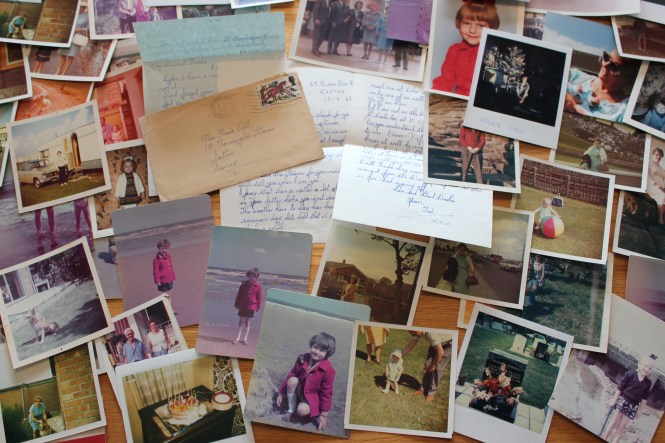
Fieldwork as Fiction: Phyllis Dare, explorer, travel guide, writer, and photographer

This paper proposes a speculative feminist historiography that re-cites the archive through embodied fieldwork, fictional personae, and the politics of memory. Drawing on site-specific research, situated within Brontë Country, West Yorkshire I explore how sensory gestures—walking, touching, re-enacting—activate archival fragments and reframe landscape as a mnemonic field. The archive here is not a static repository but a haunted space—one that migrates across media, bodies, and temporalities. By foregrounding the performative dimensions of archival practice — writing, walking, re-collecting, recollecting, reciting, re-citing and remembering, the archive, in this context, is a multisensory terrain and a site of negotiation, where memory is contested, reanimated, and re-authored.

Central to this inquiry is the figure of Phyliss Dare, a fictional persona who enables a methodological slippage between researcher and archive, past and present, fact and fiction. Dare operates as both structuring device and speculative method, enabling a mode of citation that foregrounds absence, polyphony, and narrative slippage. Her presence as explorer, travel guide, writer, and photographer allows for a reframing of fieldwork as fictional encounter, one that destabilises linear historiography and opens space for embodied speculation. Through Dare the archive becomes a stage for performance, where gestures of citation are enacted rather than merely recorded.

Rather than reconstructing a lost narrative or a singular past, the work proposes a historiography in which archival gestures become vehicles of resonance, resistance and reanimation. By triangulating fieldwork, fiction, and citation, I argue for a historiographic practice that is both materially grounded and imaginatively expansive. This method foregrounds the politics of memory, whose stories are told, whose gestures are preserved, and insists on the archive as a live site of encounter. In doing so, it offers a framework for engaging with historical material not only recovered as evidence, but re-situated within a living, shifting terrain where bodies landscapes and narratives converge.

New research

“The 1979 publication of Susan Gubar and Sandra M. Gilbert’s ground-breaking study The Madwoman in the Attic marked a founding moment in feminist literary history as much as feminist literary theory. In their extensive study of nineteenth-century women’s writing, Gubar and Gilbert offer radical re-readings of Jane Austen, the Brontës, Emily Dickinson, George Eliot and Mary Shelley tracing a distinctive female literary tradition and female literary aesthetic. Gubar and Gilbert raise questions about canonisation that continue to resonate today, and model the revolutionary importance of re-reading influential texts that may seem all too familiar.”

Text reproduced from https://www.google.co.uk/books/edition/An_Analysis_of_Sandra_M_Gilbert_and_Susa/ucxmDwAAQBAJ?hl=en&gbpv=0 (accessed 14/10/24

Currently Reading

The New York Trilogy is perhaps the most astonishing work by one of America’s most consistently astonishing writers. The Trilogy is three cleverly interconnected novels that exploit the elements of standard detective fiction and achieve a new genre that is all the more gripping for its starkness. It is a riveting work of detective fiction worthy of Raymond Chandler, and at the same time a profound and unsettling existentialist enquiry in the tradition of Kafka or Borges. In each story the search for clues leads to remarkable coincidences in the universe as the simple act of trailing a man ultimately becomes a startling investigation of what it means to be human. The New York Trilogy is the modern novel at its finest: a truly bold and arresting work of fiction with something to transfix and astound every reader.
Text reproduced from https://www.londonreviewbookshop.co.uk/stock/the-new-york-trilogy-paul-auster (accessed 14/10/24)