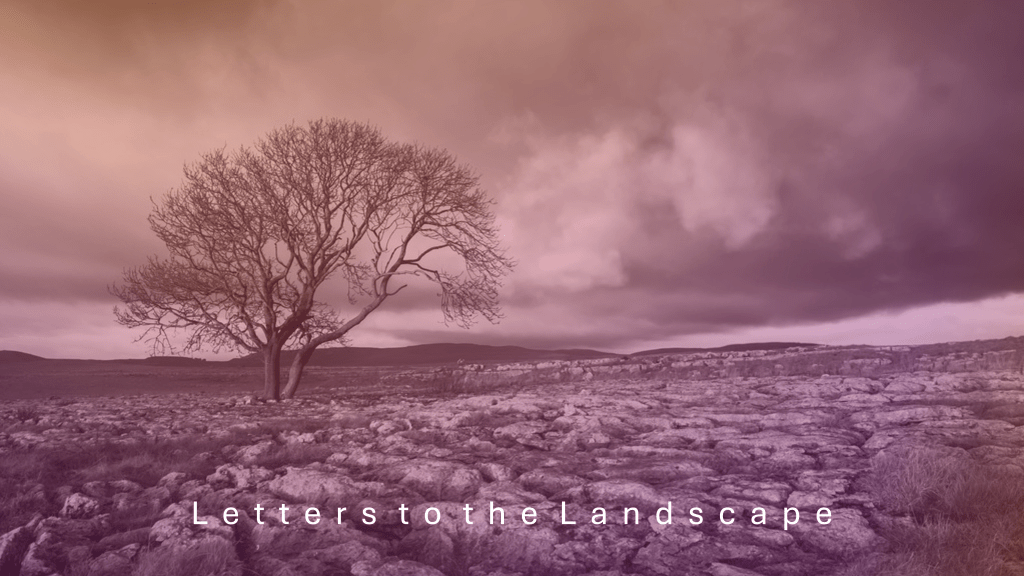
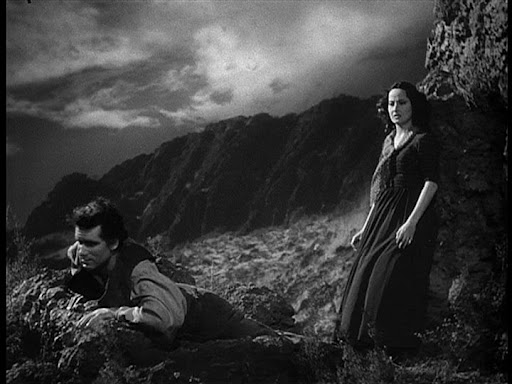
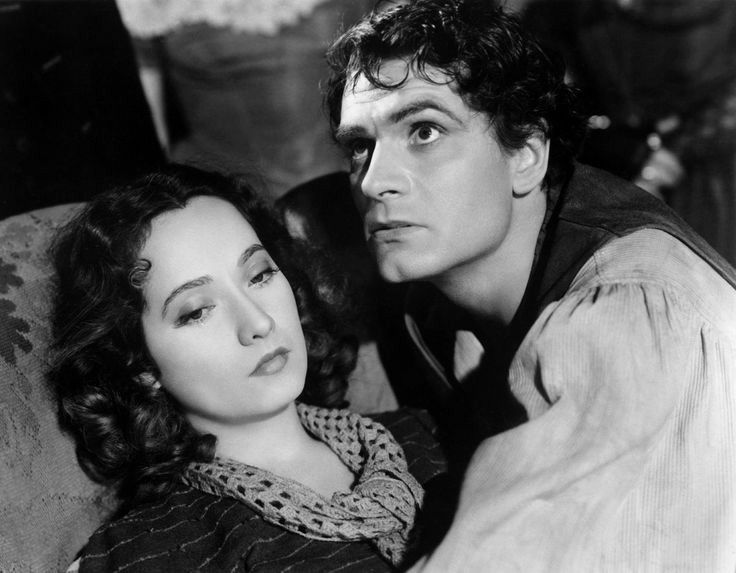
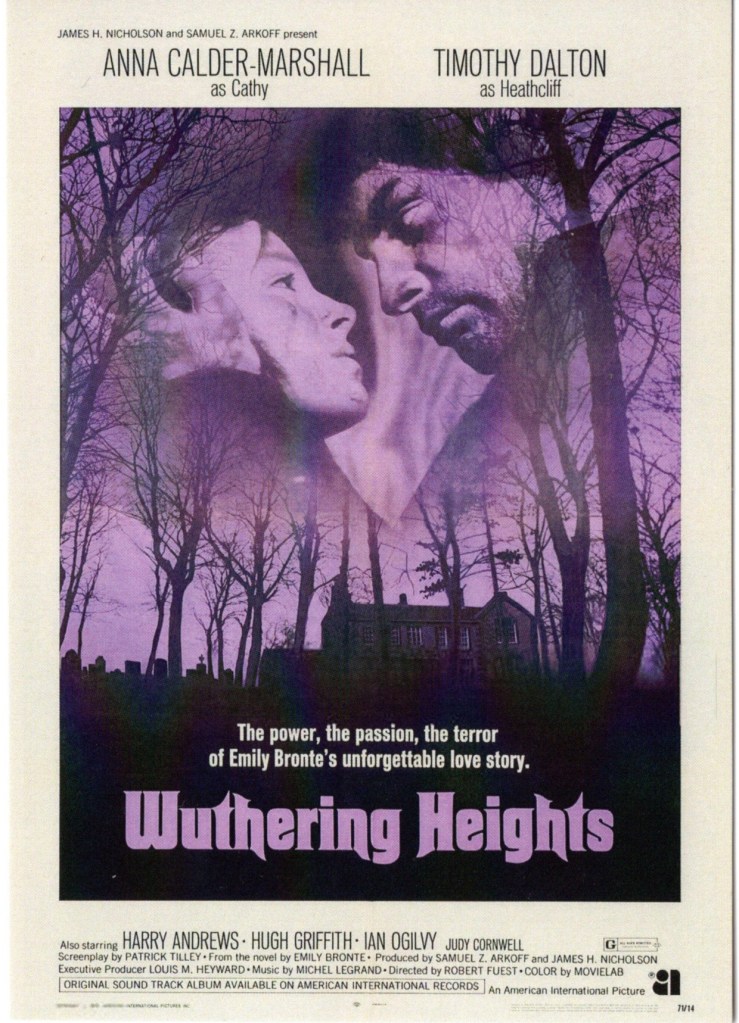
Letters to the Landscape is an epistolary diaologue and travelogue exploring the relations between Brontë Country and Emily Brontë’s Wuthering Heights. The artist uses various strategies including polyphony, narrative, autobiography and the intimate. The essay incorporates postcards, letters, pinhole photography. digital photography, found images, found texts and Super 8.
A whalebone box found washed up on the shore. Is it an enigmatic object containing a secret? A survivor from a shipwreck? It was given to Iain Sinclair, Kötting’s walking companion on his latest jaunt themed film. They set out on an expedition to take this box to its place of origin, a beach on the Isle of Harris in Scotland’s Outer Hebrides. Artist Eden Kötting helps shape the film, and in many ways it’s an ode to her indomitable spirit. Shot using mainly super 8 and super 8 apps and incorporating elements of archive and pinhole photography, The Whalebone Box celebrates the notion of the home-made but is also an idiosyncratic road map.
Review from the Guardian
“His latest offering is more like a dream – or rather a conjunction of dreams, occupying that liminal space between waking and sleep (“half one thing, half the other”) where the land meets the sea, past meets present, and lo-fi home-made cinema brushes against something sublime. As with so many of Kötting’s films, the central conceit involves a journey – a quest apparently undertaken to restore the titular artefact to the place of its making in the Outer Hebrides, and thereby cure an amorphous “unwellness”. I have no idea how much of what is documented here is “true”; suffice to say that it all feels profoundly truthful.
We’re told that the whalebone box was made over 30 years ago (“it belonged to another time, another place”) by sculptor Steve Dilworth, who fashioned it from the skeleton of a whale that washed up on the Isle of Harris. Tied with the twine from a herring net, lined with the lead of melted weights, and filled with “calm water”, the box came into the possession of Iain Sinclair, the author and “psychogeographer” (“a walker and talker”), who has become a regular Kötting collaborator. Sinclair called the box his “animal battery”, and for years it sat by his desk while he wrote. But at some point he decided that it should be returned to its home and buried in the sand where the whale was beached. And so, aided by pinhole photographer Anonymous Bosch, Sinclair and Kötting embarked upon a “reversed pilgrimage” to do just that.
Part of The Whalebone Box is a typically fragmented account of that journey, venturing in a chronological fashion from the psychic aerial of Sway Tower in the New Forest to the standing stones of Lewis (via diversions through the Pyrenees), all recorded in a variety of DIY formats, both physical and digital, and interspersed with archive footage, still photography and animation. The other part is a journey into the dreams of Eden Kötting, the remarkable artist who has long been the muse and inspiration of her father, Andrew. In these sections we find Eden seated like a regal seer in a forest, a gun across her lap, holding a pair of binoculars to search for whales. In her dreams, Eden has fashioned an imitation of the whalebone box, a papery contraption that lacks the physical heft of its namesake. Yet somehow, this dream-box has found its way into the “real” world. Or maybe it’s the other way round?
Borrowing intertitles from Leviathan by Philip Hoare (the author who also informs and structures this odyssey), The Whalebone Box muses on familiar themes of folklore, history, mysticism and “happenstance”, as it meanders across disparate landscapes, several journeys becoming one. En route we encounter the graves of Basil Bunting (“Poet of Northern England”) and Sorley MacLean (“Poet of Northern Scotland”), and hear the poet-artist MacGillivray perform her spine-tingling murdered mermaid song in a church, sounding for all the world like a whale out of water, crying plaintively into the abyss. At each stage, the box (in both its incarnations) seems to become heavier, charged with “insane energy”, carrying the accumulated psychic weight of its journey.
Thrown into the mix are discussions of other boxes: Pandora’s box; the flight recorders from doomed aeroplanes; the mysterious container from Kiss Me Deadly (“what’s in the box?”); the conceptual box in which Schrödinger’s cat is simultaneously alive and dead – a subject that also haunted Carol Morley’s tangentially comparable Out of Blue. Beneath it all, an ambient soundtrack ebbs and flows, from low pulsing throbs to rhythmic beats and floating melodies, interspersed with whispered words (“I love you inside out”) and fragments of other movies – the voiceover from Sunset Boulevard; the trailer for John Carpenter’s The Thing. You can feel the ghost of Derek Jarman in Kötting’s work: the use of collage; the investigation of memory; the allusions to Shakespeare’s The Tempest; the deconstruction of cinema itself. Yet, The Whalebone Box has something even more personal in its subtle exploration of the bond between father and daughter, an expression of love that had me laughing one moment and crying the next. With such a tender, beating heart, this is in some ways Kötting’s most unexpectedly accessible work. And, as Eden says more than once in her subtitled voiceover: “It’s true!”
Harshness is transformed into beauty and then terror by this extraordinary film from Icelandic director Hlynur Pálmason about a 19th-century Danish pastor sent to establish a new church on Iceland’s remote south-eastern coast. I left the cinema dazed and elated by its artistry; it is breathtaking in its epic scale, magnificent in its comprehension of landscape, piercingly uncomfortable in its human intimacy and severity. There is such superb compositional sense in the still life tableau shots and the almost archaeological sense of time, creating something deeply mysterious and unbearably sad. There are echoes of Werner Herzog’s Aguirre, the Wrath of God, Roland Joffé’s The Mission, Lisandro Alonso’s Jauja – and even Howard Hawks’s Red River.
Pálmason announces in the opening credits that the story was inspired by the supposed discovery in Iceland of seven glass-plate photographs of people and places taken there at the end of the 19th century. While the claim is a deadpan fiction, his screen has an almost square 1.33:1 aspect ratio, perhaps in honour of the still photograph motif. This smaller-size, in such contradistinction to the movie’s CinemaScope ambition and spectacle, gives a density to the viewing experience.
Elliott Crosset Hove plays Lucas, a highly-strung young clergyman instructed by his bishop to travel to a pioneer community in Iceland (then a Danish dependency), superintend the church-building and install himself as parish priest. Lucas makes this arduous journey first by sea and then overland with horses, taking among his luggage a huge and burdensome cross, climbing mountains and fording rivers with it. But Lucas has a secular-ethnographic project to go with the imperial Christian mission: he dreams of taking the first pictures there, capturing the people with new technology. His cumbersome tripod goes on his back, its three spiked feet poking up behind his head, a version of the points of a crucifix. The camera is Lucas’s ordeal as he visits his stations of the cross.
Driven to the edge of madness by hardship and physical pain, Lucas has a thwarted friendship – or something more – with his translator (Hilmar Gudjónsson), and finally finds an erotic connection with Anna (Vic Carmen Sonne), the daughter of the local parishioner, who takes him in. But his life is dominated by his cantankerous, contemptuous Icelandic guide Ragnar, a tough, weatherbeaten veteran tremendously played by Ingvar Sigurdsson, the cop from Pálmason’s previous film A White, White Day. Palmasón shows that Lucas is humanised and possibly even redeemed by his encounters at journey’s end, particularly his relationship with his quasi-host, the level-headed widower Carl (a shrewdly judged performance from Jacob Lohmann), who is bemused by Lucas’s self-harming decision to come to Iceland in the most difficult way possible, and then suspicious of his potential designs on his eldest daughter. Anna’s younger sister Ida (Ída Mekkín Hlynsdóttir) has an attractively emollient role and her relationship with Lucas is gentle and sweet and brings out the nearest Lucas has to warmth.
The film’s mightiest figure is the implacable Ragnar. Far from helping Lucas across the terrain, Ragnar embodies it; he is the very personification of its hostility. As an Icelander, he hates the high-handed Dane with his book-learning. Lucas comes in turn to hate and fear him. And yet Pálmason shows that Ragnar softens imperceptibly even as he sabotages Lucas; he needs someone to confess his terror of God to while exorcising a lifetime of buried rage. In Godland, these emotions are projected out on to the stunning, daunting landscape to the accompaniment of spine-meltingly beautiful choral music. That austere, boxy screen looks like a window on to a vast, unfathomable world.



 denisestartin.co.uk