Fiona Tan – Footsteps 2023-2024

“Footsteps (2022) is a 97-minute video installation made by Fiona Tan at the invitation of Amsterdam’s Eye Filmmuseum. The work combines archival film footage from the museum’s collection with a voiceover of letters written to the artist by her father while she was a student in the late 1980s. Tan added a soundtrack to the film material that reflects the action and events taking place, bringing the century-old footage to life. As we listen to the artist’s father (voiced by actor Ian Henderson) write about the fall of the Soviet Union, civil unrest in China, and the everyday lives of the artist’s relatives in Australia, we watch men and women toil the land and harvest the sea, we see cows in the field and old men smoking pipes, sailboats moving across the horizon, and the emergence of industry and urbanisation.

Assembled from hundreds of hours of footage spanning 1896 to the late 1920s, Footsteps begins with the haunting sound of a church bell accompanied by a sequence of moving images: sun and clouds, a crowd on a beach, a young girl in traditional Dutch dress, vividly hand-coloured, and the gloomy churn of the sea. Soon we hear the voice of a man utter ‘August 2nd, 1988’, a date that is almost a century after the earliest footage in the film, followed by the first of the letters from Tan’s father. A tapestry of life in early twentieth-century Netherlands unfolds, after about 30 minutes we witness the rise of factories and technology on an industrial scale, the inevitable creep of modernity. The film portrays a society being overwhelmed by enormous, relentless machines and the need to feed and service them. The letters to the artist from her father discuss their family, the global political situation, his own memories of learning Dutch geography and history while growing up in Indonesia while also encouraging the young Fiona Tan as she goes through periods of self-doubt.

Although the footage captures a nation as it makes a transition from an agrarian to an industrial society, what emerges from the film is not a portrait of the Netherlands at the dawn of modernity nor an autobiography of the artist, but a poignant study of how anyone might contend with political and technological change. Although the letters are intimate, they are also as historically compelling as the archival footage. The juxtaposition of the personal and global invites the viewer to reflect on both the significance and the ephemerality of all lives – at the dawn of the century, in the recent past, and in the present day.

Exhibited alongside Footsteps are two prints from Tan’s Technicolor Dreaming series, which relate closely to the film. Tan selected the images for the prints by instinct; some of them are taken from the film, others from the Eye Filmmuseum’s archive. The images have an ethnographical quality, capturing daily life in the Netherlands in the early 20th century. The prints are informed by Tan’s interest in early filmmakers’ obsession with colour, when frames were hand coloured in a lengthy, elaborate process using small brushes and stencils. Unlike in printmaking, perfect registration was not possible. Likewise, in the prints, ‘the colours have their own life, dancing on top of the image’, as Tan describes it. The prints were created in a two-step process: first the black-and-white photographic material was printed from a photogravure plate; in a second step, carefully considered selections of the images were printed in colour from a second, smaller copper plate hand-painted using spit bite.” 

Images and text reproduced from https://www.frithstreetgallery.com/exhibitions/223-fiona-tan-footsteps/ (accessed 18/01/24)
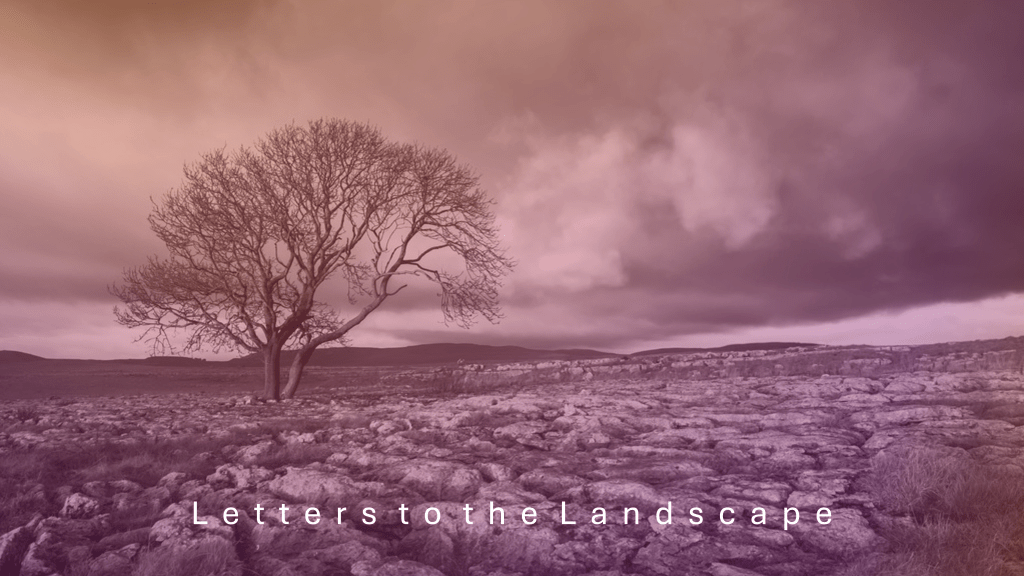
Title still from my current PhD project

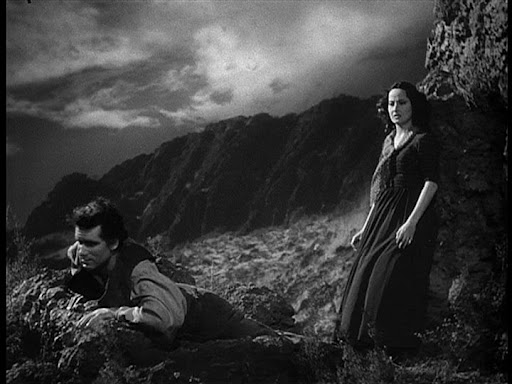
Letters to the Landscape is an epistolary diaologue and travelogue exploring the relations between Brontë Country and Emily Brontë’s Wuthering Heights. The artist uses various strategies including polyphony, narrative, autobiography and the intimate. The essay incorporates postcards, letters, pinhole photography. digital photography, found images, found texts and Super 8.

Andrew Kötting – The Whalebone Box

A whalebone box found washed up on the shore. Is it an enigmatic object containing a secret? A survivor from a shipwreck? It was given to Iain Sinclair, Kötting’s walking companion on his latest jaunt themed film. They set out on an expedition to take this box to its place of origin, a beach on the Isle of Harris in Scotland’s Outer Hebrides. Artist Eden Kötting helps shape the film, and in many ways it’s an ode to her indomitable spirit. Shot using mainly super 8 and super 8 apps and incorporating elements of archive and pinhole photography, The Whalebone Box celebrates the notion of the home-made but is also an idiosyncratic road map.

Review from the Guardian

“His latest offering is more like a dream – or rather a conjunction of dreams, occupying that liminal space between waking and sleep (“half one thing, half the other”) where the land meets the sea, past meets present, and lo-fi home-made cinema brushes against something sublime. As with so many of Kötting’s films, the central conceit involves a journey – a quest apparently undertaken to restore the titular artefact to the place of its making in the Outer Hebrides, and thereby cure an amorphous “unwellness”. I have no idea how much of what is documented here is “true”; suffice to say that it all feels profoundly truthful.

We’re told that the whalebone box was made over 30 years ago (“it belonged to another time, another place”) by sculptor Steve Dilworth, who fashioned it from the skeleton of a whale that washed up on the Isle of Harris. Tied with the twine from a herring net, lined with the lead of melted weights, and filled with “calm water”, the box came into the possession of Iain Sinclair, the author and “psychogeographer” (“a walker and talker”), who has become a regular Kötting collaborator. Sinclair called the box his “animal battery”, and for years it sat by his desk while he wrote. But at some point he decided that it should be returned to its home and buried in the sand where the whale was beached. And so, aided by pinhole photographer Anonymous Bosch, Sinclair and Kötting embarked upon a “reversed pilgrimage” to do just that.

Part of The Whalebone Box is a typically fragmented account of that journey, venturing in a chronological fashion from the psychic aerial of Sway Tower in the New Forest to the standing stones of Lewis (via diversions through the Pyrenees), all recorded in a variety of DIY formats, both physical and digital, and interspersed with archive footage, still photography and animation. The other part is a journey into the dreams of Eden Kötting, the remarkable artist who has long been the muse and inspiration of her father, Andrew. In these sections we find Eden seated like a regal seer in a forest, a gun across her lap, holding a pair of binoculars to search for whales. In her dreams, Eden has fashioned an imitation of the whalebone box, a papery contraption that lacks the physical heft of its namesake. Yet somehow, this dream-box has found its way into the “real” world. Or maybe it’s the other way round?

Borrowing intertitles from Leviathan by Philip Hoare (the author who also informs and structures this odyssey), The Whalebone Box muses on familiar themes of folklore, history, mysticism and “happenstance”, as it meanders across disparate landscapes, several journeys becoming one. En route we encounter the graves of Basil Bunting (“Poet of Northern England”) and Sorley MacLean (“Poet of Northern Scotland”), and hear the poet-artist MacGillivray perform her spine-tingling murdered mermaid song in a church, sounding for all the world like a whale out of water, crying plaintively into the abyss. At each stage, the box (in both its incarnations) seems to become heavier, charged with “insane energy”, carrying the accumulated psychic weight of its journey.

Thrown into the mix are discussions of other boxes: Pandora’s box; the flight recorders from doomed aeroplanes; the mysterious container from Kiss Me Deadly (“what’s in the box?”); the conceptual box in which Schrödinger’s cat is simultaneously alive and dead – a subject that also haunted Carol Morley’s tangentially comparable Out of Blue. Beneath it all, an ambient soundtrack ebbs and flows, from low pulsing throbs to rhythmic beats and floating melodies, interspersed with whispered words (“I love you inside out”) and fragments of other movies – the voiceover from Sunset Boulevard; the trailer for John Carpenter’s The Thing. You can feel the ghost of Derek Jarman in Kötting’s work: the use of collage; the investigation of memory; the allusions to Shakespeare’s The Tempest; the deconstruction of cinema itself. Yet, The Whalebone Box has something even more personal in its subtle exploration of the bond between father and daughter, an expression of love that had me laughing one moment and crying the next. With such a tender, beating heart, this is in some ways Kötting’s most unexpectedly accessible work. And, as Eden says more than once in her subtitled voiceover: “It’s true!”

Text reproduced from https://www.theguardian.com/film/2020/apr/05/the-whalebone-box-review-andrew-kotting-iain-sinclair (accessed 11/09/24)