“A Perambulation of Kent is the first English county history. It was written by William Lambarde, an Elizabethan antiquarian and lawyer. Lambarde wrote the text in 1570 but it was not printed until 1576. The book describes a journey through Kent and describes the antiquities of the county and its influence on English history. The text also includes a copy of Lambarde’s map of the ‘Heptarchy’ or the kingdoms of Anglo-Saxon England that he had first included in a collection of Anglo-Saxon laws he published in 1568.”
Making Place, Making Self explores new understandings of place and place-making in late modernity, covering key themes of place and space, tourism and mobility, sexual difference and subjectivity. Using a series of individual life stories, it develops a fascinating polyvocal account of leisure and life journeys. These stories focus on journeys made to the North Cape in Norway, the most northern point of mainland Europe, which is both a tourist destination and an evocation of a reliable and secure point of reference, an idea that gives meaning to an individual’s life. The theoretical core of the book draws on an inter-weaving of post-Lacanian versions of feminist psycho-analytical thinking with phenomenological and existential thinking, where place-making is linked with self-making and homecoming. By combining such ground-breaking theory with her innovative use of case studies, Inger Birkeland here provides a major contribution to the fields of cultural geography, tourism and feminist studies.
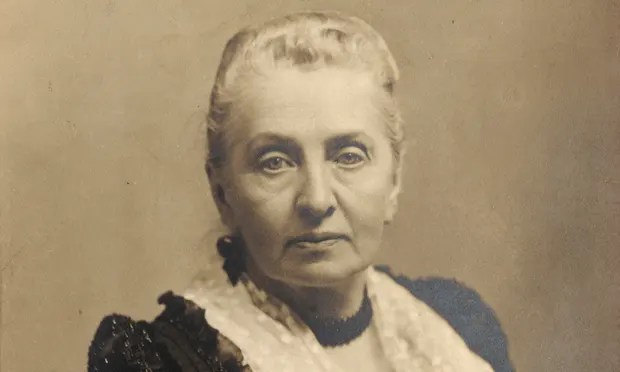
‘She was always looking forward’: Isabella Bird. Photograph: Royal Geographical Society/Getty Images
That reckless lady with “the up-to-anything and free-legged air,” as she herself described it, … went breezing about the remote parts of the Asian and American continents for thirty years and became one of the most popular, respected and celebrated travellers of the later nineteenth century. — Pat Barr, Preface.
“Isabella Bird (married name Bishop) was an English explorer, writer and photographer. She was the first women to be made a Fellow at the Royal Geographical Society. Bird was born near Leeds, in Boroughbridge in the Harrogate district of North Yorkshire, on 15th October 1831.
From a young age, Isabella Bird suffered with health problems. Her doctors recommended a sea voyage to help improve her condition and in 1854, aged 23, she set off to America on her first international journey. This was documented in her first of several books, The Englishwoman in America. Her books were written in an entertaining and accessible way and became very popular. This gave many people the chance to learn about the world beyond their home.
Isabella’s trip to America was just the beginning of her adventures. She explored countries all over the world including Australia, Hawaii, China, Japan, Vietnam, Korea, India and Iran. She climbed mountains, trekked through jungles, and rode for thousands of miles on horseback. She even rode on elephants! Her final travels were to Morocco when she was in her 70s. Isabella Bird was 60 years old by the time she took up photography. She produced beautiful images on her travels, and her later writings were published with her photographs alongside.
‘The Cobbler’ by Isabella Bird
Difficulties Facing Women Explorers
Isabella Bird led a life full of adventure and excitement, exploring sometimes dangerous regions and often setting out on her travels alone. This meant that her life was very different from how women were expected to live in the nineteenth century. When she became a Fellow at the Geographical Society in 1892, it was regarded an exception by the council members. They did not see women in general as able to contribute to scientific and geographical knowledge, and it was argued that women were not well suited to being explorers. In 1873, she rode 800 miles throughout the Rocky Mountains in North America. She was angry when a Times review of her book that described this journey described her appearance as “masculine” because of her clothing.
Although she was not a part of the Suffragette movement, she has been regarded as an important role model for women, and her images was used on a Suffragette placard. Isabella Bird is a character in Top Girls, a 1982 play by Caryl Churchill that looks at women’s roles and success in society. Churchill took quotes from Isabella Bird’s books to make up much of the dialogue of Isabella’s character in the play.”
“Bringing together contributions by artists, writers and theorists, ‘Fieldwork for Future Ecologies’ addresses the role that art practice and art-based research plays in expanding notions of fieldwork. At once a handbook for research and practice and a philosophical speculation, this book offers the unique opportunity to explore ways of working within vastly diverse climates and terrains using image, sound, movement and other sensing technologies. It also offers more creative and speculative interventions into the idea and location of the ‘field’ itself.
Focusing on a range of projects from across different geographic locations and situations, the book highlights the crucial contribution that art can make to environmental and climate studies offering a valuable intervention into current discussions of artistic practice and research. ‘Fieldwork for Future Ecologies’ presents a series of propositions and speculations … radical practices for radical times.
Contributing authors: Angus Carlyle, Alliance of the Southern Triangle/AST (D Bauer, F Grodin, P M Hernandez, E Kedan), Bianca Hester, Bridget Crone, David Burns, Henriette Gunkel and Eline McGeorge, Imani Jacqueline Brown, Julie Gough, Kate Pickering, Kreider + O’Leary, Kristen Sharp, Melody Jue, Nicholas Mangan, Philip Samartzis, Polly Stanton, Ruth Maclennan, Sam Nightingale, Saskia Beudel, Simon O’Sullivan, Susan Schuppli, Therese Keogh.“
The Chorography of Place: Mapping new ecologies of landscape, memory, history and visual culture.
This PhD by practice aims to explore chorography’s relevance as an organising principle in contemporary artistic practice and critically address the historic yet neglected role of chorography in the documentation of place. Chorography, or place writing, is the artistic representation of a regional map which originated in Classical Geography (c.149AD). This field-based approach and detailed descriptor of place takes region as it’s lens and qualitatively maps characteristics of the locale by examining the constituent parts of that place. If a sensory physical mapping of place occurs prior to representation where is the body in the process of chorography?
There is a need to distinguish this act from its documentation and re-presentation to provide new theories, forms and applications by addressing the political implications of the embodied in the act of representation. To provide a contemporaneous account the performative relations between the body, mapping and place; the mobile, embodied and situated are therefore central to a contemporary interpretation of chorography.
To enact these relations sites chosen for their historic, symbolic or mythological significance include Brontë Country which straddles West Yorkshire and the East Lancashire Pennines, the Devil’s Bridge in Wales and St. Michael’s Mount, Cornwall. Applying chorographic methods in artistic practice I aim to realise a historically grounded exploration of place by performing and documenting embodied, visual, textual and symbolic mappings. These mappings will form the basis of artworks, critical and performance writing, book works, performance and installation which will translate chorographic methods and the physical act of mapping into artistic practice. Combining historic method with contemporaneous form will enable a renewed understanding of the chorography of place not just artistically but physically, contextually and historically.