history
Episode 4: A Lovers Spat
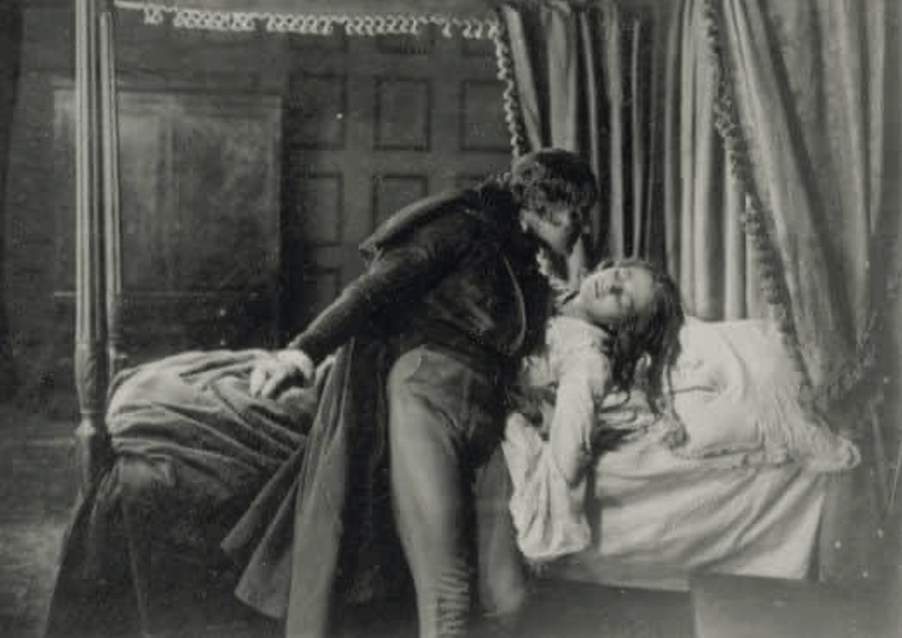
Silent gravel in the driveway, deafening clock in the hall, everything whispers anxiously. A back is turned to hide its increasing anxiety, compulsive shrugs walk away. Her shoulders wet with thunder settle like a paper cut on her soul. Confused by the bearing of the question successfully she feigns interest. Her nose wrinkles, he shifts on his feet, she, modest and unadorned. Somehow he knows her even before she knows herself. Somehow she knows him even before she knows herself. He thinks what does she want? ‘I can’t really say.’. She; silent except for exclamations of gibberish, he can tell by her pulse. Lips pursed in disgust betraying the economy of her face.
I don’t spend too much time around people, treachery, hypocrisy, the promise of love, look into the mouth of a person and you’ll find nothing but lies wriggling there…and you cling…there is no vocabulary to hush this conflict…detached poems speak voices of the dead. ….and you cling…and her fury renders her speechless…and it clings…a stain on the tip of her tongue…a ghost building, silhouettes of words where a certain set of gestures are housed.
Like any clandestine affair my glasses aren’t rose tinted, they are cracked, splintered, broken, smothered in the dirt of you, black excretions of filth exuding through the cracks, the grime of you inhabits […] the stench of you burns […] in my nostrils, rolls around like grit in my eyes, feels like ash in my mouth; I roll your name around lovingly on my tongue, caressing you...and it clings. I roll you around in my mouth and you grate, setting my teeth on the edge. The grime of you inhabits every pore, dirty, filthy little memories secreted away, skin seething like ants. No amount of washing can erase your sweet aroma, your putrid stench, your incessant demands, your impenetrability, your indifference, your excess, I sold my soul for you. I have holes in my soul for you. Still you beckoned me with your availability, your parlour games, your desire to cater to every whim, the promise to fulfil any fantasy. Your body gorged my vision. Replete with the extent of you, I could never see the end of you, never see beyond you, never get outside you, never get inside you…yet…always the feeling of you moving inside me. And it clings, and it rings and the falling begins…
“You know, you spat at me,” she said. “You had a drop of spittle come flying across in your goddamned passion. You spat, and it hit me.”
Paper Abstract: Excavating the Ephemeral through Performative Archival Practice: Fact, Fiction and Fieldwork, AAH Symposium, Cambridge 2026
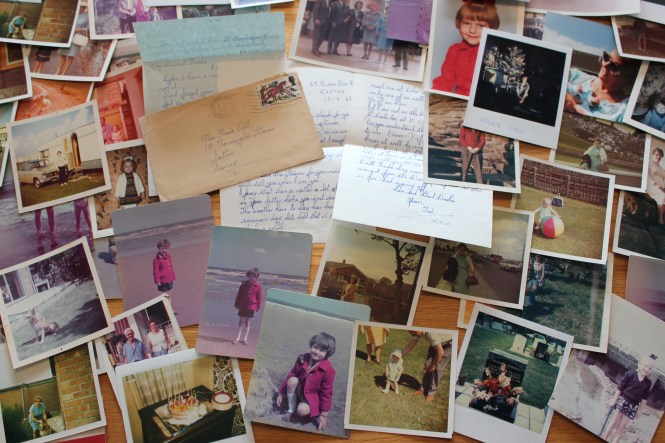
Contemporary artists are increasingly challenging the boundaries of the archive and authorship through fictional strategies and non-traditional materials. This paper offers a methodological reflection on the use of fictional personae as narrative interlocutors within my practice-led PhD research, demonstrating how non-traditional archives can challenge, extend, and reimagine art history’s archival practices. I argue that the strategic adoption of fictional personae forms a critical methodology for reimagining archival practice and opening historiography up to the speculative. Here, fictionalisation functions as ‘de-archiving’, investigating silences, absences and contested narratives within memory and history. Drawing on theoretical perspectives such as Saidiya Hartman’s critical fabulation, Donna Haraway’s speculative fabulation, and Hayden White’s conception of historiography as poetic and philosophical, I demonstrate how fictional personae developed in my project Letters to the Landscape, 2025, through the pseudonymous artist duo Vale & Howlette facilitate a performative, polyphonic engagement with a physical archive assembled from eBay. These materials instigate embodied fieldwork as détournement and processes of archival reinvention, challenging what constitutes an archive and whose histories are preserved. My approach resonates with artists such as Erika Tan, Walid Raad, Susan Hiller, and The Otolith Group, who use found or fabricated archives to critique dominant histories. By asking how using fictional personae and digital archives like eBay can reshape narrative and memory in art history, I argue that integrating fictional methodologies with non-traditional archives constitutes a form of critical, speculative historiography, one that not only reimagines narrative, memory, history and identity but also offers a transferable model for artistic and scholarly enquiry.
AAH Annual Conference, University of Cambridge

I am pleased to announce I will be presenting at the above conference in April, responding to the panel Art History: Facts and Fiction? My paper is entitled: Excavating the Ephemeral through Performative Archival Practice: Fact, Fiction and Fieldwork.
This panel explores a neglected tradition in art history: the strategic use of fictional elements in scholarly writing. We seek to examine the scope of this underexplored practice and consider the benefits, challenges and legacies of such creative strategies. The use of such elements in art history is long-standing. Vasari, for example, drew on Italian novelistic traditions in The Lives of the Artists to craft compelling historical narratives, an aspect of art historical writing that is often overlooked.
Yet, as Hayden White observed, the writing of history is ‘at once poetic, scientific and philosophical.’ Fictional perspectives have been employed in the humanities more widely to challenge prevailing conceptions and to address archival gaps. Examples include Clifford Geertz’s ‘faction,’ which addresses the fiction of the neutral anthropological observer and Saidiya Hartman’s critical fabulation, which blends historical research with critical theory and fictional narrative to amplify suppressed voices, particularly those of enslaved people. Donna Haraway’s speculative fabulation also needs to be mentioned here, which combines fact and fiction to explore complex issues and imagine possible futures, while Gerald Vizenor’s ‘Native American slipstream’ employs time travel and alternate realities to explore ‘Indigenous’ worldviews, perspectives on history and conception of futurity.
We welcome papers that explore fictional elements in art history, visual culture, and material culture studies, examining specific applications and/or their relationship to broader interdisciplinary trends in the humanities. We invite presentations on both personal experiences with employing such strategies as well as critical analysis of such work in the field.
Our Annual Conference brings together international research and critical debate about art, art history and visual cultures. This key annual event is an opportunity to keep up to date with new research, hear leading keynotes, broaden networks and exchange ideas.
Episode 3 The Reluctant Pilgrim
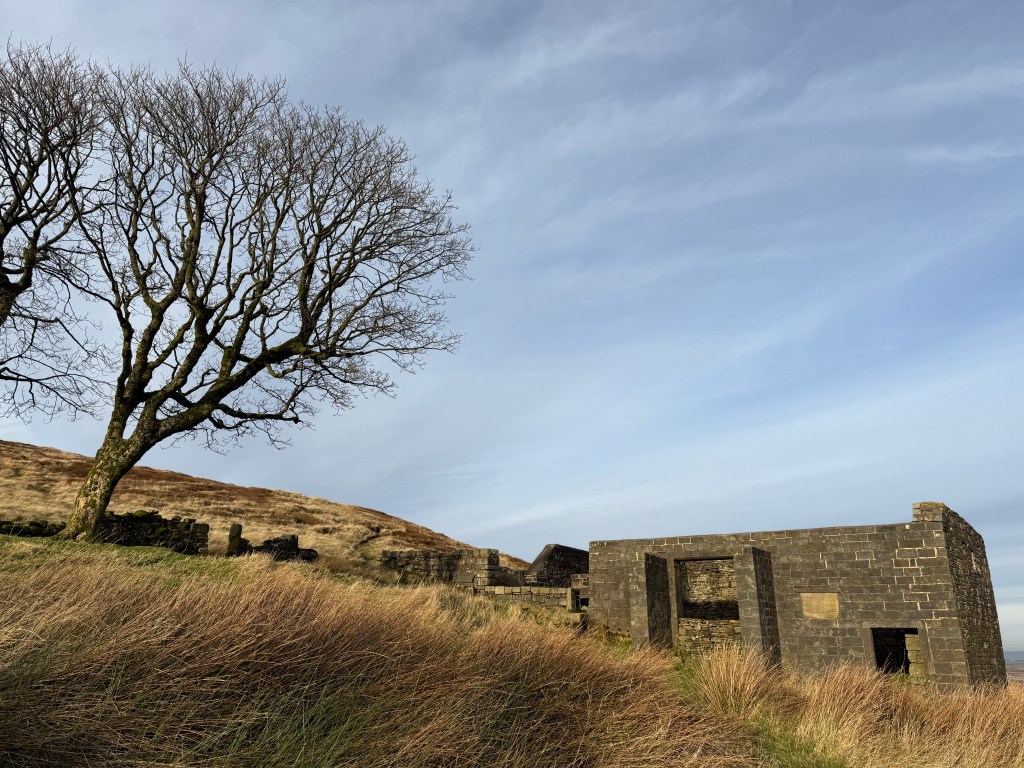
The ice on the path snapped, crackled and splintered underneath the soles of their walking boots. The ground was frozen solid. She felt as though she were walking with two blocks of ice strapped to her feet. She could feel the ground in her knees. The sound of her boots walking on frozen ground was like the crunching of bones. The chill of the wind sweeping across the moors caused her teeth to chatter in her head like a pair of castanets. Emily writes, she writes: “I lingered under that benign sky watched the moths fluttering among the heather and harebells, listened to the soft wind breathing through the grass”. I remembered there is a spot mid barren hills where winter howls still, bringing a chill to the marrow.
By this time her toes were numb and every step was agony, her boots were rather too small, she made a reluctant pilgrim. She had lost track of time by stopping to take photographs on the way but photographs of what exactly? A seemingly vast, empty and undifferentiated landscape that she experienced as a rupture or a disjunction. The landscape was not easy to assimilate. it remained resolute and other. She was in the middle of it but couldn’t get into it, so she remained steadfastly on it for the duration of the walk. Time and space expanded in multiple directions on the Moors like the ripples on a pond. Three hours of walking felt like three years of living. The closer they got to Top Withens the further away it seemed to. Be. For an age it remained a tiny speck on the horizon.
He disappeared over a mound and briefly she found herself alone with naught but a wuthering wind whistling around her eardrums and flapping against her face. How exactly was she to report any of this back to George? She was famished.
On the 18th of May 1893, Top Withens was struck by lightning during a thunderstorm. Holes were made in the wall, the roof was partially torn off, flags were cracked, and around 30 windows were almost completely removed. A portion of slate was thrown far from the house by the wind, and in the kitchen the blade of a knife had been fused by the heat.
 denisestartin.co.uk