Upcoming
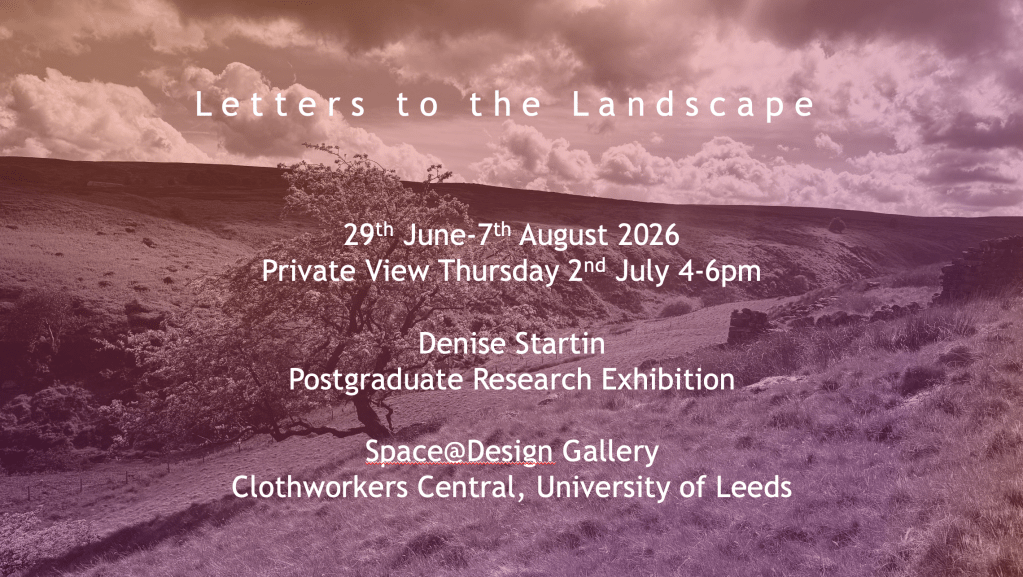
Letters to the Landscape investigates the entangled relations between Brontë Country and the imaginative terrain of Emily Brontë’s Wuthering Heights (1847), situating the moorland as a site where cultural memory, literary inheritance, and embodied fieldwork converge. Operating at the intersection of autobiography, polyphony, and archival drift, the project examines how landscapes function as repositories of memory and projection, and how they mediate the unstable boundaries between fact, fiction, and historical imagination.
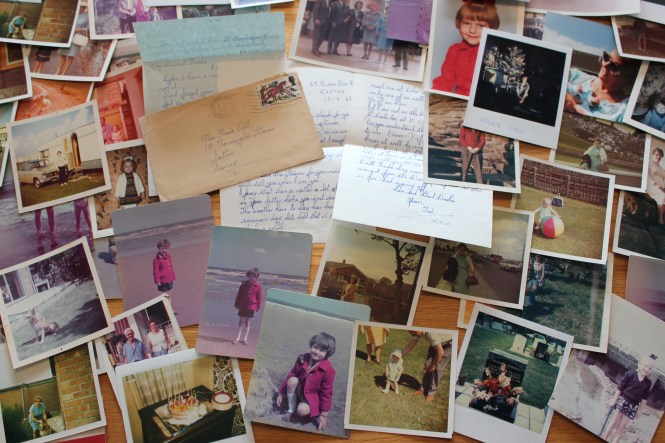
The research develops a mode of performative archival practice that reframes the archive as a haunted, migratory space rather than a fixed repository. Through the gathering and reanimation of postcards, letters, photographs, and field notes, the project mobilises archival fragments as gestures — provisional, affective, and resistant to evidentiary closure. These materials are activated through a choreography of walking, (re)collecting, re‑enacting, writing, reciting, and remembering, producing a form of speculative historiography in which remnants refuse to settle and meaning remains in motion.
The film adopts an episodic structure that mirrors the temporal and spatial logic of fieldwork. Its meditations and detours on place, collecting, pilgrimage, and return enact a methodology grounded in drift, repetition, and the recursive labour of remembering. The moorland is approached as landscape as witness — a terrain that absorbs and refracts cultural narratives, and a medium through which memory is contested, re‑authored, and felt.
Central to the research is the fictional artist duo Vale & Howlette, who operate as narrative interlocutors, structuring devices, and speculative tools. Their pseudonymous perspectives enable a slippage between researcher and archive, past and present, document and invention. As explorers, (mis)guides, and mnemonic surrogates, they facilitate a mode of inquiry that is materially grounded yet imaginatively expansive, allowing the archive to function as a site of resonance, resistance, and re-imagination.
The project privileges fragment, rupture, and affective resonance over institutional fixity, proposing a methodology of situated refusal — a way of inhabiting the archive and the Brontë imaginary without claiming it. Letters to the Landscape contributes to practice‑based research by articulating how embodied fieldwork, fictional apparatus, and archival speculation can generate new modes of historiographic thinking and new forms of artistic knowledge.
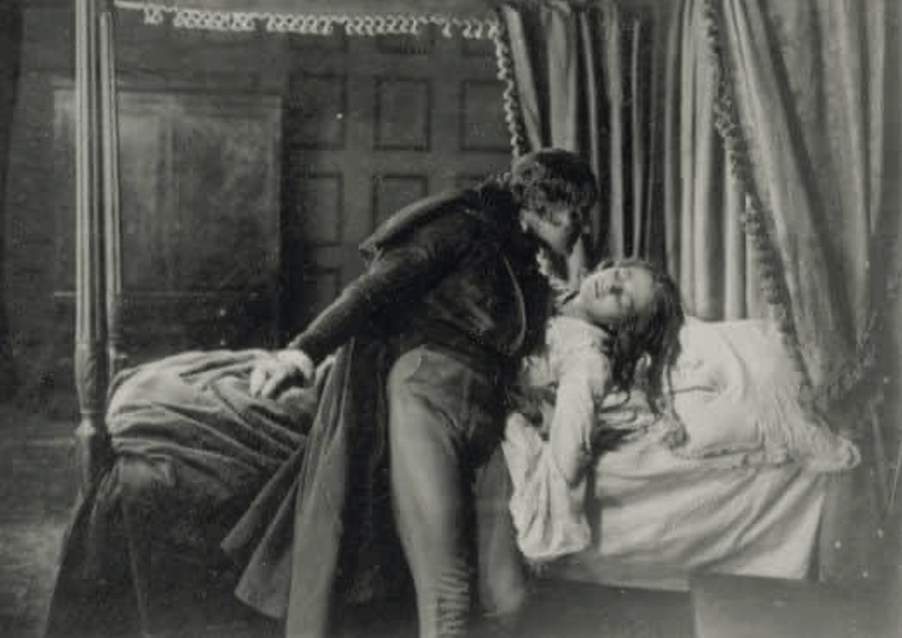
Silent gravel in the driveway, deafening clock in the hall, everything whispers anxiously. A back is turned to hide its increasing anxiety, compulsive shrugs walk away. Her shoulders wet with thunder settle like a paper cut on her soul. Confused by the bearing of the question successfully she feigns interest. Her nose wrinkles, he shifts on his feet, she, modest and unadorned. Somehow he knows her even before she knows herself. Somehow she knows him even before she knows herself. He thinks what does she want? ‘I can’t really say.’. She; silent except for exclamations of gibberish, he can tell by her pulse. Lips pursed in disgust betraying the economy of her face.
I don’t spend too much time around people, treachery, hypocrisy, the promise of love, look into the mouth of a person and you’ll find nothing but lies wriggling there…and you cling…there is no vocabulary to hush this conflict…detached poems speak voices of the dead. ….and you cling…and her fury renders her speechless…and it clings…a stain on the tip of her tongue…a ghost building, silhouettes of words where a certain set of gestures are housed.
Like any clandestine affair my glasses aren’t rose tinted, they are cracked, splintered, broken, smothered in the dirt of you, black excretions of filth exuding through the cracks, the grime of you inhabits […] the stench of you burns […] in my nostrils, rolls around like grit in my eyes, feels like ash in my mouth; I roll your name around lovingly on my tongue, caressing you...and it clings. I roll you around in my mouth and you grate, setting my teeth on the edge. The grime of you inhabits every pore, dirty, filthy little memories secreted away, skin seething like ants. No amount of washing can erase your sweet aroma, your putrid stench, your incessant demands, your impenetrability, your indifference, your excess, I sold my soul for you. I have holes in my soul for you. Still you beckoned me with your availability, your parlour games, your desire to cater to every whim, the promise to fulfil any fantasy. Your body gorged my vision. Replete with the extent of you, I could never see the end of you, never see beyond you, never get outside you, never get inside you…yet…always the feeling of you moving inside me. And it clings, and it rings and the falling begins…
“You know, you spat at me,” she said. “You had a drop of spittle come flying across in your goddamned passion. You spat, and it hit me.”