Currently Reading

Deep maps are finely detailed, multimedia depictions of a place and the people, buildings, objects, flora, and fauna that exist within it and which are inseparable from the activities of everyday life. These depictions may encompass the beliefs, desires, hopes, and fears of residents and help show what ties one place to another. A deep map is a way to engage evidence within its spatio-temporal context and to provide a platform for a spatially-embedded argument. The essays in this book investigate deep mapping and the spatial narratives that stem from it. The authors come from a variety of disciplines: history, religious studies, geography and geographic information science, and computer science. Each applies the concepts of space, time, and place to problems central to an understanding of society and culture, employing deep maps to reveal the confluence of actions and evidence and to trace paths of intellectual exploration by making use of a new creative space that is visual, structurally open, multi-media, and multi-layered.

Currently reading

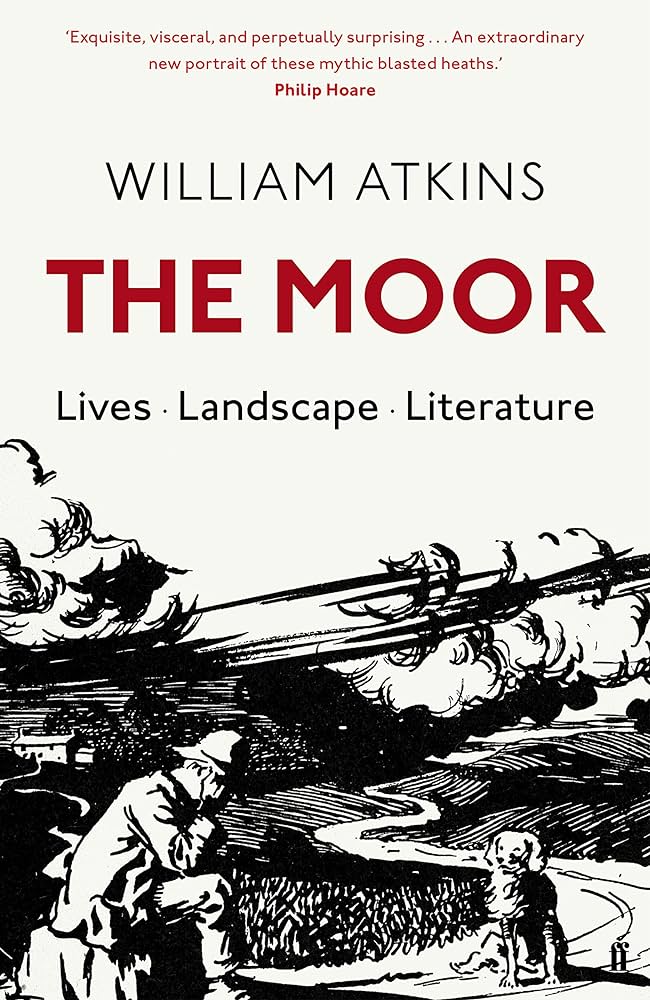
In this journey across England’s most forbidding and mysterious terrain, William Atkins takes the reader from south to north, exploring moorland’s uniquely captivating position in our history, literature and psyche. Atkins’ journey is full of encounters, busy with the voices of the moors, past and present. He shows us that, while the fierce terrains we associate with Wuthering Heights and The Hound of the Baskervilles are very human landscapes, the moors remain daunting and defiant, standing steadfast against the passage of time.

Currently Reading

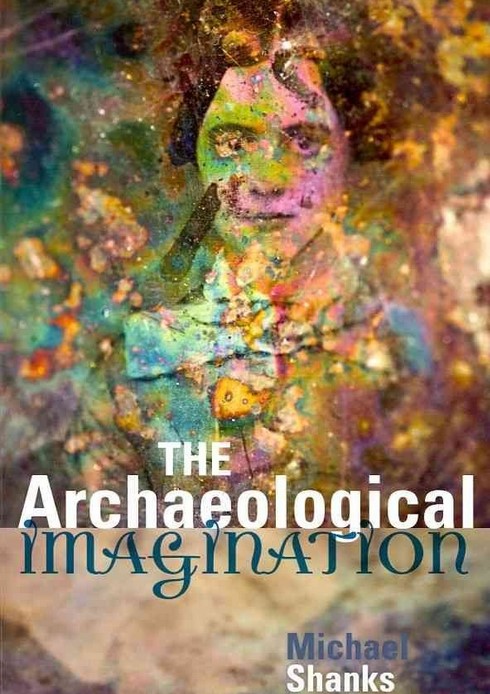
“Archaeology is a way of acting and thinking—about what is left of the past, about the temporality of what remains, about material and temporal processes to which people and their goods are subject, about the processes of order and entropy, of making, consuming and discarding at the heart of human experience. These elements, and the practices that archaeologists follow to uncover them, is the essence of the archaeological imagination.”

In his book Shanks offers the following definition: “To recreate the world behind the ruins on the land, to reanimate the people behind the shard of antique pottery, a fragment of the past: this is the work of the archaeological imagination, a creative impulse and faculty at the heart of archaeology, but also embedded in many cultural dispositions, discourses and institutions commonly associated with modernity. The archaeological imagination is rooted in a sensibility, a pervasive set of attitudes toward traces and remains, towards memory, time and temporality, the fabric of history.” pp.25

Text reproduced from https://www.google.co.uk/books/edition/The_Archaeological_Imagination/a6tJDAAAQBAJ?hl=en&gbpv=0 (accessed 13/08/23)

An Altered Landscape

I am pleased to announce my work Hints for British Tourists has been chosen for Issue 1 of the Contemporary Landscape Photography Journal – An Altered Landscape. Hints for British Tourists is the re-staging and fictional expansion of a found pamphlet containing instructions for travel. Presented as photographic documentation the work is a meditation on travel, tourism, time and memory.

Visions of Antiquity

So I’m having to do some fairly niche reading for my PhD, which starts in October, since I am investigating a concept from the 16th-17th centuries although it’s provenance is much older than that and begins with Ptolemy’s Geographia (149AD). I am tracing it’s roots and development through British History and Antiquarianism (the historical precursor to Archaeology) which flourished in the 17th century and was part of an epic effort to map Britain, one famous example being William Camden’s Brittania (1586). With its overriding pre-occupation with place Camden’s Brittania, arranged chronologically, is a county-by-county survey of England & Wales which travels from the South to the North and represents a new ‘topographical-historical method’ (Mendyk 1986 cited in Rohl 2011: 22).

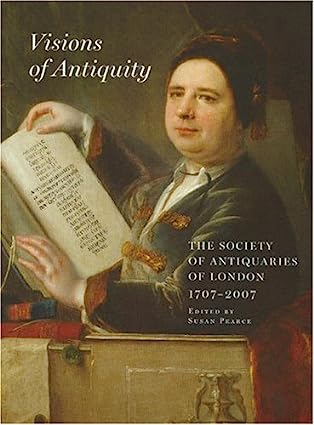
The book articulates the image of the antiquary in 17thC England, it’s relation to the graphic arts, art and antiquity in the long 19th Century, the interpetation of ancient objects, prehistory in the 19thC, nineteenth-century antiquarian culture and the project of archaeology, antiquaries and conservation of the landscape, grand excavation projects of the twentieth century and antiquaries and the professionalization of archaeology.

I am hard at work on my Bibliography and see some exciting trips to the Bodleian library, Oxford in the future.

Key words: antiquarian, antiquities, archaeology, barrow, conservation, culture, England, excavation, landscape, place, history