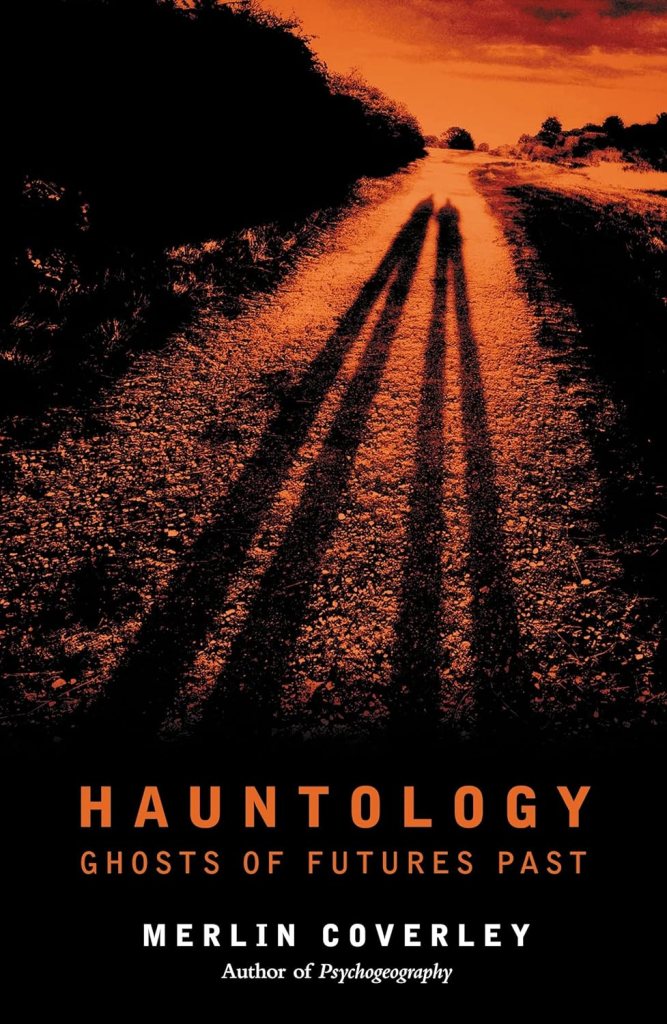
“Ghosts and spectres, the eerie and the occult. Why is contemporary culture so preoccupied by the supernatural, so captivated by the revenants of an earlier age, so haunted? The concept of Hauntology has evolved since first emerging in the 1990s, and has now entered the cultural mainstream as a shorthand for our new-found obsession with the recent past. But where does this term come from and what exactly does it mean? This book seeks to answer these questions by examining the history of our fascination with the uncanny from the golden age of the Victorian ghost story to the present day. From Dickens to Derrida, MR James to Mark Fisher; from the rise of Spiritualism to the folk horror revival, Hauntology traces our continuing engagement with these esoteric ideas. Moving between the literary and the theoretical, the visual and the political, Hauntology explores our nostalgia for the cultural artefacts of a past from which we seem unable to break free.”
A whalebone box found washed up on the shore. Is it an enigmatic object containing a secret? A survivor from a shipwreck? It was given to Iain Sinclair, Kötting’s walking companion on his latest jaunt themed film. They set out on an expedition to take this box to its place of origin, a beach on the Isle of Harris in Scotland’s Outer Hebrides. Artist Eden Kötting helps shape the film, and in many ways it’s an ode to her indomitable spirit. Shot using mainly super 8 and super 8 apps and incorporating elements of archive and pinhole photography, The Whalebone Box celebrates the notion of the home-made but is also an idiosyncratic road map.
Review from the Guardian
“His latest offering is more like a dream – or rather a conjunction of dreams, occupying that liminal space between waking and sleep (“half one thing, half the other”) where the land meets the sea, past meets present, and lo-fi home-made cinema brushes against something sublime. As with so many of Kötting’s films, the central conceit involves a journey – a quest apparently undertaken to restore the titular artefact to the place of its making in the Outer Hebrides, and thereby cure an amorphous “unwellness”. I have no idea how much of what is documented here is “true”; suffice to say that it all feels profoundly truthful.
We’re told that the whalebone box was made over 30 years ago (“it belonged to another time, another place”) by sculptor Steve Dilworth, who fashioned it from the skeleton of a whale that washed up on the Isle of Harris. Tied with the twine from a herring net, lined with the lead of melted weights, and filled with “calm water”, the box came into the possession of Iain Sinclair, the author and “psychogeographer” (“a walker and talker”), who has become a regular Kötting collaborator. Sinclair called the box his “animal battery”, and for years it sat by his desk while he wrote. But at some point he decided that it should be returned to its home and buried in the sand where the whale was beached. And so, aided by pinhole photographer Anonymous Bosch, Sinclair and Kötting embarked upon a “reversed pilgrimage” to do just that.
Part of The Whalebone Box is a typically fragmented account of that journey, venturing in a chronological fashion from the psychic aerial of Sway Tower in the New Forest to the standing stones of Lewis (via diversions through the Pyrenees), all recorded in a variety of DIY formats, both physical and digital, and interspersed with archive footage, still photography and animation. The other part is a journey into the dreams of Eden Kötting, the remarkable artist who has long been the muse and inspiration of her father, Andrew. In these sections we find Eden seated like a regal seer in a forest, a gun across her lap, holding a pair of binoculars to search for whales. In her dreams, Eden has fashioned an imitation of the whalebone box, a papery contraption that lacks the physical heft of its namesake. Yet somehow, this dream-box has found its way into the “real” world. Or maybe it’s the other way round?
Borrowing intertitles from Leviathan by Philip Hoare (the author who also informs and structures this odyssey), The Whalebone Box muses on familiar themes of folklore, history, mysticism and “happenstance”, as it meanders across disparate landscapes, several journeys becoming one. En route we encounter the graves of Basil Bunting (“Poet of Northern England”) and Sorley MacLean (“Poet of Northern Scotland”), and hear the poet-artist MacGillivray perform her spine-tingling murdered mermaid song in a church, sounding for all the world like a whale out of water, crying plaintively into the abyss. At each stage, the box (in both its incarnations) seems to become heavier, charged with “insane energy”, carrying the accumulated psychic weight of its journey.
Thrown into the mix are discussions of other boxes: Pandora’s box; the flight recorders from doomed aeroplanes; the mysterious container from Kiss Me Deadly (“what’s in the box?”); the conceptual box in which Schrödinger’s cat is simultaneously alive and dead – a subject that also haunted Carol Morley’s tangentially comparable Out of Blue. Beneath it all, an ambient soundtrack ebbs and flows, from low pulsing throbs to rhythmic beats and floating melodies, interspersed with whispered words (“I love you inside out”) and fragments of other movies – the voiceover from Sunset Boulevard; the trailer for John Carpenter’s The Thing. You can feel the ghost of Derek Jarman in Kötting’s work: the use of collage; the investigation of memory; the allusions to Shakespeare’s The Tempest; the deconstruction of cinema itself. Yet, The Whalebone Box has something even more personal in its subtle exploration of the bond between father and daughter, an expression of love that had me laughing one moment and crying the next. With such a tender, beating heart, this is in some ways Kötting’s most unexpectedly accessible work. And, as Eden says more than once in her subtitled voiceover: “It’s true!”
I am in the process of preparing for my transfer exam next month which requires a report, a body of practice, a presentation and as a PGR candidate I undergo a viva. Here is the synopsis of my research as it stands presently:
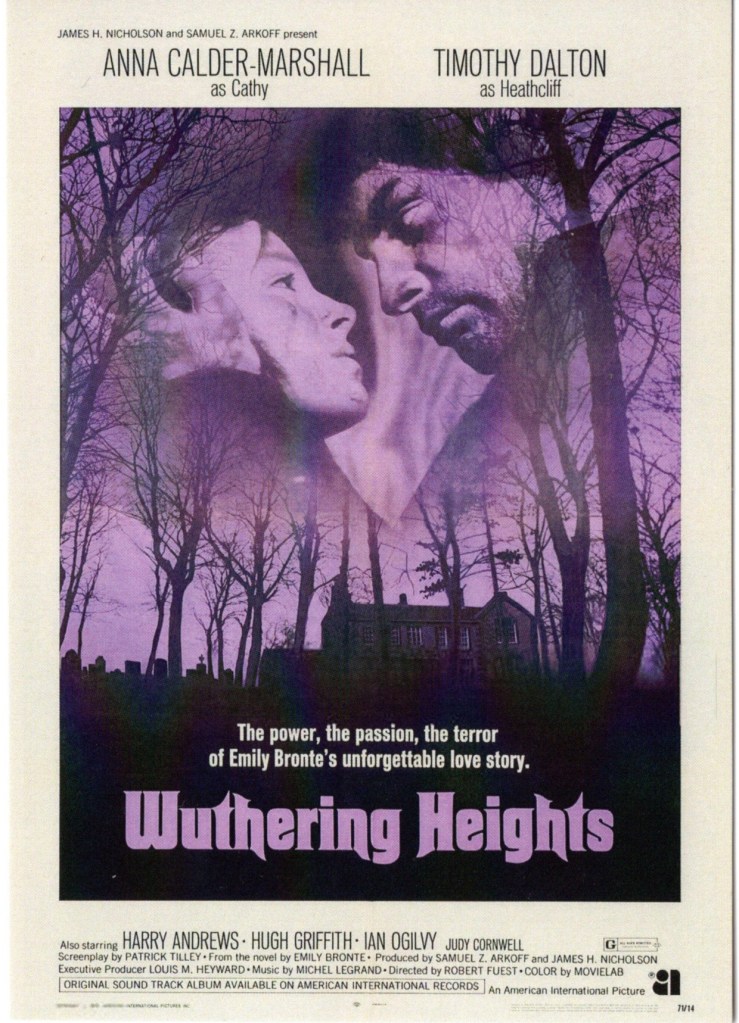
The purpose of the PhD research is to explore and critically evaluate the contemporary relevance of chorography as a practice research method for the critical examination of place. The research aims to situate chorography as a significant and relatively under-acknowledged approach in visual art to map characteristics of the locale by examining the relations between the physical site, its numerous interpretations, and representations. It seeks to investigate the performative and embodied experience of chorographic practice as a potential original contribution to knowledge. Additionally, the research aims to develop new ways to examine artistic practices of place-making and its application in visual art by restoring, developing, and communicating a connection between chorography, past and present. Overall, the purpose of the PhD research is to contribute to the understanding and application of chorography in contemporary artistic practice and research, specifically focusing on its application to the site of Brontë country.
“This book celebrates some of the most dazzling treasures of English literature to show how Britain’s greatest authors have been inspired by, and even redefined, their country. From Chaucer’s pilgrims journeying from Southwark to Canterbury, to the 21st century suburban hinterlands of J.G. Ballard, this book will explore how the places and landscapes of Britain permeate the nation’s great literary works and how these works have, in turn, helped shape our perception and understanding of landscape and place, both real and imagined. As well as celebrating the traditional British landscape the book will also examine the literary construction of the city, following the mysterious fog-filled streets that stretch from the London of Dickens and Robert Louis Stevenson’s Strange Case of Dr Jekyll and Mr Hyde to the urban underworlds revealed by contemporary writers such as Neil Gaiman and Iain Sinclair. Accompanying a major exhibition at the British Library, the book also features such diverse landscapes as Emily Bronte’s wild and windy Yorkshire Moors, Elizabeth Gaskell’s industrial northern towns, the seaside-turned-nightmare of Bram Stoker’s Dracula, Graham Greene’s seedy and menacing Brighton, Virginia Woolf’s Bond Street and Hanif Kureishi’s suburbia, this book will describe and illustrate the work of over 100 of the greatest British writers who have been inspired by place, spanning the Middle Ages to the 21st century.”


 denisestartin.co.uk