Exhibition text – Hints for British Tourists

Chalet Days I

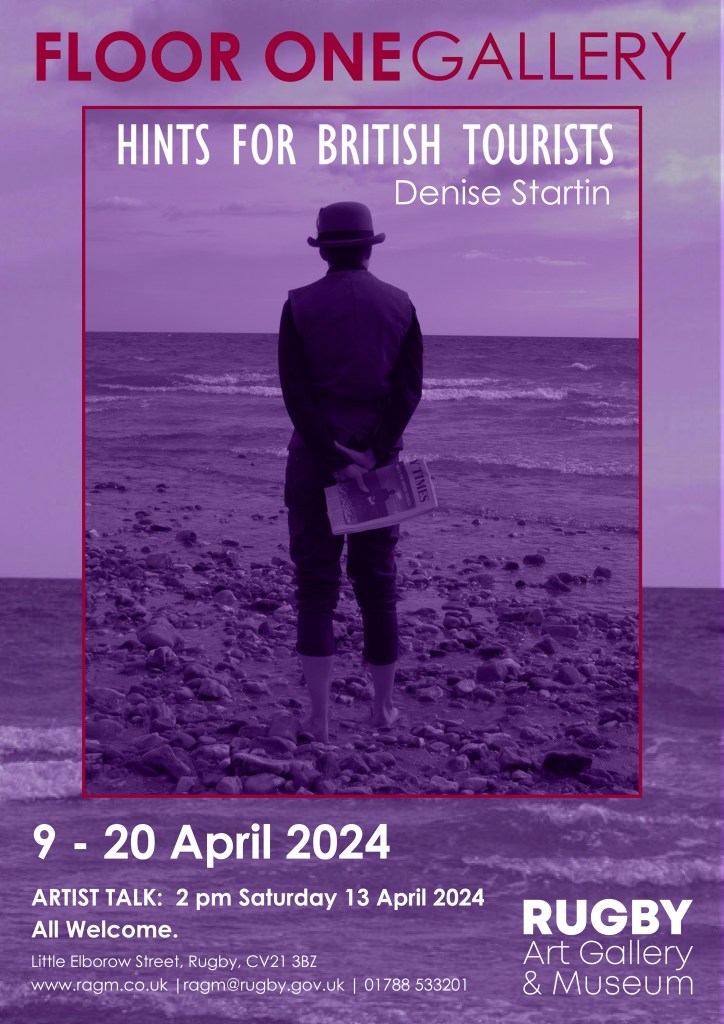
A figure in a bowler hat, waistcoat and rolled-up trousers brushes sand from their feet. They read a book in front of a painted beach hut, climb on rocks, clutch a newspaper, wait, fall asleep and lookout to sea. In one moment after another, we see tourism performed and time laid out in photographic frames like film stills.

Coventry-based artist Denise Startin presents a series of site-based performative actions, seen here via photographic documentation. The genesis of the exhibition Hints for British Tourists comprises two chance encounters: the discovery of a tourism pamphlet on eBay (also titled Hints for British Tourists) and a wall plaque on Hertford Street, Coventry, dedicated to the historic watchmaking trade that lists craftsmen Samuel Vale and George Howlette. The exhibition represents a re-staging and fictional expansion of these two very different starting points.

Vale & Howlette are adopted as dramatis personae in a wider body of work by the artist, becoming primary characters in a narrative that explores ideas of travel, leisure, time and memory performed by Startin herself and her partner. Startin’s work makes enquiries, both serious and humorous, that question what it means to be a tourist in post-Brexit England, in a world grappling with a pandemic and climate catastrophe, in a physical body that requires care and rest, and in a landlocked city more than one hundred miles from the nearest stretch of coastline.

The original pamphlet purchased by Startin was published in the former Yugoslavia in the 1970s, intended as a practical guide for travel. In it, the author observes, ‘One of the reasons I like Britain and the British, apart from liking the Sunday Times, cheese cake, Constables in the Tate, ‘apples and pears’ and not to mention the liveliness of their pubs is because their idea of a holiday is not just lying around on the beach and drinking.’ Startin’s work offers more than a nod to this ambiguous description, providing viewers with perspectives on place that appear both familiar and strange.

While also introducing historic travel mythologies relating to legendary, often unreachable places, the titles selected by Startin for the photographs shown – On the Rocks; Between a Rock and a Hard Place; Rush Hour – also point toward emotional states of being in motion, conflict, indecision or, indeed, indicate a sense of stillness. Vale & Howlette’s journey is as yet embryonic. They are on their way to who knows where.

Denise Startin studied at the Royal College of Art and has exhibited work at Compton Verney, Coventry Biennial and Whitechapel Gallery, London. She is the recipient of multiple awards and bursaries and has completed artist residencies in Wrexham, Surrey, Lands End and the Lake District.

Text by Anneka French
Currently Reading

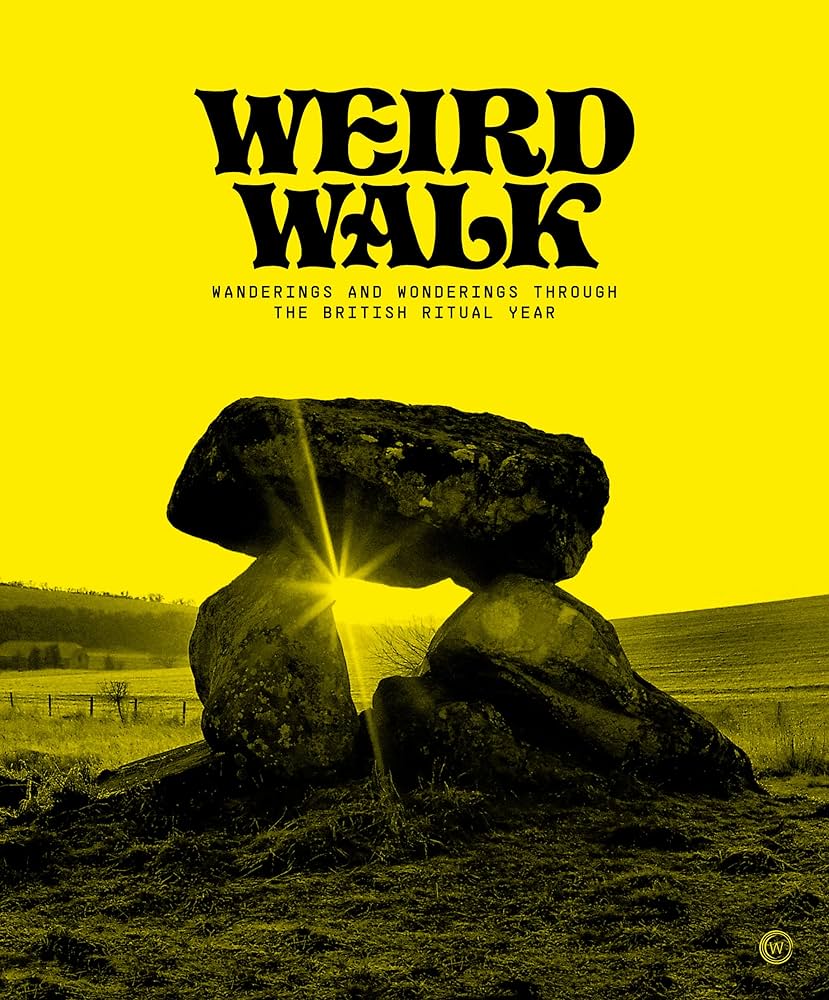
By walking the ancient landscape of Britain and following the wheel of the year, we can reconnect to our shared folklore, to the seasons and to nature. Let this hauntological gazetteer guide you through our enchanted places and strange seasonal rituals. SPRING- Watch the equinox sunrise light up the floating capstone of Pentre Ifan and connect with the Cailleach at the shrine of Tigh nam Bodach in the remote Highlands. SUMMER- Feel the resonance of ancient raves and rituals in the stone circles of southwest England’s Stanton Drew, Avebury and the Hurlers. AUTUMN- Bring in the harvest with the old gods at Coldrum Long Barrow, and brave the ghosts on misty Blakeney Point. WINTER- Make merry at the Chepstow wassail, and listen out for the sunken church bells of the lost medieval city of Dunwich. The first book by iconic zine creators and cultural phenomenon Weird Walk. This is a superbly designed guide to Britain’s strange and ancient places, to standing stones and pagan rituals, and to the process of re-enchantment via weird walking.

Text reproduced from https://www.weirdwalk.co.uk/ (accessed 04/03/24)

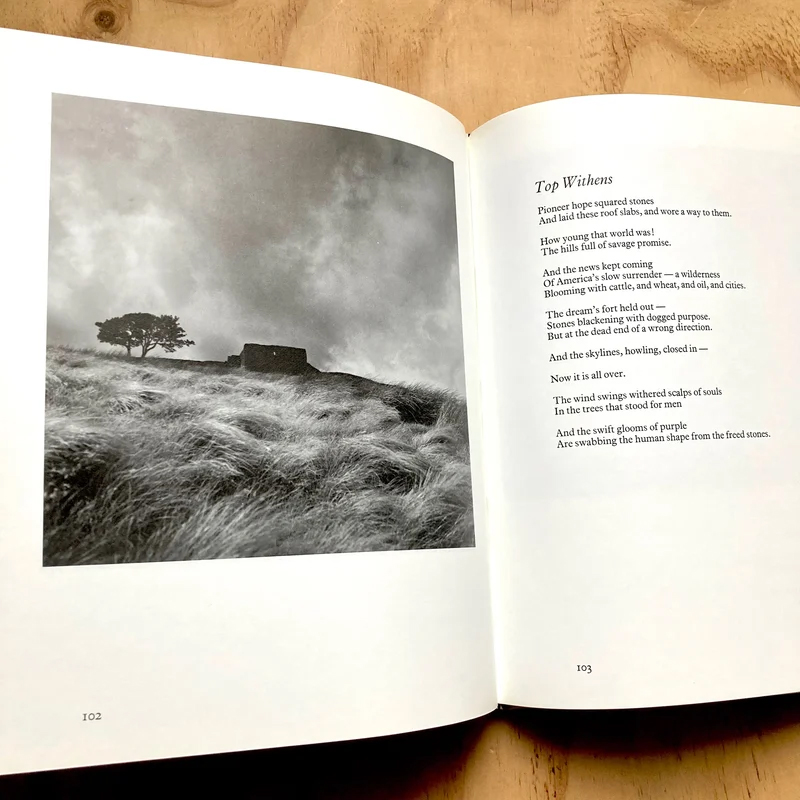
Remains of Elmet: A Pennine Sequence (1979)

Fay Godwin
Top Withens by Ted Hughes

“Ted Hughes (1930-1998) was born at 1 Aspinall Street, Mytholmroyd, in the West Riding of Yorkshire on the 17th August 1930. Ted was a pupil at the Burnley Road School until he was seven, when his family moved to Mexborough, in South Yorkshire. As a child he spent many hours exploring the countryside around Mytholmroyd, often in the company of his older brother, Gerald, and these experiences and the influences of the landscape were to inform much of his later poetry.

In ‘The Rock’, an autobiographical piece about his early childhood, Hughes writes about Scout Rock, whose cliff face provided ‘both the curtain and back-drop to existence‘. The area continued to be a powerful source of inspiration in his poetry long after he had left Yorkshire. Hughes described the experience of looking out of the skylight window of his bedroom on 1 Aspinall Street onto the Zion Chapel. The Chapel is long gone, but Zion Terrace remains, its name a reminder of more God-fearing times.

In his classic and richly personal collection Remains of Elmet: A Pennine Sequence (1979), with photographs by Fay Godwin, Hughes suggests that the Calder Valley was originally the kingdom of Elmet, the last Celtic land to fall to the Anglo-Saxons. A second, revised edition was published as Elmet in 1994. 

Many of Hughes’s other poems also relate to the Calder Valley. ‘Six Young Men’, for example, was written at Hughes’s parents’ house at Heptonstall Slack in 1956. The poem describes a photograph belonging to Hughes’s father of six of his friends on an outing to Lumb Falls, taken just before the First World War.”

Text reproduced from https://www.theelmettrust.org/elmet-trust-ted-hughes/ (accessed 25/01/23). Images reproduced from Pinterest.