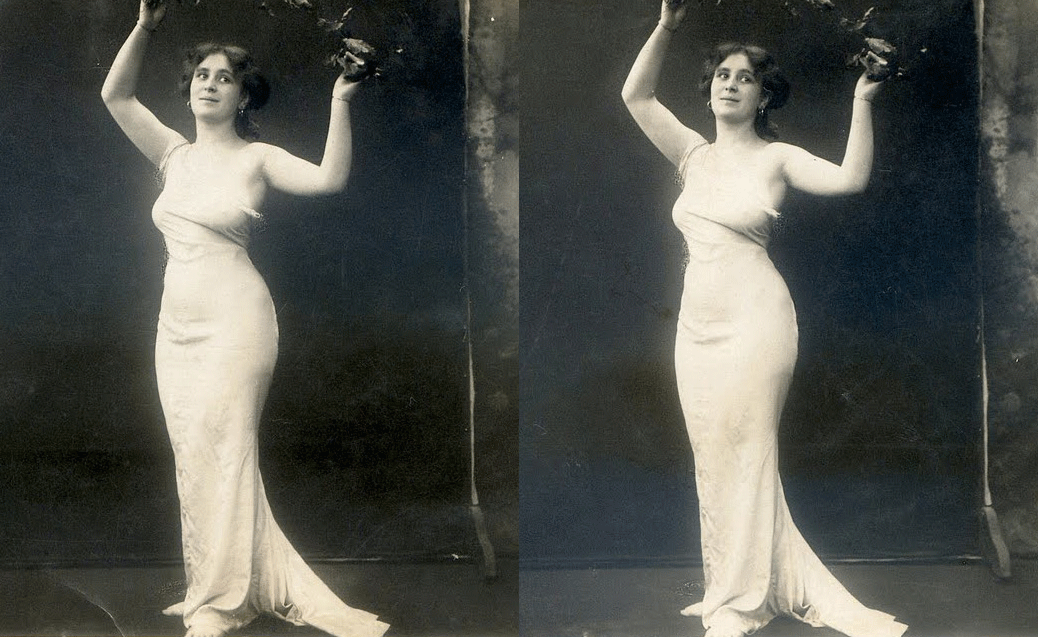
Woman having a wobble © Denise Startin

Woman having a wobble © Denise Startin

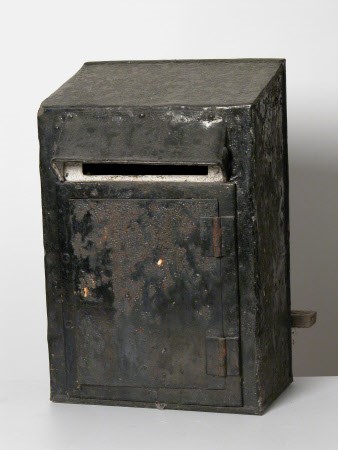
Old Letterbox at Erddig Estate, nr. Wrexham, Wales, n.d.
Dear Readers, I hope you are well.
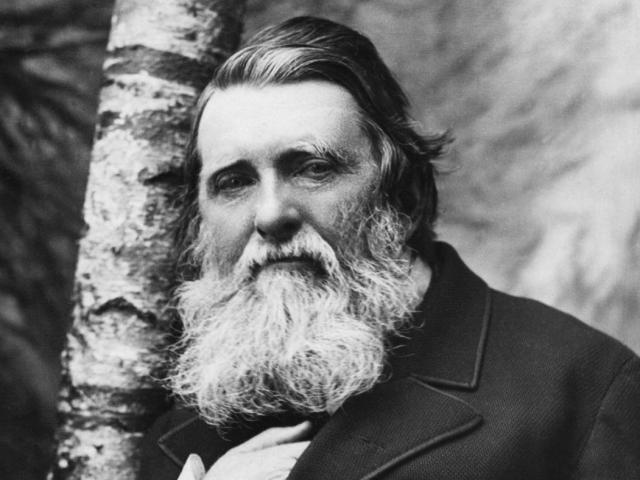
Apologies for the lack of manual dexterity on my blog of late I have been extremely unwell, so unwell in fact I couldn’t type or at least I was trying but inventing a completely new and unintelligible language. For some self encouragement this blog is about what I will be blogging about. Things have occurred that can be written about, in spite of some of these things happening many months ago, so I decided I will write about them anyway if memory provides the ability to do so. These include a ‘medieval propaganda’ day relating to St.George at St. John the Baptist Church, Fleet Street, Coventry, a Hidden Heritage Conference in Dorset (an oxymoron I know), a visit to Burton Dassett Hills, Warwickshire, an outstanding Arts & Crafts House, Blackwell, south of Bowness, Windermere and Brantwood, Coniston Water, home of John Ruskin in the latter years of his life.
Yours


Coronia © Denise Startin
“VI A few examples: A sailor of antiquity in his boat, enjoying himself and appreciating the comfortable creations. Ancient art represents the subject accordingly. And now: the experiences of modern man, walking across the deck of a steamer: 1. his own movement, 2. the movement of the ship which could be in the opposite direction, 3. the direction and speed of the current, 4. the rotation of the earth, 5. Its orbit, and 6. The orbits of the stars and the satellites around it.
The result: an organization of movements within the cosmos centred on the man on the steamer.”
Extract from Paul Klee “Creative Credo 1920” quoted in Theories of Modern Art: A Source Book by Artists and Critics, Herschel Browning Chip, Peter Howard Selz, pp.186

chiasmus
“[T]here must be, then, corresponding to the open unity of the world, an open and indefinite unity of subjectivity. Like the world’s unity, that of the I is invoked rather than experienced each time I perform an act of perception, each time I reach a self-evident truth, and the universal I is the background against which these effulgent forms stand out: it is through one present thought that I achieve the unity of all my thoughts…The primary truth is indeed ‘I think’, but only provided that we understand thereby ‘I belong to myself’ while belonging to the world.”
Text reproduced from Maurice Merleau-Ponty, The Phenomenology of Perception, quoted in Place and Experience, A Philosophical Topography, J Malpas, Cambridge University Press, 1999:pp.72. Image reproduced from http://merleau.jp/whatsE.html