William Hole’s frontispiece (from the Folger Shakespeare Library [http://luna.folger.edu/luna/servlet/s/7ihql3])
“Poly-Olbion is an expansive poetic journey through the landscape, history, traditions and customs of early modern England and Wales. Originally published in two parts (1612, 1622), it is also a richly collaborative work: Michael Drayton’s 15,000-line poem, which navigates the nation county by county, is embellished by William Hole’s thirty exquisite engraved county maps, and accompanied for its first eighteen ‘songs’ by the young John Selden’s remarkable prose ‘Illustrations’. Drayton was a close associate of Shakespeare and Ben Jonson, and his Poly-Olbion crystallizes early modern ideas of nationalism, history and memory.”
So I’m having to do some fairly niche reading for my PhD, which starts in October, since I am investigating a concept from the 16th-17th centuries although it’s provenance is much older than that and begins with Ptolemy’s Geographia (149AD). I am tracing it’s roots and development through British History and Antiquarianism (the historical precursor to Archaeology) which flourished in the 17th century and was part of an epic effort to map Britain, one famous example being William Camden’s Brittania (1586). With its overriding pre-occupation with place Camden’s Brittania, arranged chronologically, is a county-by-county survey of England & Wales which travels from the South to the North and represents a new ‘topographical-historical method’ (Mendyk 1986 cited in Rohl 2011: 22).
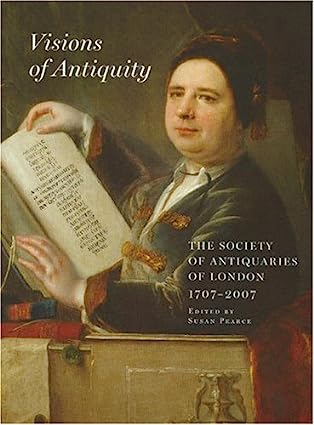
The book articulates the image of the antiquary in 17thC England, it’s relation to the graphic arts, art and antiquity in the long 19th Century, the interpetation of ancient objects, prehistory in the 19thC, nineteenth-century antiquarian culture and the project of archaeology, antiquaries and conservation of the landscape, grand excavation projects of the twentieth century and antiquaries and the professionalization of archaeology.
I am hard at work on my Bibliography and see some exciting trips to the Bodleian library, Oxford in the future.
“A Perambulation of Kent is the first English county history. It was written by William Lambarde, an Elizabethan antiquarian and lawyer. Lambarde wrote the text in 1570 but it was not printed until 1576. The book describes a journey through Kent and describes the antiquities of the county and its influence on English history. The text also includes a copy of Lambarde’s map of the ‘Heptarchy’ or the kingdoms of Anglo-Saxon England that he had first included in a collection of Anglo-Saxon laws he published in 1568.”
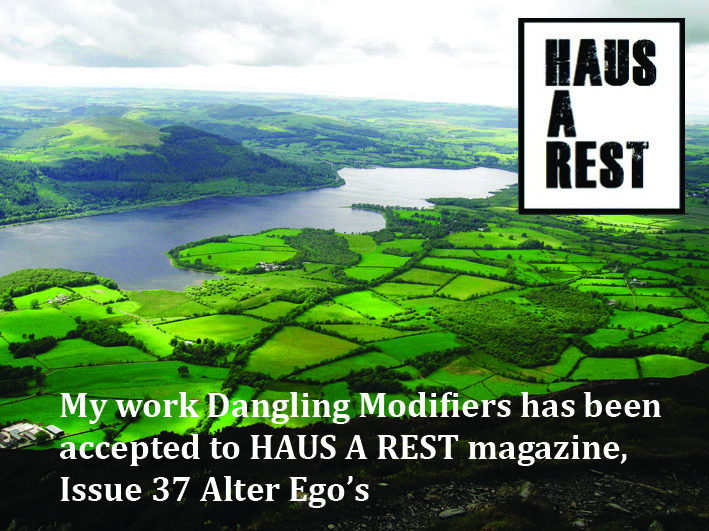
I am pleased to announce my piece “Dangling Modifiers” was accepted to HAUS A REST magazine, Issue 37 Alter Ego’s. Dangling Modifiers is the document of an ephemeral performance capturing a subject in process, a momentary ecstasis where high on a hilltop in the Lake District I attempted to dance with Paul Klee using his drawing Knotted 1920 as the performative score. I engaged in an improvised choreography whereby the drawing was translated into movement by falling, jittering, twisting, snaking, weaving and shimmying on a hilltop like a deranged walker. This performance was part of a residency where several bodies slept together in a village hall, and explored their structures, rhythms, touch, possibilities, limits, and their fragilities. This text is the only document of the performance.


 denisestartin.co.uk