Poetry, Language, Thought

‘In Heidegger’s thinking, poetry is not a mere amusement or form of culture but a force that opens up the realm of truth and brings man to the measure of his being and his world.’

Quote from back cover, Extract from Poetry, Language, Thought, The Thinker as Poet, Harper and Row, NY 1971: pp11

Deleuze

First Drafts_DS 2012


“Writing has nothing to do with signifying. It has to do with surveying, mapping, even realms that are yet to come.”
Deleuze and Guattari, A Thousand Plateaus

Text reproduced from POSTCOLONIAL ‘TEXTUAL SPACE’: TOWARDS AN APPROACH
 by Alexander Moore . For the full article click here.


Dark Writing

Klee_Line_for_a_walk

“Conspicuously left out of geography’s line – as it is left out of Descartes construction of the ‘I’- is of course the body that writes, and which, in writing, is also being written. Justine Clark explains:

The surface of the drawing is the site of involuntary traces, just as the scene of the body is the scene of involuntary muscular motions – blushing, tics, twitches – the play of internal effects across the surface of the body. If we follow Elizabeth Grosz’s contention that ‘all effects of depth and interiority can be explained in terms of the inscriptions and transformations of the subject’s corporeal surface…that the body can be understood as the very stuff of subjectivity,” then this surface of bruises and blushes, tingles and scars is crucial.”

Carter Paul, Dark Writing, University of Hawaii Press, 2009:pp.82. Image reproduced from http://rodcorp.typepad.com/rodcorp/rodcorps_art/page/2/

Awaiting Oblivion

her lodging her, bidding DS2011

“When I am before you and would like to look at you, to speak to you…” – “He takes hold of her and attracts her, drawing her out of her presence.” – “When I approach, motionless, my pace bound to your pace, calm, hurried…” – “She leans back against him, holding back, letting herself go.” – “When you go ahead, marking out a path for me to you…” – “She slips, rising up on the one he touches.” – “When we come and go in the room and look for an instant at...” – “She holds back in her, drawn back outside her, waiting for what happened to happen.” – “When we move away from each other, and also from ourselves, and thus approach each other, but far from each other…” – “That is the coming and going of waiting: its cessation.” – “When we remember and forget, reunited: separated…” – “That is the motionlessness of waiting: in motion more than any movement.” – “But when you say: ‘Come” and I come to this place of attraction…” – “She falls, given to the outside, her eyes calmly open.” – “When you turn back and make me a sign…” – “She turns away from everything visible and invisible.” – “Leaning back and showing herself.” – “Face to face in this calm turning away.” – “Not here where she is or there where he is, but between them.” – “Between them like this place, with its great staring look, the reserve of things in their latent state.”

Awaiting Oblivion (L’Attente l’oubli), Maurice Blanchot, Trans John Gregg, University of Nebraska Press: USA1997, pp.85

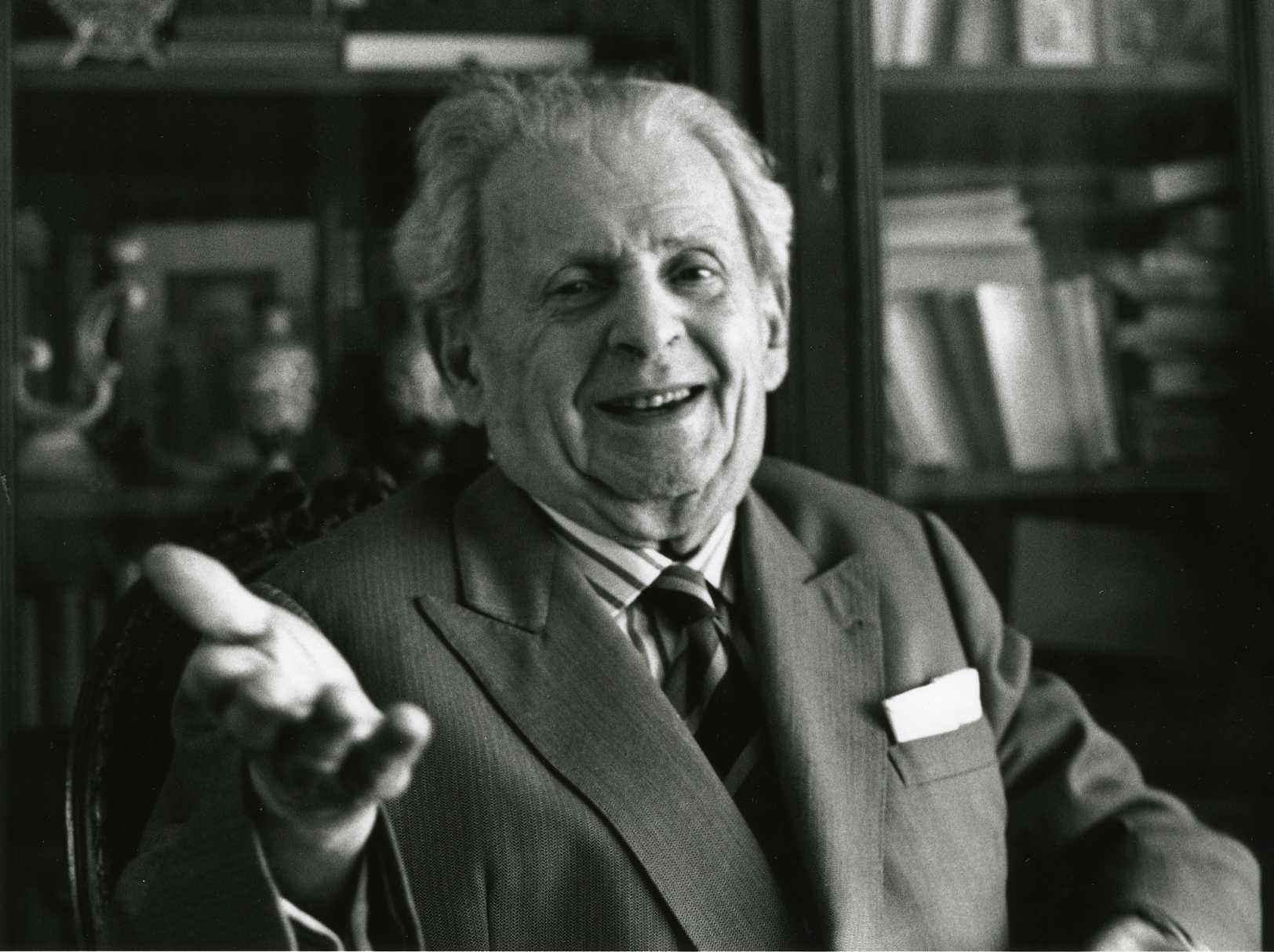
Emmanuel Levinas

Emmanuel Lévinas

“To approach the Other in conversation is to welcome his expression, in which at each instant he overflows the idea a thought would carry away from it. It is therefore to receive from the Other beyond the capacity of the I, which means exactly: to have the idea of infinity. But this also means: to be taught. The relation with the Other, or Conversation, is a non-allergic relation, an ethical relation; but inasmuch as it is welcomed this conversation is a teaching. Teaching is not reducible to maieutics; it comes from the exterior and brings me more than I contain. In its non-violent transitivity the very epiphany of the face is produced.”

Quoted from http://www.goodreads.com/author/quotes/1603038.Emmanuel_L_vinasEmmanuel Lévinas, Totality and Infinity: An Essay on Exteriority

Image reproduced from http://www.dcambrose.com/past-research/