Unit 2J, FarGo Village, Open Studio Weekend

Rachel Kelly, Site Manager and Jo Truslove, Project marketing Manager at FarGo Village, Coventry

Rachael Kelly, Site Manager and Jo Truslove, Project Marketing Manager at FarGo Village, Coventry

Denise Startin Unit 2J, FarGo Village, Open Studio Weekend, Far Gosford Street, Coventry, CV1 5EA

“The destination for independent shopping and creative arts in Coventry is on its way.”

Opening on 27th September 2014, Fargo Village will bring a whole new dimension to the city offering niche and unique retailers, artists’ studios, creative workspace, crafts, cafes, markets and entertainment space. Affordable rents will allow new businesses to set up, thrive and survive in an attractive environment, in a community of like minded people.

We are bringing a piece of the London cool scene of Camden and Brick Lane to Coventry. Twenty years ago these were run down areas of London but with investment into the creative industries they have now become major attractions bringing in visitors from all over the world and in turn supporting the local economy. To emulate some of that success here would give Coventry a huge boost in perception and appeal to locals and visitors. Fargo Village will inject energy and fun into Coventry.”

Denise Startin, former graduate of Coventy University and recent graduate of the Royal College of Art, MA Printmaking 2013 will be holding an Open Studio at the launch weekend where elements of her MA Show will be on display. Unit 2J is upstairs on the balcony at the rear of the Market Hall. For a recent article on the development of FarGo including views from the tenant’s, image gallery & FarGo’s Project Marketing Manager Jo Truslove click here, download the Launchflyer or visit the website at www.fargovillage.co.uk.

Text quoted from http://www.fargovillage.co.uk/. For more information about the creative business tenants please visit http://www.fargovillage.co.uk/tenants/. Image reproduced from http://www.coventrytelegraph.net/news/business/smes/coventrys-new-fargo-village-launches-7816480

Save

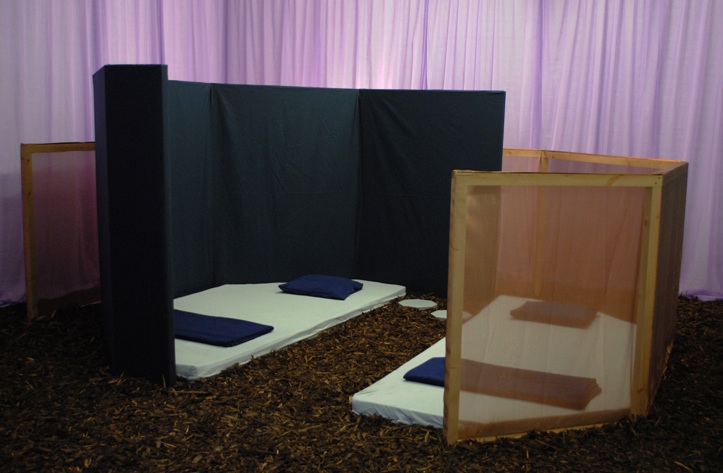
Choreographic Objects

||HOST||The Royal Standard as part of the Liverpool Biennial27th October - 4th November 2012

||HOST||
The Royal Standard as part of the Liverpool Biennial
27th October – 4th November 2012
Sovay Berriman, Royal College of Art Alumni 2003

Choreographic Objects by William Forsythe

An object is not so possessed by its own name that one could not find another or better therefore.
– Rene Magritte

“Choreography is a curious and deceptive term. The word itself, like the processes it describes, is elusive, agile, and maddeningly unmanageable. To reduce choreography to a single definition is not to understand the most crucial of its mechanisms: to resist and reform previous conceptions of its definition.  There is no choreography, at least not as to be understood as a particular instance representing a universal or standard for the term. Each epoch, each instance of choreography, is ideally at odds with its previous defining incarnations as it strives to testify to the plasticity and wealth of our ability to re-conceive and detach ourselves from positions of certainty. Continue reading

Spatial Architectonics

Loie Fuller

Loïe Fuller, physical poet, 1862-1928

“Space – my space – is not the context of which I constitute the ‘textuality’: instead it is first of all my body, and then it is in my body’s counterpart or ‘other’, it’s mirror image or shadow: it is the shifting intersection between that which touches, penetrates, threatens or benefits my body on the one hand, and all other bodies on the other. Thus we are concerned, once again, with gaps and tensions, contacts and separations, Yet, through and beyond these various effects of meaning, space is actually experienced, in its depths, as duplications, echoes and reverberations, redundancies and doublings up…”

Text reproduced from The Production of Space, Henri Lefebvre, Trans. Donald Nicholson-Smith, Blackwell Publishing UK, 1991: pp.184

Image reproduced from http://www.metmuseum.org/collections/search-the-collections/287807 where you will also find more information on Loïe Fuller

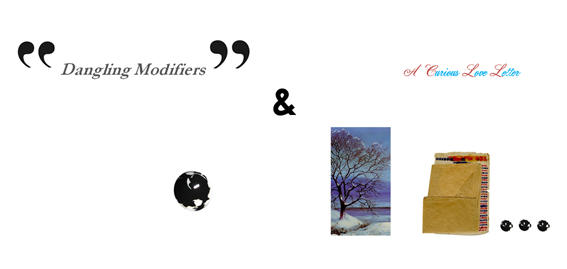
Dangling Modifiers & A Curious Love Letter, Micro Performance Lectures, Ragley Hall

Dangling Modifiers & A Curious Love Letter, Micro performance Lectures, Warwickshire Open Studios, Ragley Hall, Warks

Dangling Modifiers & A Curious Love Letter, Micro Performance Lectures, Warwickshire Open Studios, Ragley Hall, Warks

 [Briefly she enters another’s space becoming a site of inscription like the blank page…
he advances towards her with short, sharp stabbing motions. Can she subject her
sensuous gesture to his nervous tic? Following the curve of her S she drops down
heavily into its base disappearing from his line of site. She sways at the bottom before
rising and finds that he has become a woodpecker, his nervous tic feverishly
inscribing the trunk of a tree.]

“Dangling Modifiers” is the textual re-performance of a physical performance. High on a hilltop in the Lake District Denise engaged in an improvised choreography attempting to dance with the artist Paul Klee (1879-1940); to coax the performer’s body and Klee’s silent drawing into speech . Klee’s rhythmic line is expressive, lyrical, poetic and figurative evoking transcriptions of music. “The letter is not directed to the body; the line however, exists only through the echo it will encounter in other bodies where it will generate itself as a danceable volume, polyphony, scene, texture, at palpitating fingertips…” [1]. Positively performing a Kleeché  (taking a line for a walk), Paul Klee’s Drawing Knotted, 1920 was utilised as the performative score translating the drawing into movement by falling, jittering, twisting, snaking, weaving and shimmying on a hilltop like a deranged walker.

“Echo who cannot be silent when another speaks. Echo who cannot speak at all unless another has spoken. Echo who always answers back.” [2]

A Curious Love Letter is equally a failed attempt at speech, letters of love to an absent and unreachable addressee, based on an original reading of a performed letter at which Denise was absent. Separated by distance, time, space and location Denise has ventriloquised the original speakers voice into her own, reconstructing and miming the unheard text. Other voices and figures have been incorporated including artists Ad Reinhardt, Piet Mondrian & Michael Craig-Martin and literary figures such as Maurice Blanchot, Roland Barthes and Fernando Pessoa. The result is a polyphonic word and image divigation and a very curious love letter indeed.

Dates & Times: Saturday 5 th July 2pm & 3pm, Sunday 6th July 2pm & 3pm – Saturday 12th July 2pm & 3pm, Sunday 13th July 2pm & 3pm.

[1] Jean-Francois Lyotard, Driftworks, Semiotext(e), Inc, (Columbia University: New York, 1984), p.86/87.
[2] Ted Hughes, Tales from Ovid (London: Faber and Faber Limited, 1997), p.75/77.

Review: CHORALE, A Sam Shepard Roadshow, The War in Heaven

thewarinheaven

The War in Heaven (Photograph: Nina Sologubenko) CHORALE: A Sam Shepard Roadshow, The Presence Theatre Company

The War in Heaven, Sam Shepard

“I died the day I was born and became an Angel on that day”

Whilst the non resolution of The Holy Ghostly was resolved powerfully both in terms of the scenography, the visual imagery and the performance by John Chancer this did not translate successfully in The War in Heaven which Usher describes as “a moving plea from both a fallen angel and a man struggling to be heard once more.” I would argue important contextual information was missing for the audience in the interpretation of this play especially following the The Holy Ghostly since the full title is The War in Heaven: Angel’s Monologue. Whilst The Animal You and The Holy Ghostly were connected conceptually and through the characters there was absolutely no connection to the final instalment except the fact that it was Sam Shepard’s work.

As a general rule visually I  found the scene to be completely incoherent, which in itself is not a dismissal of the aesthetic, sculptural and conceptual qualities of this kind of work and its inherent complexities however it felt largely unresolved from a formal perspective. There was simply no connection between the performers in space and the set. Clearly narrative and visual incoherence are  conceptual strategies and the production appeared to commit to this concept as an overall architecture to the work. The play itself is on many levels trying to find form through language within a stream of consciousness speech but my feeling is it didn’t go far enough and was therefore caught somewhere between the concept and the execution. If this disconnection is a formal aspect of the work it is possible to resolve the visually incoherent formally but there seemed to be a failure to commit to the intention and make it concrete.

Continue reading