Not all those who wander are lost

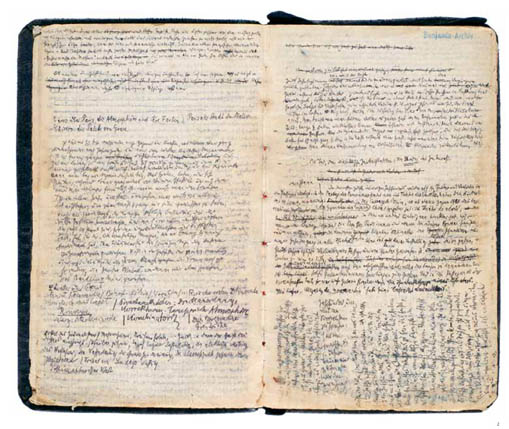
Walter Benjamin, Pariser Passagen

In the Field Guide To Getting Lost Rebecca Solnit quotes a question from the pre-socratic philosopher Meno. “How will you go about finding that thing the nature of which is totally unknown to you?” p.4 […] and goes on to write “To lose yourself: a voluptuous surrender, lost in your arms, lost to the world, utterly immersed in what is present so that its surroundings fade away. In Benjamin’s terms, to be lost is to be fully present, and to be fully present is to be capable of being in uncertainty and mystery. And one does not get lost but loses oneself, with the implication that it is a conscious choice, a chosen surrendering, a psychic state achievable through geography.” p.6

The current exhibition at the British Library 25th September celebrates this psychic state through the relationship of writing in Britain. Exhibits include extracts from diaries, notebooks, letters, artworks and sound recordings from a wealth of poets and writers including William Blake, Ted Hughes, George Eliot, James Joyce, J G Ballard, John Lennon, Harold Pinter and more. Writing speaks of walking and wandering [wondering], of finding and losing, of coming and going, of boundaries and horizons, pilgrimages and wild places. Writing and landscape mark each other reciprocally producing dream landscapes, barren landscapes, hostile landscapes, loving landscapes and sacred spaces where the human being who is most of the time caught up in human doing, can take time out and dwell [in the Heideggerian sense of the term] in being. To experience its chthonic heartbeat and return itself to its natural rhythms through walking and what is writing if not a walk on the wild side?

The title of this quote is reproduced from the exhibition and is from J.R.R. Tolkien, The Fellowship of the Ring.

Quotes reproduced from Rebecca Solnit, A Field Guide to Getting Lost, Canongate Books 2011. Image reproduced from http://www.hatjecantz.de/controller.php?cmd=detail&titzif=00002894&lang=en

Deleuze

First Drafts_DS 2012


“Writing has nothing to do with signifying. It has to do with surveying, mapping, even realms that are yet to come.”
Deleuze and Guattari, A Thousand Plateaus

Text reproduced from POSTCOLONIAL ‘TEXTUAL SPACE’: TOWARDS AN APPROACH
 by Alexander Moore . For the full article click here.


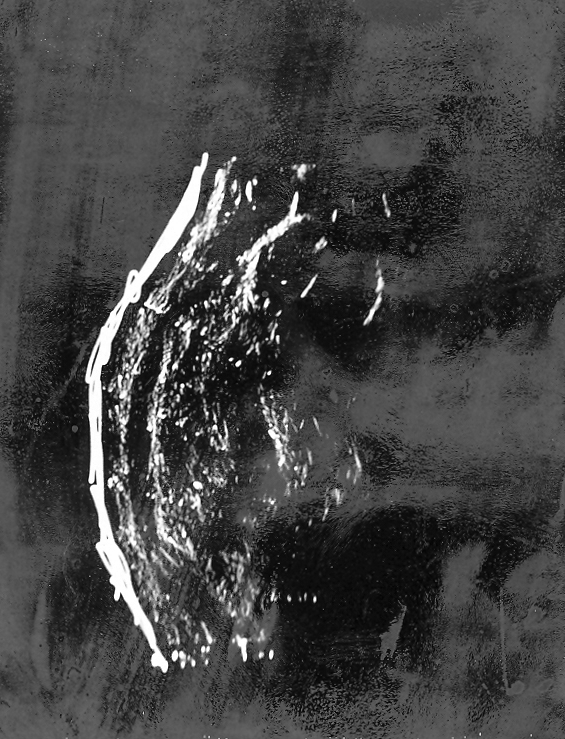
Dark Writing

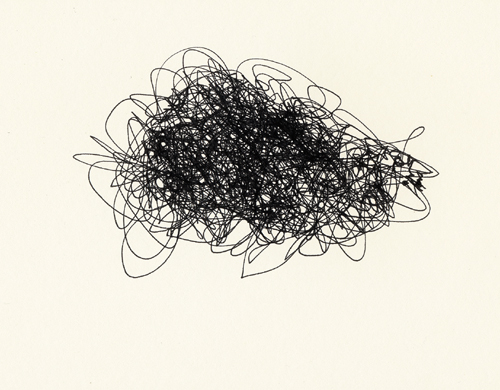
Klee_Line_for_a_walk

“Conspicuously left out of geography’s line – as it is left out of Descartes construction of the ‘I’- is of course the body that writes, and which, in writing, is also being written. Justine Clark explains:

The surface of the drawing is the site of involuntary traces, just as the scene of the body is the scene of involuntary muscular motions – blushing, tics, twitches – the play of internal effects across the surface of the body. If we follow Elizabeth Grosz’s contention that ‘all effects of depth and interiority can be explained in terms of the inscriptions and transformations of the subject’s corporeal surface…that the body can be understood as the very stuff of subjectivity,” then this surface of bruises and blushes, tingles and scars is crucial.”

Carter Paul, Dark Writing, University of Hawaii Press, 2009:pp.82. Image reproduced from http://rodcorp.typepad.com/rodcorp/rodcorps_art/page/2/