Subjects of dispersal

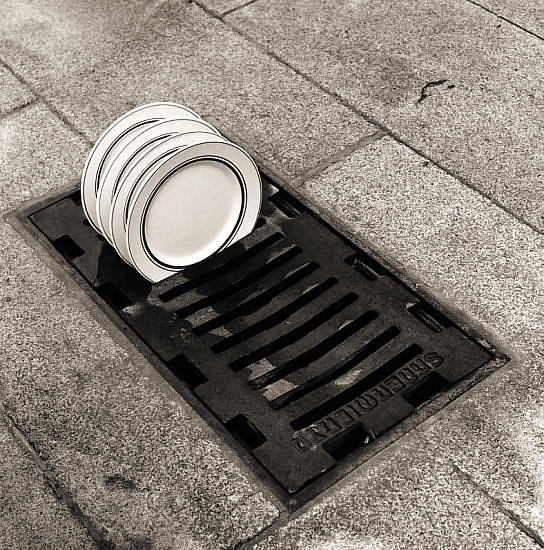
Hands:Holding by Rune T

‘Foucault uses the language of space to highlight the formative effects of discourse and the instability of the plane it constitutes. Foucault’s analytics and politics are inextricably linked to creating an alternative physics of space. His alternative spatial text-ure both represents itself as a more accurate depiction of the real work of power and shifts the paradigmatic grounds for conceiving power. Power has generally been conceived as a dichotomous structure pairing intent and result, cause and effect, oppressor and oppressed. But Foucault levels the dimensionality of the social edifice, making power, knowledge, and subjects alike the temporary internal effects of a dispersed, evanescent field. The subject loses its organic solidity to appear like a bubble within a perpetually plastic substance. Subjects appear ‘in-different’ neither casually prior to a power’s mechanism, not imaginative outside its perpetually [re]formative web: Continue reading

Mirrors

mirrors

(Absence.)

The perfect monochrome is a surface without any marks: uniform, textureless, polished: a mirror.
“Nothing” turns into “anything”: the perfect monochrome throws the world back at the spectator.

(Tautology.)

The mirror only reflects what is already there.
It can show anything, but it cannot make a difference.
It says: x = x.

(Narcissism.)

The only exception is the thing that cannot be duplicated: the subject.
The mirror returns the gaze of the observer. The subject becomes an object.

(Fun.)

A mirror surface with a non-uniform orientation presents a multiplied, fragmented and/or distorted image of the world and the viewer. Automated cubism becomes a joke.

(Infinity.)

A closed optical loop between two or more mirrors multiplies an image ad infinitum.
Pistoletto’s “Metrocubo d’Infinito” implements the thought experiment: What if there is no input image?

Text reproduced from http://radicalart.info/nothing/mirrors/index.html

Performative Installation

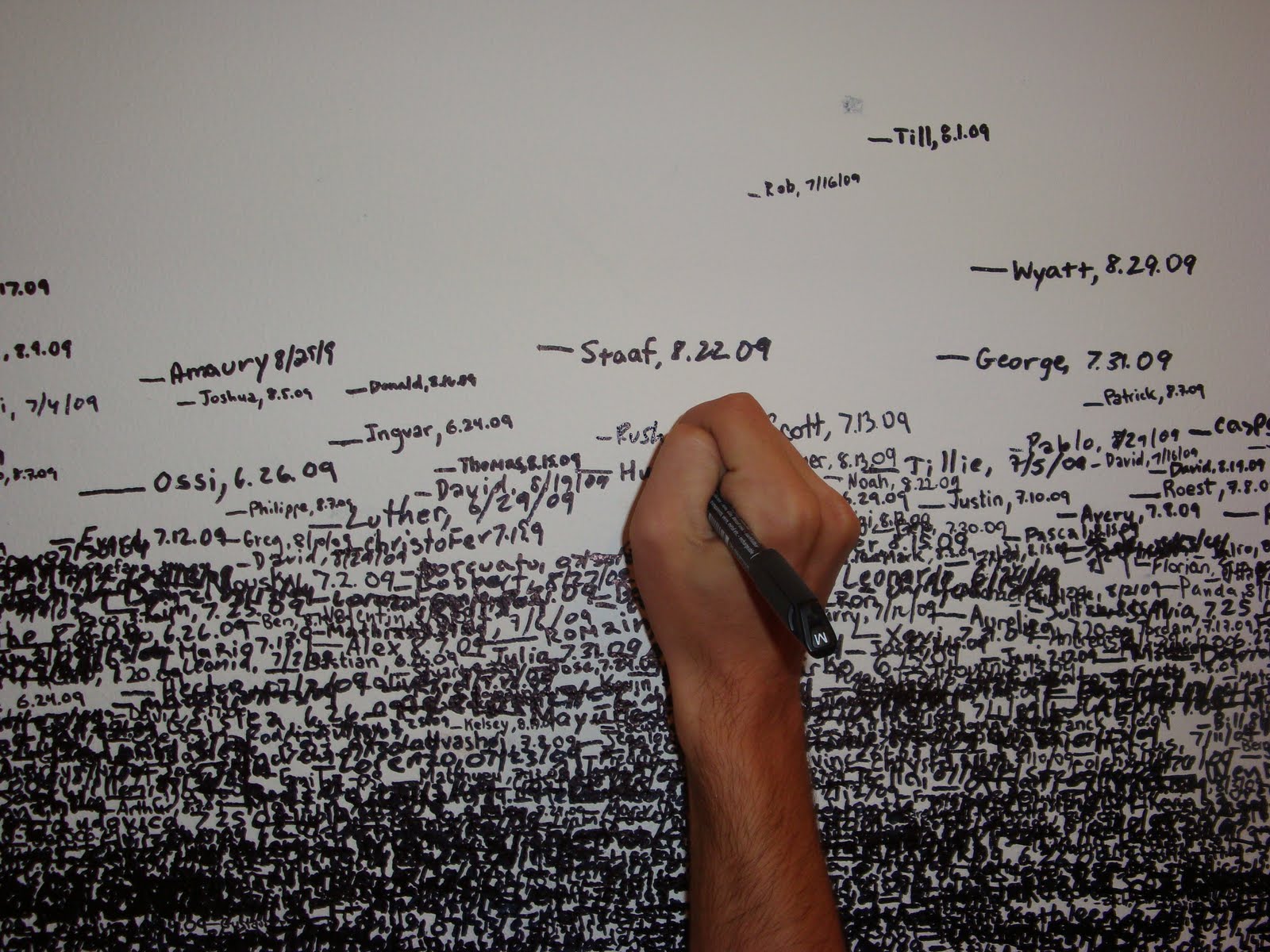
Measuring the Universe, Roman Ondák

  1. The event aspect of performativity [the moment, now] is linked to the materiality of an installation in through simultaneousness of action/experience, or the event aspect of artistic production [performance] continues to take effect within the installation.
  2. Performativity is a constitutive part of the installation
  3. The installation alone is what generates the performativity
  4. A Performance Installation has its own individual context; by means of the performative elements it embraces the live elements of the external context and thereby incorporates categories from everyday routine and life.
  5. The extent of the performativity of an installation in terms of its appearance cannot be completely predicted or controlled here. Performative Installation thus unites within itself presence and representation, ephemeral and static elements, event and duration and immateriality and materiality. The direct effect and the indirect work enter into a synthesis. In a Performative Installation the dialectics of subject and object are annulled. Both are given a new common identity here.

Text quoted from performative installation, Angelika Nollert, 2003:pp.13

Image reproduced from http://artjetset.com/2009/08/30/roman-ondak-performative-installation-at-moma-2/. For more information about the work at MOMA 2009 click here