‘Infinite is a meaningless word: except – it states
The mind is capable of performing
an endless process of addition.’
Text quoted from http://www.manystuff.org/?p=6119
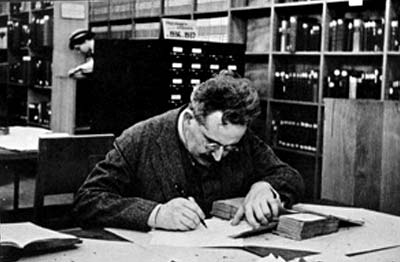
Image reproduced from http://spconger.blogspot.com/2010/07/louis-zukofsky.html
‘Infinite is a meaningless word: except – it states
The mind is capable of performing
an endless process of addition.’
Text quoted from http://www.manystuff.org/?p=6119
Image reproduced from http://spconger.blogspot.com/2010/07/louis-zukofsky.html
I write you all the time, that is all I do.
‘After a long and fruitless waiting I have determined to write you myself, as much for your sake as mine.’
Oscar Wilde to Lord Alfred Douglas, Jan 1897
Love Letters, 2000 years of Romance, 2011:pp87
Heading and sub-heading: Derrida J, Occasional Deconstructions, Wolfreys J, 2004: pp319
‘I am conscious of myself and become myself only through revealing myself for another, through another and with the help of another. The most important acts constituting self-consciousness are determined by a relationship toward another consciousness [toward a thou]…The very being of man internal and external is the deepest communion. To be means to communicate…To be means to be for another, and through the other for oneself. A person has no internal soveriegn territory, he is wholly and always on the boundary: looking inside himself he looks into the eyes of another or with the eyes of another…I cannot manage without another, I cannot become myself without another.’
Text reproduced from: Thinking space By Mike Crang, N. J. Thrift, 2000:pp73/74
Image reproduced from http://www.marxists.org/glossary/people/album/index2.htm
‘The detail discloses hidden elements within a diegesis – a formulation that applies to psychoanalysis as much as it applies to the interpretation of narrative generally. Freud creates an interpretive pradagim in which details function as clues, distractions or unarticulated dimensions of diegesis. […] Details need only suggest in their effects of authenticity or usualness that they belong to a possible world. Framing that world, which can be entirely made up, ‘details provide an important aesthetic function when their concreteness, historical accuracy, or presicision captures and sustains the readers attention or conveys to him the illusion of immediacy’. That immediacy need not spring from the coherence of details. They can exist independent of each other, like so many curiosities in a cabinet. For this reason details resemble material goods; the precise captures the essential qualities of an object.’
Perceived and interpreted, details offer counter narratives within narratives, they supplement stories with extra diegectical importance. In The Pleasure of the Text, Roland Barthes reflects on details as narrative information: ‘Why this curiosity for tiny details, schedules, meals, habits, clothes and so on. Is this the fantasmic taste of reality [‘the materiality of this once existed’]?. Is it not a fantasy itself which summons the detail, the minutiae, private scene in which I might find my place at last’?. Fantasy stakes its claim in the kingdom of the detail. Whereas the realist text purports to offer historical veracity through a grisaille of details, details admit speculation, fantasy, even the fantasmic. The detail in this sense is not available for public scrutiny or sharing. The detail re-fetishizes ownership through particularity.’
Enchanted Objects: visual art in contemporary fiction, 2010:pp64/65
‘It seems that the soul loses itself in itself when shaken and disturbed unless given something to grasp onto, and so we must always provide it with an object to butt up against and act upon.’
c.1580 source unknown
Image reproduced from http://hua.umf.maine.edu/Reading_Revolutions/MontaigneT.html