Heraclitus

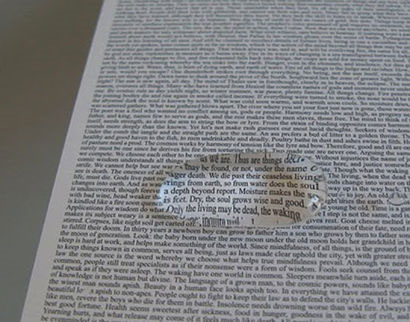
Josh Baum Reading Heraclitus

Browsing the fragments of Early Greek Philosophy by Heraclitus, Empedocles and Diogenes et al I have made some startling and humorous discoveries of the thoughts of Heraclitus inscribed here for your delectation:

‘Exhalations are given off by the earth and the sea, some of them bright and pure, others dark. Fire is increased by the bright exhalations, moisture by the others. He does not indicate what the surrounding heaven is like. But there are bowls in it, their hollow side turned toward us […] The sun and the moon are eclipsed when the bowls turn upwards. The moon’s monthly changes of shape come about as its bowl gradually turns.

and here in this combination of the comic and the tragic:

‘In the end he became a misanthrope, leaving the city where he fed on plants and herbs. Because of this he contracted dropsy and returned to the town. He asked the doctors in his riddling fashion if they could change a rainstorm into a drought. When they failed to understand him, he buried himself in a byre [barn, cowshed], hoping that the dropsy would be vaporized by the heat of the dung. But he met with no success even by this means and died at the age of sixty.’

Barnes J, Early Greek Philosophy, Penguin, London, 1987:pp 107, 105

Image by Josh Baum reproduced from http://futuremap.arts.ac.uk/press/joshbaum-reading-heraclitus/

A Romantic Manifesto

Following on from my last post with regard to ‘universal poetry’:               Athenaeum Fragment 116

‘Romantic poetry is a progressive, universal poetry. Its aim isn’t merely to reunite all the separate species of poetry and put poetry in touch with philosophy and rhetoric. It tries to and should mix and fuse poetry and prose, inspiration and criticism, the poetry of art and the poetry of nature; and make poetry lively and sociable, and life and society poetical; poeticize wit and fill and saturate the forms of art with every kind of good, solid matter for instruction, and animate them with the pulsations of humor. It embraces everything that is purely poetic, from the greatest systems of art, containing within themselves still further systems, to the sigh, the kiss that the poetizing child breathes forth in artless song. It can so lose itself in what it describes that one might believe it exists only to characterize poetical individuals of all sorts; and yet there still is no form so fit for expressing the entire spirit of an author: so that many artists who started out to write only a novel ended up by providing us with a portrait of themselves. Continue reading

The Critical Turn

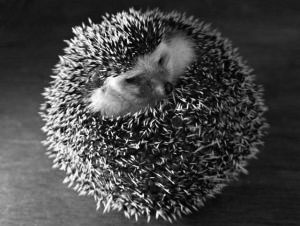
‘A fragment, like a small work of art, has to be entirely isolated from the surrounding world and complete in itself like a hedgehog’, Freidrich Schlegel, Athaneum Fragment 206 [pp.43]

The Literary Absolute by Jean-Luc Nancy and Phillippe Lacoue-Labarthe ‘traces the emergence of the modern conception of Literature’ in Jena Romanticism. Their ‘fragmentary’ model of literature – as the production of it’s own theory – stands in relation to the development of a Post-Kantian conception of philosophy as the total and reflective auto-production [autopoiesis, literally self production] of the thinking subject in the work of art.’ [Book jacket]. Nancy and Labarthe also hightlight the inadequacy of the term Romanticism [as retrospective label] since ‘what is at stake in Jena […] is the first approximation of theoretical romanticism.’ [pp.2]. Continue reading

The Object of Post Criticism

The doctrine of eternal change is summarized in the assertion that + ACI -one cannot step into the same river twice + ACI – – the river is never + ACI – the same +ACI – from one moment to the next, and for Heraclitus the first principle of the world is not + ACI – being + ACI – but + ACI – becoming. + ACI – change, change, change…’

It is here important to refer to Greg Ulmer’s essay, “The Object of Post Criticism” in The Anti-Aesthetic: Essays on Postmodern Culture. In this essay Ulmer succinctly describes a set of potentials related to new forms of critical writing. Ulmer presents the following concept:

I will argue, following White’s lead, that ‘post-criticism'( -modernist, -structuralist) is constituted precisely by the application of the devices of modernist art to critical representations; furthermore, that the principal device taken over by the critics and theorists is the compositional pair collage/montage. (Ulmer, 1983, p. 83)

Recombinant Poetics seeks to build on this concept of the incorporation of collage/montage, through the technological construction of an enabling electronic mechanism, capable of making collage/montage operations which are not fixed, but are, mobile, fleeting, and continuously operational. Unlike the collage/montage environment that Ulmer suggests, A Recombinant Poetic environment enables the vuser to explore a set of modular elements within a continuously active, non-fixed, relativistic environment. An environment that exhibits the qualities of non-closure. Continue reading